

Neolamprologus caudopunctatus
£15.00
Bulk Offer – 3 for £42.00
Discount will apply at checkout.
- Description
- Store Policies
- Enquiries
Description
Neolamprologus caudopunctatus:
A Guide for Aquarists
Neolamprologus caudopunctatus is a fascinating and peaceful cichlid from the shell-dwelling group of cichlids native to Lake Tanganyika in Africa. They are known for their small size, striking appearance, and engaging behaviour, making them an excellent choice for a species-specific tank or a Lake Tanganyika biotope setup. This document will cover their natural habitat, tank requirements, diet, and breeding behaviour.
Natural Habitat & Appearance
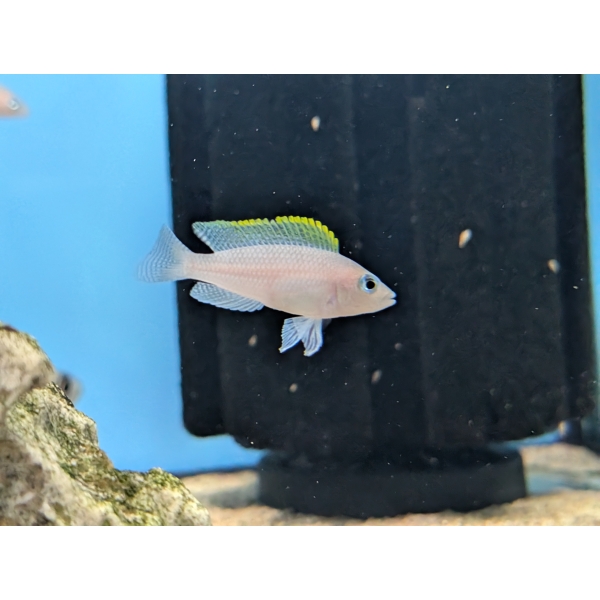
N. caudopunctatus are found in the rocky, shallow areas of Lake Tanganyika, where they live near or in empty snail shells, which they use for shelter and breeding. They are a small species, typically reaching a maximum size of around 5-7 cm (2-2.75 inches). They have a slender, elongated body, and their most distinctive feature is a series of white or pale blue spots on their caudal (tail) fin, which gives them their name, ‘caudopunctatus’ (Latin for ‘spotted tail’). Their body colour is generally a pearlescent beige or grey, often with a hint of iridescent blue.
Tank Requirements
These cichlids are relatively small and can be kept in a modest-sized aquarium.
- Tank Size: A tank of 60 litres (15 US gallons) or more is suitable for a single pair. For a colony, a larger tank of 120 litres (30 US gallons) is recommended.
- Water Parameters: As with all Tanganyikan cichlids, stable water parameters are key. They thrive in hard, alkaline water:
- pH: 7.8 – 9.0
- Hardness: 10 – 20 dGH
- Temperature: 24 – 26°C (75 – 79°F)
- Substrate & Décor: A fine sand substrate is essential, as they love to dig and sift through it. Provide plenty of empty snail shells (such as escargot shells or similar) for them to hide in and breed. A minimum of two shells per fish is recommended to provide options and reduce aggression. Rocks and a few hardy plants can also be added to create a more natural environment.
Diet
In the wild, N. caudopunctatus are primarily micro-predators, feeding on small invertebrates. In an aquarium, their diet is straightforward.
- Primary Diet: A high-quality cichlid pellet or flake food should form the basis of their diet.
- Supplements: Supplement their diet with live or frozen foods such as brine shrimpo and daphnia to provide essential protein and enrich their diet. Feed small amounts several times a day.
Breeding and Behaviour
N. caudopunctatus are a monogamous species that form strong pair bonds. Their breeding behaviour is one of their most fascinating traits.
- Mating: The pair will select and defend a snail shell, which the female will use as a spawning site. They are prolific breeders and can produce small clutches of eggs every few weeks.
- Raising Fry: Both the male and female will guard the eggs and the fry. The female stays in the shell to care for the eggs, while the male patrols the perimeter, defending their territory from other fish. The fry are very small and can be fed newly hatched brine shrimp or crushed flakes once they are free-swimming. The parents will continue to care for the young until they are quite large.
Convenient nationwide delivery; you’re only a click away!
General Enquiries
There are no enquiries yet.