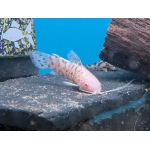

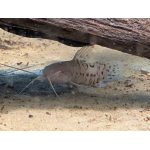


Albino Hoplo Catfish Hoplosternum thoracatum
£15.00
Bulk Offer – 3 for £42.00
Discount will apply at checkout
Albino Hoplo Catfish
- Description
- Store Policies
- Enquiries
Description
Albino Hoplo Catfish (Hoplosternum thoracatum)
Common Names: Albino Hoplo, Armoured Catfish, Spotted Hoplo (for the wild-type colouration).
Scientific Name: Hoplosternum thoracatum (Note: Modern taxonomy often classifies this species as Megalechis thoracata, though it is still widely traded under its older synonym).
Family: Callichthyidae (Armoured Catfishes).
1. Introduction
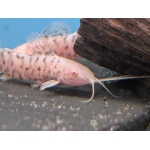
The Albino Hoplo Catfish is a striking and highly robust freshwater fish native to South America. Known for their prehistoric appearance, boisterous personality, and exceptional hardiness, they make excellent additions to medium-to-large community aquariums. The albino variant lacks dark pigmentation, presenting a pinkish-white body and distinctive red eyes, offering a unique contrast against darker substrates and aquatic plants.
Unlike many shy catfish species that vanish into caves during the day, Hoplos are relatively outgoing and active, constantly patrolling the substrate in search of food.
2. Natural Habitat and Biology
Geography
The species has a vast range across northern and central South America, inhabiting the Amazon, Orinoco, and Paraguay river basins, as well as coastal river systems in the Guianas.
Environment
In the wild, Hoplos are found in slow-moving waters, swamps, marshlands, and floodplains. These environments are often low in dissolved oxygen, sometimes drying up significantly during the dry season.
Unique Adaptations
To survive in these challenging habitats, the Hoplo Catfish has developed two key adaptations:
-
Armour Plating: Instead of scales, their bodies are covered in two rows of overlapping bony plates called scutes. This provides significant protection against predators.
-
Facultative Air Breathing: Hoplos are “gut breathers.” They are capable of dashing to the surface to gulp atmospheric air, which is then processed in highly vascularised hind-gut tissue. This allows them to survive in stagnant, oxygen-depleted water that would kill other fish species.
3. Appearance and Size
The albino variant possesses a creamy, pinkish-white base colour. Depending on their genetics and mood, they may show faint, darker “ghost” mottling across the flanks. As true albinos, their eyes are bright red.
They possess long, sensitive maxillary barbels (whiskers) used for locating food in murky substrates.
Size: Adult Albino Hoplos typically reach a substantial size of 15cm to 18cm (6 to 7 inches). They are heavy-bodied fish and require ample swimming space.
4. Aquarium Requirements
Due to their potential size and active nature, Hoplos are not suitable for small starter tanks.
Tank Size
A minimum aquarium size of 120 litres (approximately 30 imperial gallons) is recommended for a single adult or a pair. However, a tank footprint of at least 100cm in length is preferable to accommodate their patrolling habits. They appreciate floor space more than water depth.
Substrate (Crucial)
Hoplos are vigorous diggers that search for food using their sensitive barbels. It is imperative to use a substrate of soft, fine sand or rounded, smooth gravel. Sharp, jagged gravel will abrade their barbels, leading to injuries that easily become infected and prevent the fish from feeding properly.
Décor and Plants
Provide hiding spots using bogwood, rock piles, or terracotta pipes. While not strictly nocturnal, they appreciate a shaded area to rest.
Robust plants like Anubias, Java Fern, or Amazon Swords are suitable. Be aware that their constant foraging may uproot delicate carpeting plants or stem plants that are not well-established.
Filtration and Flow
While they come from slow-moving waters, they are messy eaters and produce significant waste. Efficient filtration is necessary to maintain water quality. Moderate water flow is preferred; avoid creating a torrent that they have to constantly fight against.
The Surface Gap
Because Hoplos need to gulp air, you must ensure a gap of at least 2–3 cm between the water surface and the aquarium lid/cover slides. Furthermore, the lid must be secure; they can gather surprising speed when dashing for air and may jump out of an uncovered tank.
5. Water Parameters
Albino Hoplos are exceptionally adaptable to a wide range of water conditions, making them very forgiving fish to keep.
-
Temperature: 22°C – 28°C (72°F – 82°F).
-
pH: They tolerate a wide range between 6.0 and 8.0.
-
Hardness: Adaptable to soft or moderately hard water (5 – 20 dGH).
6. Diet and Feeding
Hoplos are unfussy omnivores and scavengers. In the wild, they consume benthic invertebrates, insect larvae, detritus, and plant matter.
In the aquarium, they should be offered a varied diet:
-
High-quality sinking catfish pellets or wafers.
-
Frozen or live foods such as bloodworm, Daphnia, brine shrimp, and Tubifex.
-
Occasional vegetable matter (e.g., blanched courgette or cucumber medallions).
Feeding Tip: They are voracious eaters and can easily outcompete slower bottom-dwellers. Ensure food actually reaches the substrate if keeping them with fast mid-water swimmers.
7. Behaviour and Compatibility
Hoplos are generally peaceful but can be boisterous and clumsy due to their size. They are not aggressive toward other fish, but their enthusiastic swimming might intimidate very shy species.
-
Social Behaviour: They are content kept singly but are naturally gregarious and enjoy the company of their own kind if the tank is large enough.
-
Tank Mates: They make excellent community fish for medium-to-large setups. Good companions include larger Tetras (e.g., Congo Tetras), Barbs, Gouramis, Rainbowfish, and peaceful South American Cichlids (e.g., Severums or Keyholes).
-
Avoid: Do not keep them with very small fish or fry that could fit in their mouths, or highly aggressive, territorial species.
8. Breeding (Brief Overview)
Unusually for catfish, Hoplosternum thoracatum are bubble nest builders, similar to Gouramis. The male constructs a nest at the surface, usually utilizing floating plants or debris to anchor it.
Spawning is a vigorous affair. The male guards the nest aggressively until the fry hatch (usually within 3–4 days). If breeding is attempted, the female should be removed after spawning, and the male removed once the fry are free-swimming, to prevent predation.
Summary Checklist
| Requirement | Specification |
| Minimum Tank Size | 120 Litres |
| Substrate | Smooth sand or rounded gravel essential |
| Diet | Omnivore (Sinking foods) |
| Temperature | 22°C – 28°C |
| Adult Size | 15cm – 18cm |
| Special Requirement | Must have access to the water surface to breathe air |
Convenient nationwide delivery; you’re only a click away!
Please put your desired delivery day in the Order Notes on the Checkout page.
General Enquiries
There are no enquiries yet.