
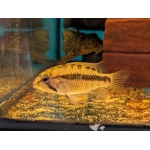
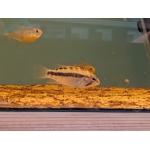
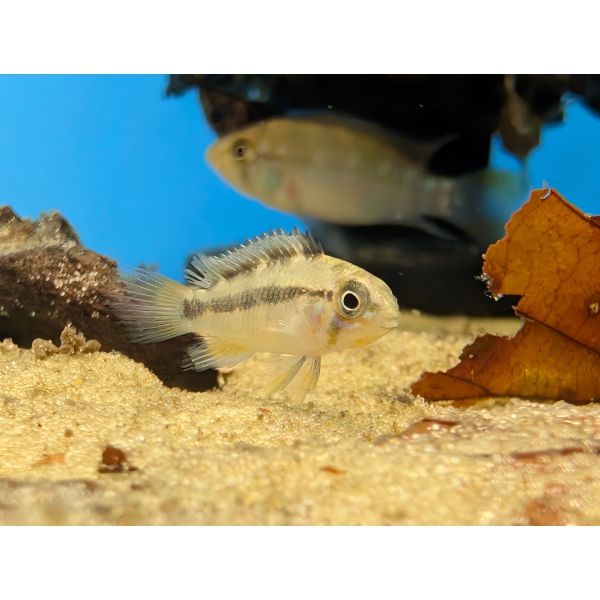
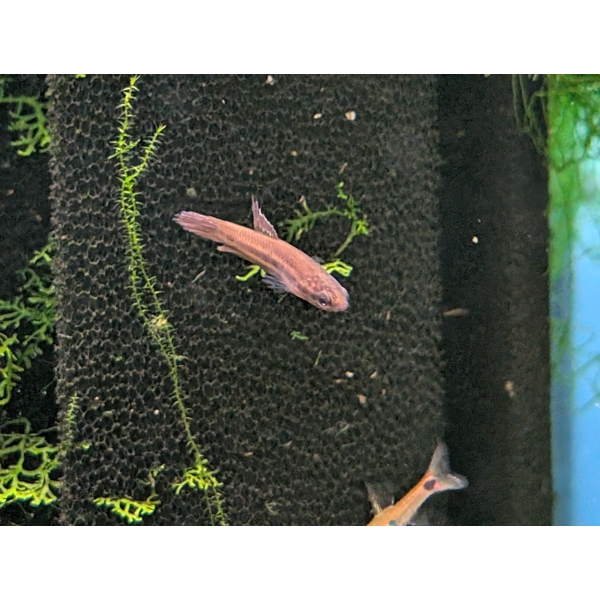
Apistogramma sp.D10 (Rare)
£14.00
Apistogramma sp. ‘D10’
- Description
- Store Policies
- Enquiries
Description
Apistogramma sp. ‘D10’
Care Guide & Species Profile:
Apistogramma sp. ‘D10’ is a rare, highly sought-after, and undescribed species of South American dwarf cichlid. Collected from the remote Amazonian blackwater systems of Colombia, this species has generated significant excitement in the hobby due to its remarkable and evolutionarily advanced reproductive strategy: it is a facultative larvophilous mouthbrooder.
Species Overview
| Common Name | Apistogramma sp. ‘D10’, D10 Dwarf Cichlid |
| Scientific Name | Apistogramma sp. ‘D10’ (Undescribed) |
| Lineage | A. trifasciata Lineage A. sp. ‘D10’-Group |
| Origin | Colombia (Río Caquetá drainage basin) |
| Adult Size | Males: up to 9 cm (3.5 inches) | Females: up to 6.5 cm (2.5 inches) |
| Lifespan | 4 to 6 years with expert care |
| Minimum Tank Size | 75 litres (approx. 20 gallons) for a single pair |
Appearance and Identification
Apistogramma sp. ‘D10’ is one of the larger representatives of the genus. It features an elongated, moderately deep body and a disproportionately large head with an expansive jaw structure designed to accommodate mouthbrooding.
-
Males: Display a spectacular, light beige-to-rosy body overlaid with a shimmering metallic blue-turquoise sheen. The lower half of the head and gill covers are adorned with highly conspicuous, intense turquoise stripes and bright red-to-orange wormlike markings.
-
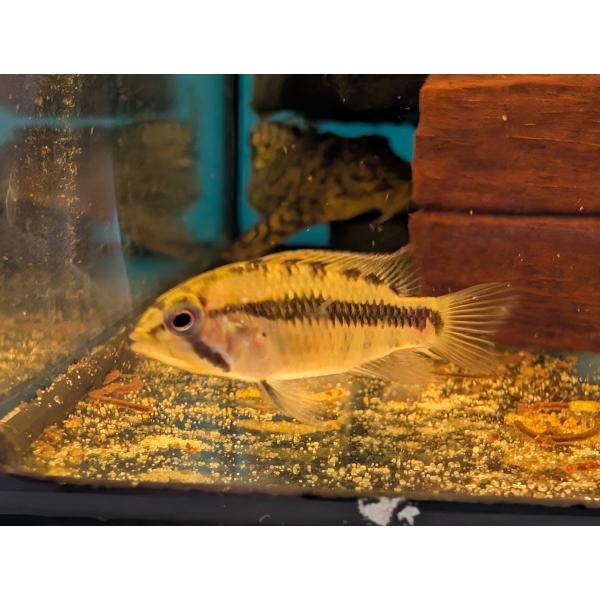
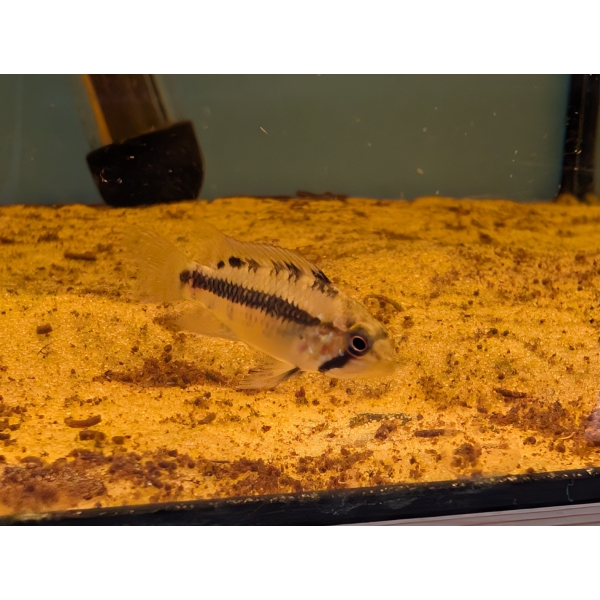
Females: Notably smaller and typically maintain a yellowish-beige base colour with a distinct lateral spot. During courtship and brood-care cycles, they transform into an intense, vibrant parental yellow with stark black contrast markings.
Aquarium Setup and Habitat
In its native Colombian habitat, Apistogramma sp. ‘D10’ populates shallow, sunlit blackwater streams filled with dense beds of fallen leaves, submerged branches, and aquatic plants.
Substrate (Critical)
-
Recommendation: A thick layer of ultra-fine, smooth white sand is mandatory.
-
Behavioural Requirement: Sand is crucial not only because they sift it for food, but because females actively use their mouths to bulldoze and construct sand blockades at cave entrances to protect their eggs.
Aquascaping and Cover
-
Leaf Litter: Provide a generous layer of dried leaf litter (such as Indian Almond, Oak, or Beech leaves). The decaying leaves offer vital security, simulate their natural habitat, and provide a grazing ground for micro-organisms that fry feed upon.
-
Spawning Caves: Introduce multiple small breeding caves, such as hollowed-out coconut shells, small terracotta pots, or natural rock crevices. The entrances should be relatively narrow.
Water Parameters
As a true blackwater species, Apistogramma sp. ‘D10’ is highly sensitive to water chemistry and dissolved organic waste. Pristine, biologically stable conditions are mandatory.
-
Temperature: 23°C to 26°C (73°F to 79°F)
-
pH: 4.0 to 6.0 (A stable pH of 5.5 is optimal)
-
Hardness: Extremely soft; 0 to 4 dGH (Conductivity < 100 uS/cm)
-
Water Tint: The water should be enriched with humic substances and tannins. This can be achieved by filtering through aquarium-safe peat or adding botanical extracts.
Diet and Feeding
This species is primarily a micro-predator, relying on a diet rich in small invertebrates.
-
Live and Frozen Foods: They thrive on a staple of live or frozen baby brine shrimp (Artemia), daphnia, cyclops, white mosquito larvae, and chopped bloodworms.
-
Prepared Foods: Over time, they can be conditioned to accept high-quality, protein-dense sinking micro-pellets or crushed flakes, though live foods remain superior for conditioning.
Temperament and Compatibility
Apistogramma sp. ‘D10’ is relatively peaceful outside of breeding cycles. However, because they are larger than average apistos, dominant males can be fiercely territorial toward rivals.
-
Conspecifics: Best kept as a bonded pair. It is highly recommended not to mix them with other Apistogramma species to prevent extreme territorial conflict and potential cross-hybridisation.
-
Suitable Tank Mates: Ideal companions include small, peaceful dither fish that occupy the upper water columns, such as Pencilfish (Nannostomus), Hatchetfish, or small, soft-water tetras (e.g., Ember or Cardinal Tetras).
-
Avoid: Heavy bottom-dwellers like large Corydoras or territorial loaches, which will repeatedly violate the apisto’s territory and cause severe parental stress.
Breeding and Facultative Mouthbrooding
The most fascinating aspect of Apistogramma sp. ‘D10’ is its facultative larvophilous mouthbrooding behaviour. The term “facultative” means that mouthbrooding is optional and adaptive; the female can modify her parenting strategy based on environmental stressors, current speed, or perceived predator threats.
-
The Nest: The female selects a dark cave and meticulously heaps piles of sand around the entry to narrow the opening. She lays a modest clutch of up to 40 eggs on the cave ceiling.
-
Initial Guarding: The female guards the eggs inside the cave while the male defends the outer perimeter.
-
The Shift to Mouthbrooding: Once the eggs hatch into larvae (wiggler stage), or if the female senses a threat, she picks up the larvae and gathers them into her buccal cavity (mouth).
-
Brood Care: The mother will cradle the young securely in her mouth for up to three weeks, periodically releasing them into shallow sand depressions to forage under her strict supervision before gathering them back up at the slightest hint of danger.
Note: Because it is an undescribed and highly specialised wild-type variant, keeping and successfully breeding Apistogramma sp. ‘D10’ should ideally be reserved for dedicated aquarists committed to maintaining strict, species-specific soft-water conditions.
Convenient nationwide delivery; you’re only a click away!
Our nationwide delivery service makes it easy to receive your fish directly at your door, anywhere in the UK, for a flat rate of just £30. This convenient service allows you to order up to 10kg of fish, with the assurance that they will arrive in excellent condition. To make the fishes journey as comfortable as possible we use Oxygen in the fish bags and heat packs in all the boxes of fish we send out.
Our delivery days are as follows:
Please put your desired delivery day in the Order Notes on the Checkout page.
General Enquiries
There are no enquiries yet.