


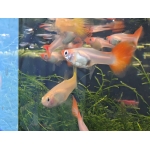


Assorted Female Guppies Poecilia reticulata
£4.00
Bulk Offer – 6 for £22.00
Discount will apply at checkout.
Please note colours are subject to current stock.
- Description
- Store Policies
- Enquiries
Description
Female Guppy:
A Comprehensive Care Guide
Female guppies () are a popular and vibrant freshwater fish, cherished for their peaceful nature, adaptability, and role in breeding. While often less colourful than their male counterparts, selectively bred strains can exhibit beautiful, muted shades. They are livebearers, meaning they give birth to live young, making them a fascinating addition to any aquarium.
Scientific Classification
- Scientific Name:
- Family: Poeciliidae
- Origin: Native to South America, Central America, and several Caribbean islands. Most guppies in the aquarium trade are tank-bred.
Appearance and Size
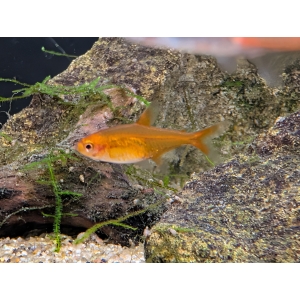
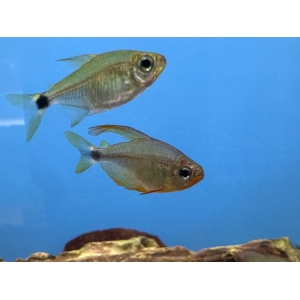
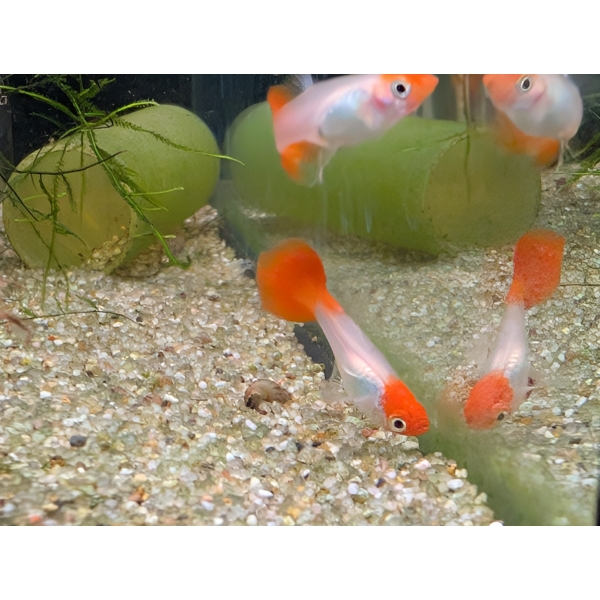
Female guppies are generally larger and rounder than males, typically reaching an average size of 6 cm. While males are known for their elaborate, colourful fins and patterns, females usually have a more subdued colouration, often in shades of grey, gold, or pale olive. They also lack the elongated anal fin (gonopodium) seen in males.
Temperament and Social Behavior
Female guppies are very peaceful, active, and highly social fish. They thrive when kept in groups and should never be housed individually. It is recommended to keep them in a ratio of at least two or three females for every male to prevent males from over-harassing a single female. Females can also be kept in female-only tanks without aggression, which is a good option if you want to avoid constant breeding.
Tank Requirements
- Tank Size: A minimum of 20-40 liters is recommended for a small group of guppies. However, given their active nature and prolific breeding, a 80 litre or larger tank is often more suitable for long-term health and population management.
- Substrate: Any type of substrate works well, including gravel, sand, or a bare bottom. A darker substrate can help bring out their colours.
- Decorations: Guppies appreciate a well-planted tank with plenty of hiding spots. Live plants like Anubias, Java Fern, Java Moss, Hornwort, and Water Lettuce are excellent choices. Driftwood and other smooth-edged decorations also provide shelter. Avoid sharp or rough decor that could tear their delicate fins.
- Lighting: Moderate lighting is generally sufficient and beneficial for live plants.
- Filtration: A reliable filtration system is essential to maintain clean and well-oxygenated water. Guppies prefer gentle to moderate water flow. If breeding, consider a sponge filter or a pre-filter sponge on the intake to protect tiny fry from being sucked in.
- Heater: An adjustable heater is crucial to maintain a stable water temperature.
- Lid: Guppies can jump, so a fitted lid or canopy is necessary to prevent them from escaping.
Water Parameters
Guppies are relatively hardy and adaptable, but they thrive in stable and clean conditions.
- Temperature: to ( to ). While they can tolerate a wider range, maintaining a consistent temperature within this range is ideal for their health and lifespan.
- pH: Slightly alkaline water is preferred, with an ideal pH range of 7.0 to 8.0. They can tolerate a range of 6.5 to 8.5.
- Hardness (GH): Guppies prefer moderate to hard water, with a general hardness (GH) between 8-12 dGH (140-210 ppm). Some sources suggest a range of 10-30 dGH.
- Carbonate Hardness (KH): An ideal range for KH is 5-10 dKH.
- Water Quality: Ammonia and nitrite levels should always be zero. Nitrate levels should be kept below 20 mg/L. Regular partial water changes (20-25% weekly) are vital.
Diet and Feeding
Female guppies are omnivores and are not picky eaters. A varied diet will ensure their health and vibrant colors.
- Staple Diet: High-quality flake food or micro-pellets designed for tropical fish.
- Supplements: Offer live or frozen foods such as brine shrimp, daphnia, bloodworms, and mosquito larvae.
- Vegetable Matter: Occasionally provide blanched vegetables like spinach or peas, or spirulina-based foods.
- Feeding Frequency: Feed adult guppies small amounts one to two times daily, only what they can consume within one to two minutes. Overfeeding can lead to health issues and poor water quality.
Tankmates
Female guppies are peaceful and can be kept with a variety of other non-aggressive, similarly sized community fish. Good tankmates include:
- Other Guppies
- Mollies
- Platies
- Swordtails
- Neon Tetras
- Corydoras Catfish
- Snails
- Shrimp (though guppies may eat shrimp fry)
Avoid aggressive or fin-nipping species such as Tiger Barbs or Bettas, as they can stress or injure guppies.
Breeding
Female guppies are livebearers and are prolific breeders. They can store sperm for up to six months, meaning a female can give birth multiple times from a single encounter with a male.
- Gestation Period: Approximately 21-30 days.
- Signs of Pregnancy: A dark “gravid spot” will appear on her abdomen near the anal opening, which darkens as the pregnancy progresses. Her belly will also become noticeably larger and more “squared off.”
- Fry Protection: Guppies will eat their own young. If you want to maximize fry survival, transfer the pregnant female to a separate breeding tank or use a breeding box just before she gives birth. Provide plenty of dense floating plants (like Java Moss or Water Lettuce) in the main tank for fry to hide in.
- Fry Care: Newborn fry are tiny but can swim and eat immediately. Feed them small meals several times a day with specialized fry food, crushed flakes, or baby brine shrimp.
Special Considerations
- Population Control: Due to their rapid breeding, be prepared for a growing population. You can separate sexes, sell or give away surplus fish.
- Hardiness: While generally hardy, tank-bred guppies can be more susceptible to disease than their wild counterparts if water conditions are not maintained.
- Observation: Regularly observe your female guppies for signs of good health (bright colouration, active swimming, good appetite) or illness.
With proper care and attention to their environment, female guppies will thrive and bring continuous life and beauty to your freshwater aquarium.
Convenient nationwide delivery; you’re only a click away!
General Enquiries
There are no enquiries yet.