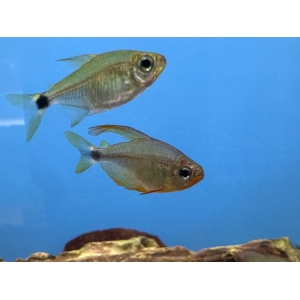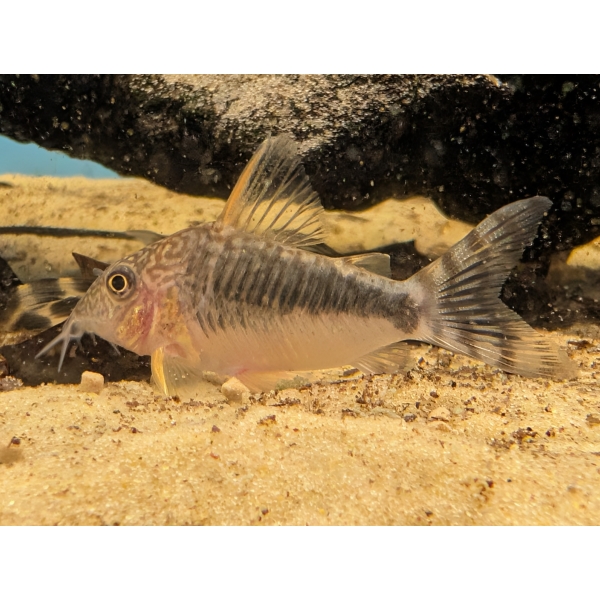
Axelrods Catfish
£10.00
Axelrods Catfish
Bulk Offer – 3 for £27.00
Discount will apply at checkout.
- Description
- Store Policies
- Enquiries
Description
Hoplistoma axelrodi:
Axelrod’s Catfish Care Guide
Common Name: Axelrod’s Catfish, Scientific Name: Hoplistoma axelrodi (often now reclassified as Dianema axelrodi in the hobby) Family: (Armoured Catfish family, which includes the genus) Origin: South America (specifically, the slow-moving tributaries of the system in Colombia).
The name confusion often arises because H. axelrodi shares the peaceful temperament and shoaling behaviour typical of . However, they have a distinct, more elongated, torpedo-like body shape compared to the chunky, rounded profile of most true species. Like their cousins, they are excellent, non-aggressive additions to a community tank.
Key Characteristics and Appearance
- Size: They typically reach a maximum adult length of 4 (approximately 2 inches).
- Appearance: This species is noted for its sleek body and elongated snout. They typically display a creamy brown or beige base colour patterned with distinct dark spots or blotches. They use their long, sensitive constantly to sift through the substrate for food.
- Temperament: Highly peaceful and social. They are shoaling fish and become stressed if kept alone.
- Activity: While active at night, they will readily emerge to feed during the day, especially if they are kept in a well-established group.
Aquarium Setup Requirements
These catfish thrive in setups that mimic their natural South American jungle river habitat—slow-moving, dark water with plenty of leaf litter and cover.
Tank Size and Substrate
- Minimum Tank Size: A tank is the recommended minimum for a small shoal of at least five or six individuals. As bottom dwellers, the tank’s length and width (footprint) are more important than its height.
- Substrate: Fine river sand is absolutely essential. Using coarse gravel can quickly damage their delicate barbels, which they use to locate food. Damaged barbels can lead to infection and difficulty feeding.
- Decor: Furnish the tank with plenty of hiding places like bogwood, smooth river stones, and large leaf litter (e.g., Indian Almond leaves, which also release beneficial ). They love resting in shaded areas.
Water Parameters
H. axelrodi are adaptable but prefer soft, slightly acidic conditions for optimal health.
| Parameter | Recommended Range |
|---|---|
| Temperature | to ( to ) |
| to (Neutral or slightly acidic is best) | |
| Hardness () | Soft to Medium () |
Filtration and Flow
They require excellent water quality but dislike strong currents. A quality external or internal filter should be used, but ensure the water return is baffled or directed against the glass to create a gentle, diffuse flow.
Diet and Tank Mates
Dietary Needs
As opportunistic, omnivorous bottom scavengers, they require a varied diet to remain in peak condition.
- Staple: High-quality sinking pellets, wafers, and granules.
- Supplement: Offer frequent frozen or live treats like bloodworms, , and brine shrimp. This variety helps boost their immune system and encourages natural foraging behaviour.
- Feeding Tip: Always drop food directly onto the substrate after the main lights have dimmed or gone out, as this caters to their slightly nature and ensures faster fish don’t steal their dinner.
Compatibility
H. axelrodi are ideal community fish. They co-exist happily with most small, peaceful tropical species.
- Good Tank Mates: Small (like or ), , small , and (, ).
- Avoid: Large, overly aggressive, or overly boisterous species that might intimidate them or outcompete them for food.
Convenient nationwide delivery; you’re only a click away!
General Enquiries
There are no enquiries yet.