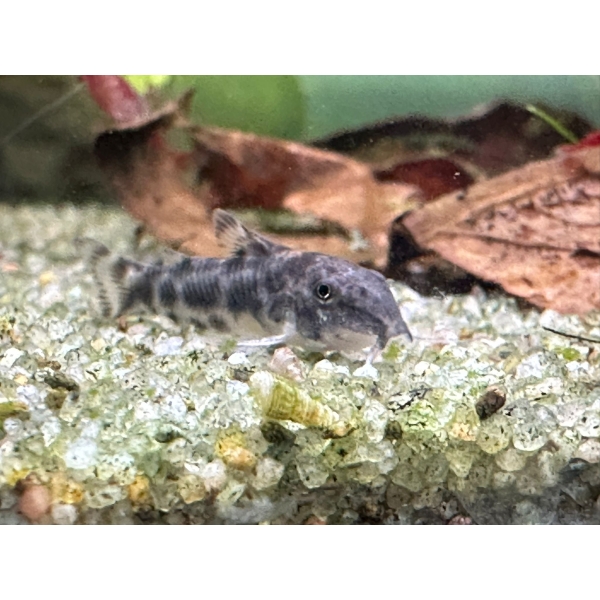
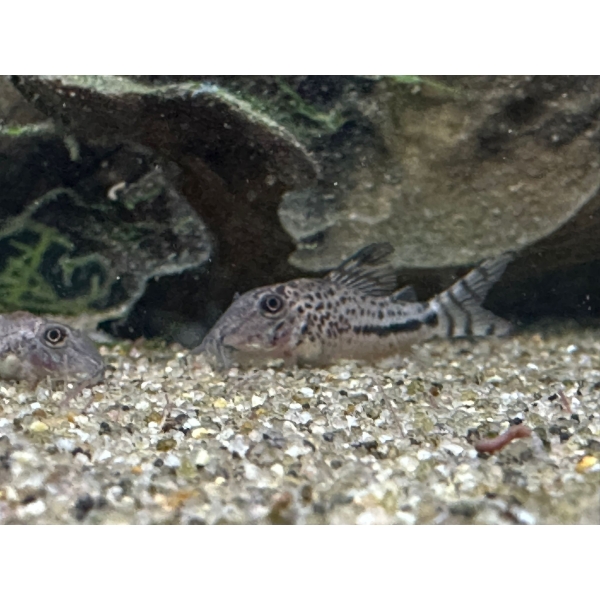

Ceara Bulldog Catfish (Aspidoras raimundi)
£7.50
Bulk Offer – 6 for £40.00
Discount will apply at checkout.
- Description
- Store Policies
- Enquiries
Description
Ceara Bulldog Catfish (Aspidoras raimundi): Care and Profile
The Ceara Bulldog Catfish (Aspidoras raimundi) is a small, peaceful, and endearing species of catfish that is an excellent addition to a community aquarium. Hailing from the freshwater streams of Brazil, particularly in the state of Ceará, this fish is often mistaken for a member of the Corydoras genus due to its similar appearance and behaviour. It is a bottom-dweller, known for its active and social nature, making it a great choice for planted tanks and docile community setups.
Physical Characteristics and Profile
- Size: Reaching a maximum size of around 4-5 cm (about 2 inches), the Ceara Bulldog Catfish is a small species perfectly suited for smaller tanks.
- Lifespan: With proper care, they can live for 5 to 7 years.
- Appearance: This species has a mottled body pattern, typically in shades of brown, beige, and black. Its head is distinctively broad and slightly flattened, giving it a bulldog-like appearance, hence its common name. They have two pairs of barbels on their mouth, which they use to forage for food in the substrate.
- Sexual Dimorphism: Females are typically larger and have a rounder body shape than the males, especially when viewed from above.
Ideal Tank Conditions
- Tank Size: A minimum tank size of 45 litres (10 gallons) is recommended for a small group. A larger tank will allow for a more stable environment and more space for them to forage.
- Water Parameters:
- Temperature: 22-26°C (72-79°F).
- pH: 6.0-7.5.
- Hardness: Soft to medium hard water (2-15 dGH).
- Substrate: A soft, sandy substrate is essential. The Ceara Bulldog Catfish loves to sift through the sand with its barbels, and a coarse substrate like gravel can damage them over time.
- Filtration: A gentle filter that provides good water flow and oxygenation is ideal. Avoid strong currents that can stress the fish.
- Decor: Provide plenty of hiding spots and visual barriers using bogwood, caves, smooth rocks, and dense plant growth. This creates a secure environment and allows them to exhibit natural behaviour.
Diet and Feeding
The Ceara Bulldog Catfish is an omnivore and is not a picky eater. They are scavengers, constantly searching for food on the substrate.
- Primary Diet: Sinking pellets or wafers, and high-quality flakes that settle at the bottom.
- Supplemental Foods: Offer a varied diet with frozen or live foods such as bloodworms, daphnia, and brine shrimp to ensure they receive all the necessary nutrients.
- Feeding Frequency: Feed once or twice a day, providing an amount they can consume within a few minutes.
Behaviour and Tank Mates
- Social Nature: This is a highly social species and must be kept in groups. A minimum group of six is recommended to see them thrive and display their natural schooling behaviour. Keeping them alone can lead to stress and a shorter lifespan.
- Peaceful Temperament: The Ceara Bulldog Catfish is very peaceful and will not bother other tank inhabitants.
- Suitable Tank Mates: Ideal tank mates include other peaceful, small to medium-sized fish that occupy the mid to upper levels of the aquarium. Examples include small tetras, rasboras, dwarf cichlids, and other peaceful catfish species like Corydoras.
- Unsuitable Tank Mates: Avoid large, aggressive, or fin-nipping fish that could intimidate or harm them.
Breeding
Breeding the Ceara Bulldog Catfish is similar to breeding Corydoras species. A good technique is to perform a large, cool water change to simulate the rainy season, which often triggers spawning. The eggs are typically laid on plants, glass, or decor and can be moved to a separate breeding tank to prevent them from being eaten by other fish or the parents. The eggs usually hatch within 3-4 days, and the fry can be fed microworms and later, crushed fry food.
General Enquiries
There are no enquiries yet.