

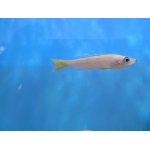


Cyprichromis leptosoma “Utinta”
£20.00
Bulk Offer – 3 for £55.00
Discount will apply at checkout.
- Description
- Store Policies
- Enquiries
Description
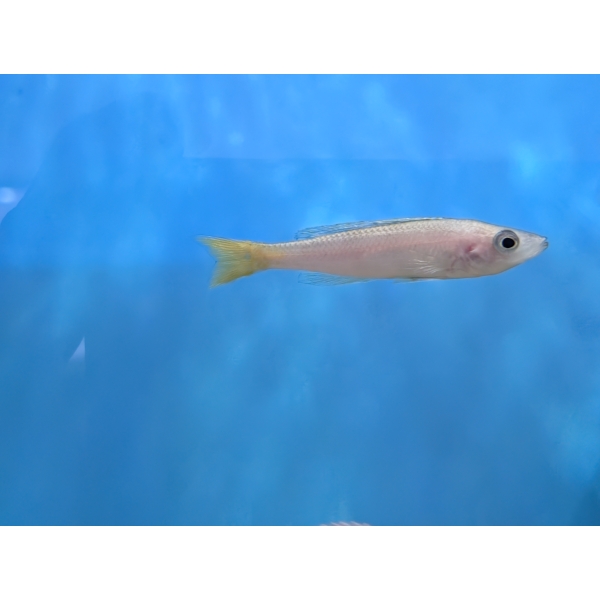
Slender Sardine Cichlid (Cyprichromis leptosoma “Utinta”)
A Comprehensive Guide:
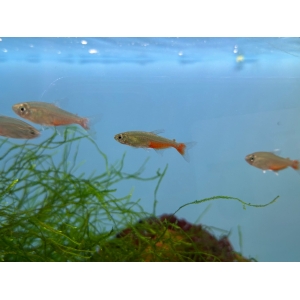
The Slender Sardine Cichlid, or more commonly known as “Cyps,” is a peaceful, schooling species native to the rocky, open-water zones of Lake Tanganyika in Africa. The “Utinta” variant is particularly sought after for its vibrant blue and yellow colouration, especially in mature males. These fish are a joy to watch as they gracefully dart about the tank in a shimmering shoal.
Key Characteristics
- Appearance: They have a slender, torpedo-like body, which gives them their common name. The “Utinta” variant features a metallic blue body with bright yellow or orange fins. Males are much more colourful and have more elongated fins than the females, who are a more subdued tan or grey colour. They grow to a maximum size of around 10 to 12 cm (4 to 5 inches).
- Temperament: Unlike most cichlids, they are very peaceful and shy. They are a schooling species and should never be kept alone; a group of at least 8 to 12 individuals is highly recommended to reduce stress and encourage their natural behaviour.
- Lifespan: With proper care, they can live for 5 to 8 years.
Aquarium Requirements
Recreating their open-water, rocky habitat is essential for their health and happiness.
- Tank Size: A minimum tank size of 150 litres (40 gallons) is needed for a small group. A longer tank is better than a taller one to provide ample swimming space.
- Water Parameters: As they are from Lake Tanganyika, they require hard, alkaline water.
- Temperature: to ( to )
- pH: A high pH of to is crucial.
- Hardness: They prefer moderately hard to hard water, with a dH of to .
- Tank Setup: The aquarium should be set up with a fine sand or smooth gravel substrate. They are mid-water dwellers, so the main focus should be on providing a large open swimming area. Use rocks to create tall, narrow rockwork and caves along the back and sides of the tank. This provides security and visual barriers for the females to retreat to if needed.
Diet and Feeding
In the wild, Cyprichromis are zooplankton feeders, eating tiny organisms drifting in the water column.
- Diet: A varied diet is essential. Use high-quality cichlid flakes or micropellets as a staple.
- Feeding: Supplement their diet with frequent feedings of live and frozen foods. Small meaty foods like brine shrimp, daphnia, and cyclops are ideal. Because of their small mouths, make sure the food is small enough for them to easily consume.
Compatibility
Their peaceful nature and mid-water dwelling habit make them perfect companions for many other species from Lake Tanganyika.
- Good Tank Mates: They can be kept with peaceful, bottom-dwelling or rock-dwelling cichlids that occupy a different area of the tank. Good companions include shell-dwellers (Neolamprologus species), rock-dwellers (Julidochromis), or other peaceful Tanganyikan species that will not outcompete or bully them.
- Fish to Avoid: Avoid keeping them with aggressive or overly large cichlids, such as many species from Lake Malawi. Do not mix different variants of Cyprichromis as they can easily hybridise.
Convenient nationwide delivery; you’re only a click away!
General Enquiries
There are no enquiries yet.