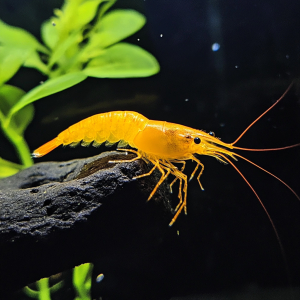
Dimidiochromis compressicpes “Orange Blotch”
£15.00
Bulk Offer – 3 for £42.00
Discount will apply at checkout.
- Description
- Store Policies
- Enquiries
Description
Dimidiochromis compressiceps “Orange Blotch”
A Comprehensive Guide:
Dimidiochromis compressiceps “Orange Blotch” (OB) is a striking, captive-bred colour morph of the renowned Malawi Eye-Biter. While the standard wild-type fish displays metallic blue or silver hues, the OB variant is generally considered a hybrid or a line-bred strain as this specific “Orange Blotch” pattern does not occur naturally in wild D. compressiceps populations.
Species Profile
- Scientific Name: Dimidiochromis compressiceps.
- Common Name: Orange Blotch Malawi Eye-Biter, OB Compressiceps.
- Origin: Captive-bred variant; wild ancestor is endemic to Lake Malawi, East Africa.
- Adult Size: Males can reach 20–25 cm (8–10 inches); females are slightly smaller.
- Lifespan: 8–10 years with optimal care.
- Temperament: Predatory and territorial, particularly during spawning.
Tank Requirements & Maintenance
This species is a powerful swimmer and an ambush predator that requires a substantial environment to thrive.
| Parameter | Ideal Range |
|---|---|
| Minimum Tank Size | 300 litres (approx. 66–75 gallons) for a single specimen; larger for groups. |
| Temperature | 23–28°C (73–82°F). |
| pH Level | 7.5–8.8 (Alkaline water is essential). |
| Hardness | 10–25 dGH (Moderately hard to hard). |
- Aquascaping: Recreate the Lake Malawi shoreline using a sandy substrate. Incorporate large rocks to form caves and visual barriers to manage aggression.
- Vegetation: In the wild, they hunt amongst Vallisneria beds. In the aquarium, dense clumps of this hardy plant provide natural cover and encourage their unique “head-down” ambush posture.
- Filtration: High-efficiency filtration (preferably external canisters) is necessary to manage the high bio-load produced by large predatory cichlids.
Diet & Nutrition
As a piscivore, the OB Compressiceps requires a protein-rich, carnivorous diet.
- Core Diet: High-quality cichlid pellets or sticks designed for predatory species.
- Fresh/Frozen Foods: Mysis shrimp, krill, prawns, mussels, and cockle meat.
Compatibility
- Best Kept With: Other robust, similarly sized Lake Malawi cichlids such as Nimbochromis venustus or Cyrtocara moorii.
- Species to Avoid: Small, peaceful fish (e.g., Tetras, Guppies) or smaller Mbuna, which may be harassed or eaten.
- Social Structure: Ideally kept in a harem (one male to three or more females) to disperse male aggression.
Breeding
The OB Compressiceps is a maternal mouthbrooder.
- Spawning: The male clears a pit in the sand or a flat rock to entice the female.
- Fertilisation: Using the “dummy egg” method, the female picks up eggs in her mouth and is attracted to the egg-spots on the male’s anal fin, where she receives his milt.
- Incubation: The female carries 50–250 eggs for approximately 21 days. She will not feed during this period and may spit the brood early if stressed.
Convenient nationwide delivery; you’re only a click away!
Our nationwide delivery service makes it easy to receive your fish directly at your door, anywhere in the UK, for a flat rate of just £30. This convenient service allows you to order up to 10kg of fish, with the assurance that they will arrive in excellent condition. To make the fishes journey as comfortable as possible we use Oxygen in the fish bags and heat packs in all the boxes of fish we send out.
For your peace of mind we enclose a slip which will explain what to do in the event of a fish not traveling too well.
We use a licensed courier to deliver your fish directly to you door and will be with you by 1pm the next day.
Our delivery days are as follows:
Tuesday for Wednesday delivery
Wednesday for Thursday delivery
Thursday for Friday delivery
Please put your desired delivery day in the Order Notes on the Checkout page.
General Enquiries
There are no enquiries yet.