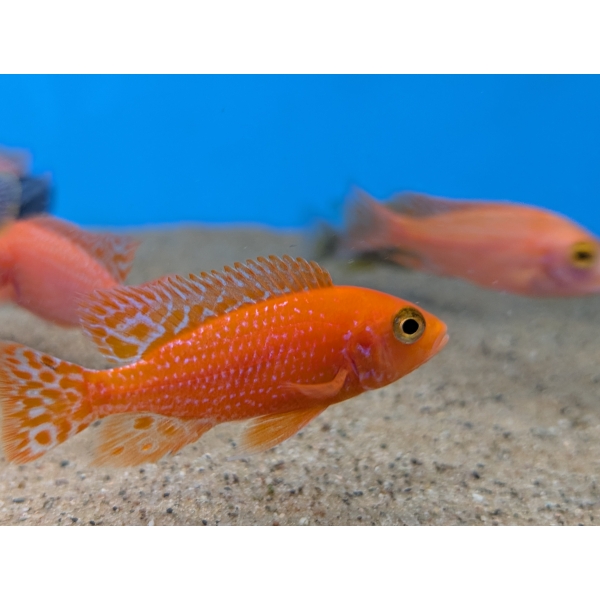
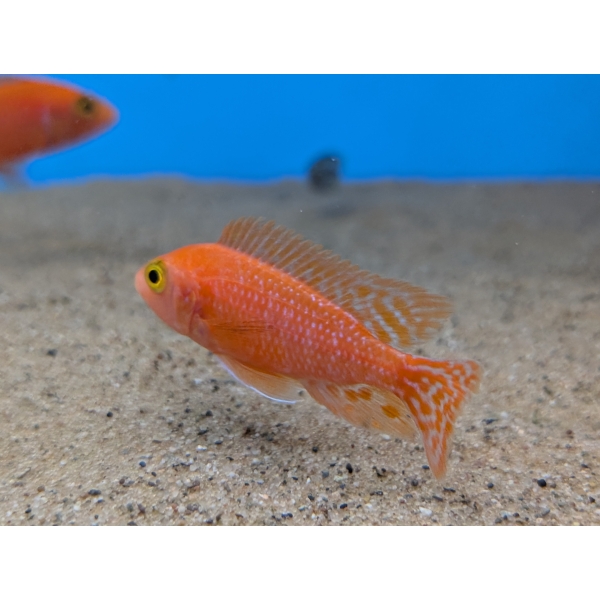

Fire Peacock Cichlid Aulonocara sp. Fire Fish
£14.00
Bulk Offer – 3 for £39.00
Discount will apply at checkout.
- Description
- Store Policies
- Enquiries
Description
Fire Peacock Cichlid (Aulonocara sp. ‘Fire Fish’)
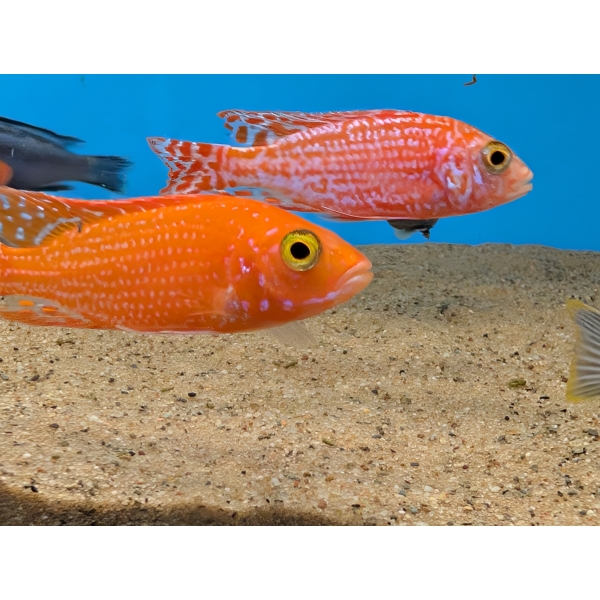
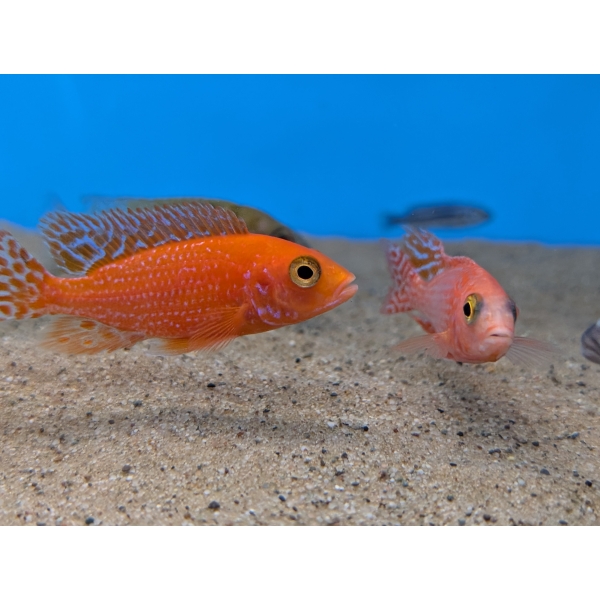
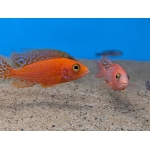
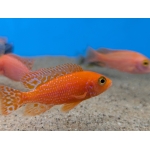
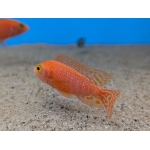
The Fire Peacock Cichlid, often referred to as Aulonocara ‘Fire Fish’, ‘Dragon Blood Fire Fish’, or ‘Strawberry Peacock’, is a highly prized and intensely colored variant within the Aulonocara genus. This stunning African cichlid is celebrated for its brilliant red, orange, and sometimes pink hues, making it an undeniable focal point in any Lake Malawi-themed aquarium.
Origin and Habitat
Unlike many wild Aulonocara species that are endemic to specific sandy or rocky areas of Lake Malawi in East Africa, the Fire Peacock Cichlid is a selectively bred, man-made strain. Its lineage is believed to involve crosses between various Aulonocara species and possibly some Mbuna cichlids, with intensive breeding efforts focused on enhancing and stabilizing its fiery colouration. Therefore, it does not have a specific natural habitat in Lake Malawi but thrives in aquarium conditions that mimic the lake’s parameters.
Appearance and Characteristics
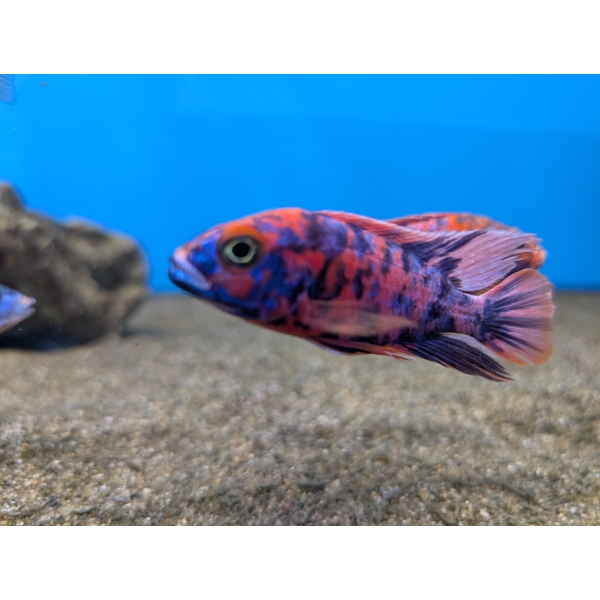
The Fire Peacock Cichlid typically grows to about 5-7 inches (13-18 cm) in length, with males being larger and more vibrantly colored than females. The most striking feature of this cichlid is its intense and often uniform coloration, ranging from deep blood red to bright orange and sometimes a vivid pink. Unlike the OB Peacock, which has random blotches, the Fire Peacock often exhibits a more solid, iridescent colour across its body, though some variations may show subtle patterns or a mix of red and orange.
Males display the most brilliant colours, especially when mature and during breeding periods, with their fins often taking on a blue or reddish fringe. Females are generally more subdued in colour, often appearing a duller orange, pinkish, or even mottled brown/grey, though some can still show attractive colouration.
Behavior and Temperament
Fire Peacock Cichlids are generally considered semi-aggressive, similar to other Aulonocara species. Males can be territorial, particularly towards other males or fish with similar colouration, especially during spawning. To minimize aggression and stress, it is highly recommended to keep them in a “harem” setup, with one male accompanied by three or more females.
They are relatively peaceful towards other non-aggressive Lake Malawi cichlids that do not share their intense red/orange colouration or body shape. Suitable tank mates include other Aulonocara species, certain Haplochromis species, and docile Mbunas like Yellow Labs. Avoid housing them with highly aggressive Mbunas or very small, timid fish that could be outcompeted or bullied. They typically occupy the lower to middle levels of the aquarium.
Aquarium Requirements
To ensure the health, vibrant colouration, and natural behavior of Fire Peacock Cichlids, specific aquarium conditions are essential:
- Tank Size: A minimum of 280 litres is recommended for a single male and a harem of females. For a more diverse cichlid community or multiple males, a tank of 500 litres or larger is highly preferred to provide ample swimming space and dilute aggression.
- Water Parameters:
- Temperature: 23-26°C (73-79°F)
- pH: 8.0-8.4 (alkaline water is crucial, mimicking Lake Malawi’s natural conditions).
- Hardness: 10-20 dGH (hard to very hard water is essential for their well-being).
- Filtration: Excellent and robust filtration is paramount to manage the bioload of cichlids. A high-capacity canister filter or multiple powerful hang-on-back filters providing strong mechanical, biological, and chemical filtration are necessary. Regular, large water changes (25-50% weekly) are also vital.
- Substrate: A fine sand substrate is ideal, as Aulonocara species enjoy sifting through sand for food.
- Lighting: Moderate lighting is suitable.
- Decor: Provide ample rock formations, caves, and crevices to create territories, hiding spots, and visual barriers. Arrange rocks strategically to break up lines of sight and minimize aggression. While live plants can be challenging due to cichlids’ digging habits and water parameters, hardy species like Anubias or Java Fern attached to rocks can sometimes be successful.
Diet
Fire Peacock Cichlids are primarily carnivorous, feeding on small invertebrates in their wild counterparts’ diet. In the aquarium, a high-quality, protein-rich diet is essential for their health, growth, and to enhance their brilliant colors.
- Primary Diet: High-quality cichlid pellets or flakes specifically formulated for African cichlids, with a strong emphasis on protein content.
- Supplements: Offer frozen foods such as Mysis shrimp, brine shrimp as treats. These are excellent for conditioning and colour enhancement.
- Avoid: Do not feed foods high in vegetable matter (like spirulina flakes as a primary diet) or beef heart, as these can lead to digestive issues and potentially fatal “Malawi Bloat” in Peacock Cichlids. Overfeeding should also be strictly avoided.
Breeding
Fire Peacock Cichlids are maternal mouthbrooders, meaning the female carries the eggs and fry in her mouth until they are free-swimming. Breeding them in a home aquarium is relatively straightforward, similar to other Aulonocara species.
- Spawning: The male will display intense colouration and attempt to entice a receptive female to his chosen spawning site (often a flat rock or a depression in the sand). The female will lay eggs, which she immediately picks up into her mouth. The male will then display his “egg spots” on his anal fin, mimicking eggs, which encourages the female to attempt to pick them up, allowing the male to fertilize the eggs inside her mouth.
- Incubation: The female will hold the eggs for approximately 21-28 days, during which she will typically not eat. She may become reclusive and seek hiding spots.
- Fry Care: Once the fry are released, they are miniature versions of the adults and can be fed finely crushed flake food, baby brine shrimp, or specialized cichlid fry food. It is often recommended to separate the brooding female to a dedicated breeding or “holding” tank to ensure the fry’s survival, as other tank inhabitants (including the male) may prey on them.
Common Health Issues
Like all African cichlids, Fire Peacock Cichlids are susceptible to “Malawi Bloat,” a common and often fatal digestive disease linked to improper diet (too much vegetable matter or low-quality protein), poor water quality, and stress. Maintaining pristine water conditions, providing a high-quality, appropriate diet, and avoiding overfeeding are crucial for prevention. Other common issues include Ich (white spot disease) and bacterial infections, often exacerbated by stress or fluctuating water parameters.
Conclusion
The Fire Peacock Cichlid is a truly magnificent and rewarding fish for the dedicated African cichlid enthusiast. Its intensely vibrant red and orange coloration makes it an unparalleled centerpiece in a well-maintained Lake Malawi biotope aquarium. With proper care, appropriate tank mates, and diligent attention to their specific water parameter and dietary needs, these cichlids can thrive and provide years of breathtaking enjoyment.
Convenient nationwide delivery; you’re only a click away!
General Enquiries
There are no enquiries yet.