



- Description
- Store Policies
- Enquiries
Description
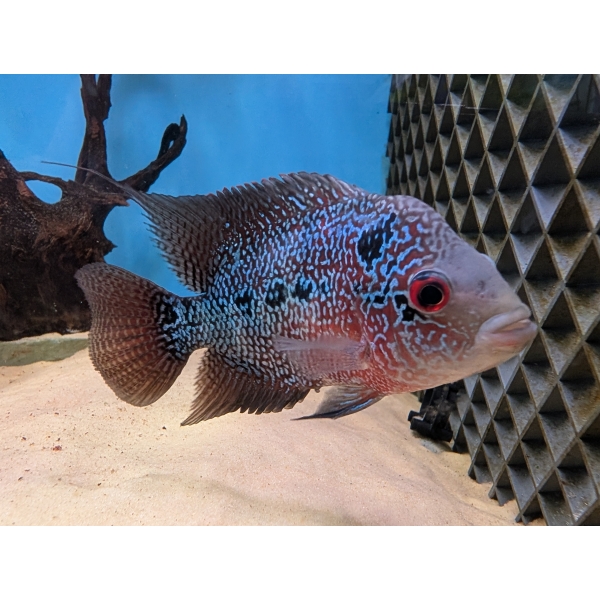
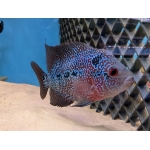
Female Flowerhorn Cichlid
Care Guide
The Flowerhorn Cichlid is a stunning, artificially-bred hybrid fish, primarily developed from Central American species. While males are known for their pronounced nuchal hump (KOK) and extreme aggression, female Flowerhorns are slightly smaller, generally more manageable, and still display the incredible colouration and distinctive markings that make this species so popular among aquarists.
This guide covers the specific requirements and key differences when keeping a female specimen.
Key Characteristics of the Female Flowerhorn
Understanding the traits specific to females is crucial for identification and care:
- Size: Females typically grow smaller than their male counterparts, usually reaching (8-10 inches) in length.
- Nuchal Hump (KOK): Unlike the males, females will have a very small or completely non-existent nuchal hump.
- Identification Markings: The most reliable way to sex a Flowerhorn is by observing the vent (genital opening) or the dorsal fin:
- Dorsal Fin Spots: Females often display a prominent black spot on the margin of the dorsal fin, which is rare in males.
- Breeding Spot: When mature, the female will occasionally display a noticeable black or dark patch on her belly near the vent, especially when preparing to lay eggs.
- Temperament: Although less violently aggressive than males, females are still large, territorial Central American cichlids and are highly assertive.
Aquarium Environment and Setup
Due to their territorial nature and bioload, stability and space are non-negotiable for the Flowerhorn.
Tank Size and Water Parameters
- Minimum Tank Size: A single female requires a minimum of ( UK gallons), though larger is always better for long-term health and stability.
- Tank Layout: The tank should be at least ( feet) in length to allow for turning and swimming space.
- Filtration: Use powerful external canister filters to handle their high bioload and keep the water pristine. Flow should be strong, as they appreciate moderate current.
- Maintenance: Weekly water changes of are essential to keep nitrates low.
| Parameter | Recommended Range |
|---|---|
| Temperature | () |
| pH | (Neutral to Slightly Alkaline) |
| Hardness (GH/KH) | Moderate to Hard () |
Aquascape and Decor
- Substrate: Fine gravel or sand is suitable. Ensure the substrate is clean, as they frequently dig and sift.
- Decor: Provide large, smooth rocks, ceramic pots, or substantial driftwood pieces to create hiding spots and established territory markers. The female will often pick a flat surface (like a large slate or rock) as a spawning site, even without a male present.
- Security: Ensure all rockwork is secure, as they are strong fish and prone to digging, which can cause structures to collapse.
- Plants: Live plants are generally difficult to keep with Flowerhorns, as they will be uprooted or chewed. Hardy species like Anubias or Java Fern tied to decor may survive, but plastic or silk plants are usually the best alternative.
Diet and Feeding
Flowerhorns are primarily carnivorous, and their brilliant colour and growth depend on a high-quality, protein-rich diet.
- Staple Diet: High-quality sinking cichlid pellets specially formulated for large carnivorous species. Look for pellets that contain natural colour enhancers like astaxanthin.
- Protein Sources: Supplement daily with fresh or frozen meaty foods like bloodworms, krill, shelled prawns, or earthworms.
- Vegetable Matter: While primarily carnivores, offering vegetable matter occasionally, such as spirulina pellets or blanched spinach, aids in digestion.
- Feeding Frequency: Feed once or twice daily, only offering an amount they can consume within a minute. Avoid overfeeding, as this rapidly degrades water quality.
Temperament and Compatibility
Female Flowerhorns are slightly less aggressive than males, but they still require careful consideration regarding tank mates.
- Social Nature: Flowerhorns are best kept as solitary specimens. They thrive when they are the sole focus of the tank and will display less stress and more engaging behaviour.
- Tank Mates: If a Flowerhorn is housed in a very large tank ( minimum) with ample line-of-sight defence and hiding spaces, very robust and fast-swimming tank mates may occasionally be considered. These could include:
- Large, fast Catfish (e.g., larger Plecostomus species).
- Other similarly sized, robust Central American cichlids (exercise extreme caution and monitor closely).
- Pairing: Attempting to introduce a male/female pair is highly risky and typically only undertaken by experienced breeders in very large setups, as the male can seriously injure the female if she is not receptive.
Breeding Behaviour (Even without a Male)
Female Flowerhorns will often begin displaying nesting behaviour as they reach maturity:
- Cleaning: They will obsessively clean a flat surface (rock or tank bottom).
- Digging: They will furiously dig pits around their chosen spawning site.
- Egg Laying: They may periodically lay eggs (which will be unfertilised) and guard them aggressively for several days until they go mouldy. Remove unfertilised eggs once they start to degrade to prevent fouling the water.
Convenient nationwide delivery; you’re only a click away!
General Enquiries
There are no enquiries yet.