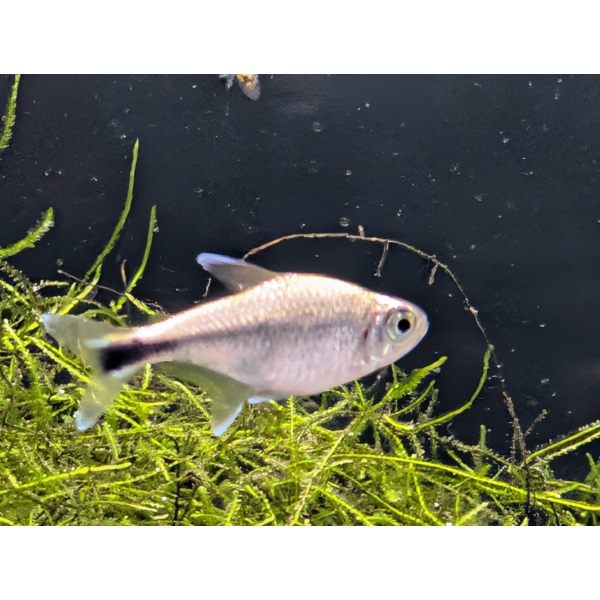

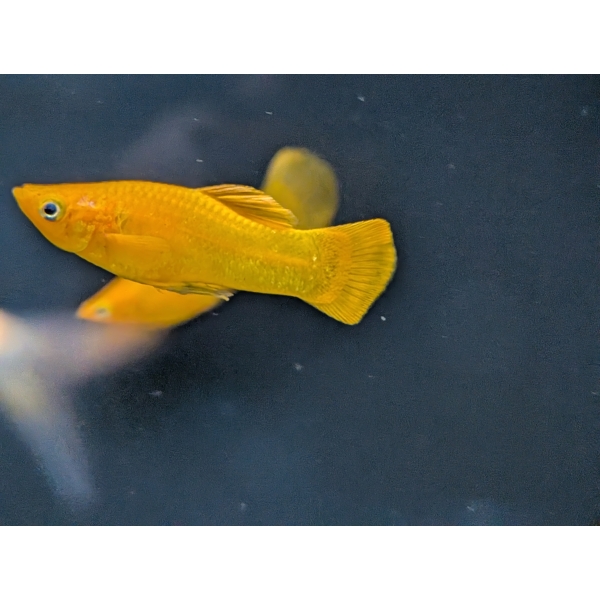
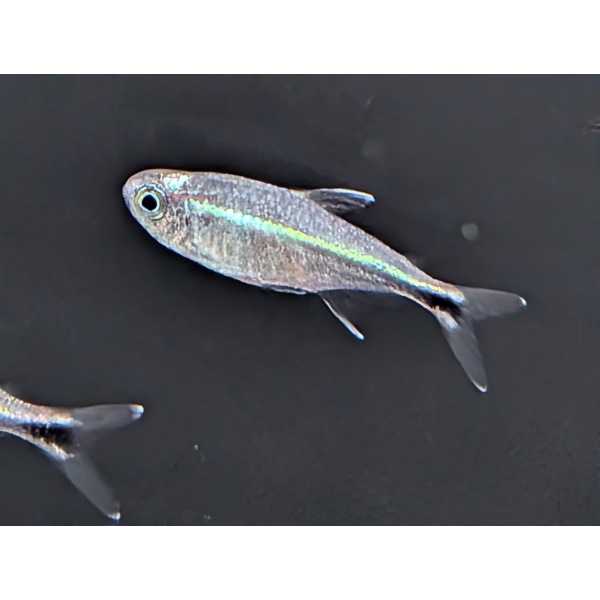
Gold Tetra Hyphessobrycon saizi
£12.00
Gold Tetra Hyphessobrycon saizi
Price is for £12.00 for ALL 5
- Description
- Store Policies
- Enquiries
Description
Species Care Guide: Gold Tetra (Golden Tetra)
Hemigrammus rodwayi (Gold Tetra)
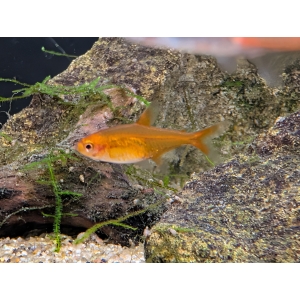
The Gold Tetra (Hemigrammus rodwayi), sometimes referred to as the Golden Tetra, is a highly attractive shoaling characin native to the Amazon river system, specifically the tributaries and floodplains of Guyana and Suriname. They are distinct from the popular Hyphessobrycon species and are prized for the natural, all-over golden or brassy shimmer they exhibit, which can be enhanced by tannins in the water. They are peaceful, hardy, and an excellent choice for a community aquarium that provides slightly soft, mature water.
1. General Characteristics and Sizing
| Characteristic | Detail |
|---|---|
| Common Name | Gold Tetra, Golden Tetra |
| Origin | Guyana, Suriname, Amazon Basin |
| Adult Size | Up to 4.5 cm (approx. 1.8 inches) |
| Temperament | Peaceful and active; excellent shoaling species |
| Lifespan | 4 – 6 years with optimal care |
| Shoal Size | Minimum of 8 individuals, preferably 10 or more, to ensure comfort and vivid colouration. |
| Key Features | All-over gold/brass sheen, faint dark spot behind the gill plate, and a strong dark line running to the caudal fin base. |
2. Aquarium Requirements (Husbandry)
Gold Tetras are flexible fish but will display the best colour when housed in a clean, established tank that mimics their natural, densely vegetated environment.
| Requirement | Recommendation |
|---|---|
| Minimum Volume | 75 Litres (approx. 16 Imperial Gallons) for a good-sized shoal. |
| Filtration | Efficient biological and mechanical filtration is required. They appreciate gentle to moderate water flow, ensuring the water is oxygenated and clean. |
| Lighting | Moderate. Their metallic colouration is enhanced by subdued lighting. Use floating plants (Amazon Frogbit or Red Root Floaters) or tall plants to create shaded areas. |
| Substrate | Fine, dark sand or fine gravel is recommended. A dark substrate is crucial for reducing stress and intensifying the golden sheen. |
| Decoration | Heavily plant the tank perimeter, leaving an open swimming space in the centre. Use driftwood and leaf litter (e.g., catappa leaves) to release beneficial tannins and create hiding spots. |
3. Water Quality and Parameters
The Gold Tetra is more tolerant of neutral conditions than the highly specialized Blue Laser Tetra, but prefers water on the softer, slightly acidic side. Stability is key.
| Parameter | Optimal Range | Notes |
|---|---|---|
| Temperature | 24°C – 27°C (75°F – 81°F) | Stable temperature is essential for active health. |
| pH | 6.0 – 7.2 (Neutral to Slightly Acidic) | They are flexible but thrive best slightly below neutral (6.5). Avoid alkaline water (pH above 7.5). |
| Hardness (dGH) | 5 – 15 dGH (Soft to Medium) | They are more adaptable to medium hardness than blackwater species. |
| Maintenance | Regular weekly water changes (20–25%) are necessary to maintain low nitrate levels. Clean water is vital for preventing disease and stress. |
4. Diet and Nutrition
The Gold Tetra is an opportunistic omnivore, readily accepting a varied diet. Variety is essential for achieving the most vibrant gold colour.
- Staple Diet: High-quality flake or micro-pellets.
- Meaty Foods (Essential): Supplement daily with live or frozen foods, which should be the primary component of their diet. Ideal choices includes brine shrimp, daphnia, and cyclops.
- Vegetable Matter: Ensure a small portion of vegetable matter is included, usually via high-quality flakes with spirulina content.
- Feeding Behaviour: They are active mid-water feeders. Ensure the entire shoal has access to food during feeding time.
5. Compatibility and Behaviour
Gold Tetras are excellent community fish, well-suited to peaceful South American tanks.
- Tank Mates: Excellent companions are other peaceful, similarly sized tetras (like Neon Tetras or Ember Tetras), small Rasboras, gentle dwarf cichlids (Apistogramma species), Corydoras, and Otocinclus catfish.
- Avoid: Large, highly aggressive, or predatory fish.
- Behaviour: They are active and inquisitive, spending their time in the middle levels of the tank. Their gold colour is strongest when they are settled, well-fed, and kept in a large, secure shoal.
Convenient nationwide delivery; you’re only a click away!
Please put your desired delivery day in the Order Notes on the Checkout page.
General Enquiries
There are no enquiries yet.