

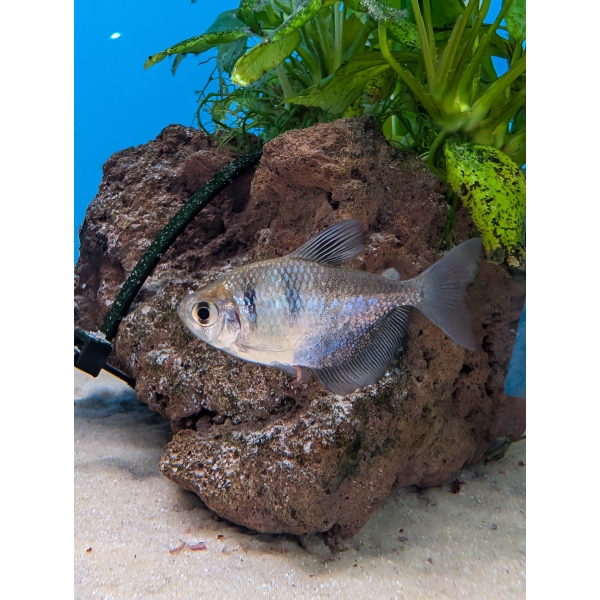

Golden Dwarf Barb (Pethia aurea)
£4.50
Bulk Offer – 6 for £25.00
Discount will apply at checkout.
- Description
- Store Policies
- Enquiries
Description
Golden Dwarf Barb (Pethia aurea)
A Comprehensive Overview
Pethia aurea, commonly known as the Golden Dwarf Barb, is a small and attractive species of freshwater fish belonging to the family Cyprinidae. Native to South Asia, particularly parts of India, this peaceful and active barb is appreciated by aquarists for its subtle golden-yellow colouration, engaging schooling behaviour, and suitability for smaller community aquariums.
Taxonomy and Classification
- Kingdom: Animalia
- Phylum: Chordata
- Class: Actinopterygii
- Order: Cypriniformes
- Family: Cyprinidae
- Genus: Pethia (formerly Puntius)
- Species: Pethia aurea
The Golden Dwarf Barb was historically classified under the genus Puntius, but recent taxonomic revisions have placed it in the genus Pethia. The species name “aurea” is Latin for “golden,” referring to its characteristic colour.
Habitat and Distribution
Pethia aurea is endemic to various freshwater habitats in India, particularly in the states of Kerala and Karnataka. Its natural habitat typically consists of clear, slow-moving streams, rivers, and ponds, often with a substrate of sand, gravel, and abundant leaf litter. These environments are usually well-oxygenated and may have some submerged vegetation. The water parameters are generally soft to moderately hard and slightly acidic to neutral, with temperatures ranging from 20-25°C (68-77°F).
Physical Characteristics
The Golden Dwarf Barb is a small fish, usually reaching an adult size of approximately 3-4 cm (1.2-1.6 inches) in total length. Its most distinctive feature is its golden-yellow body colouration.
Key physical characteristics include:
- Body Shape: Slender and elongated, with a somewhat compressed body, typical of many smaller barb species.
- Colouration: A beautiful, iridescent golden-yellow or brassy-gold body. Males may develop a more intense golden hue, especially during breeding, and sometimes exhibit faint reddish tints on their fins. A small, dark spot may be present on the caudal peduncle (base of the tail).
- Fins: Transparent or lightly tinted, often with a golden or reddish hue.
- Barbels: Possesses a pair of small barbels at the corners of its mouth.
Diet and Feeding
In its natural habitat, Pethia aurea is an omnivore, feeding on small invertebrates, insect larvae, algae, and detritus. In an aquarium setting, they are unfussy eaters and will readily accept a variety of high-quality foods.
Suitable foods include:
- Flake Food & Micro-Pellets: Finely crushed high-quality flake food and micro-pellets should form the staple of their diet.
- Frozen Foods: Frozen baby brine shrimp, daphnia, and bloodworms are excellent protein supplements.
- Live Foods: Live daphnia, microworms, and newly hatched brine shrimp are eagerly accepted and can help enhance their colouration and condition for breeding.
- Vegetables: Occasional spirulina-based foods can also be offered.
A varied diet is crucial for maintaining their vibrant colouration and overall health.
Behaviour and Temperament
The Golden Dwarf Barb is a peaceful, active, and highly social schooling fish. They thrive when kept in groups of at least 8-10 individuals, and ideally more. Keeping them in larger groups encourages their natural shoaling behaviour, reduces stress, and allows them to display their full range of behaviours and most intense colours. They are an excellent choice for nano aquariums and community tanks with other very small, equally peaceful species. They are not typically competitive feeders, so care must be taken to ensure they get enough food when housed with more boisterous tank mates.
Reproduction
Pethia aurea are egg-scatterers and are relatively easy to breed in captivity.
- Spawning: Females scatter small, non-adhesive eggs over fine-leaved plants or a spawning mop, which the male then fertilises. Spawning often occurs in the morning.
- Parental Care: There is no parental care; adults may predate on eggs and fry, so a separate breeding tank with a spawning mop or mesh bottom is recommended for successful rearing.
- Fry Care: Eggs usually hatch within 24-48 hours, and the fry become free-swimming a few days later. The fry are tiny and initially require infusoria or liquid fry food, gradually moving to baby brine shrimp and micro-pellets as they grow.
Conservation Status
The conservation status of Pethia aurea is not extensively evaluated by international bodies like the IUCN. However, like many freshwater species in South Asia, its natural habitats are susceptible to threats such as habitat degradation, pollution, and over-collection. Sustainable collection practices and the development of captive breeding programmes are crucial for its long-term viability in both the wild and the aquarium trade.
Aquarium Care
For aquarists interested in keeping Golden Dwarf Barbs, here are some essential care guidelines:
- Tank Size: A minimum of 40 litres (10 gallons) for a small group (8-10 fish). Larger tanks are always beneficial for stability and to accommodate their active nature.
- Water Parameters:
- Temperature: 20-25°C (68-77°F)
- pH: 6.0-7.5 (slightly acidic to neutral)
- Hardness: 2-15 dGH (soft to moderately hard)
- Filtration: Gentle filtration is crucial; sponge filters or small hang-on-back filters with a low flow rate are ideal. Strong currents should be avoided.
- Decor: Provide plenty of hiding spots in the form of dense planting, driftwood, and rocks. Open swimming areas should also be available. Leaf litter (e.g., Indian almond leaves) can help create a more natural environment and provide beneficial tannins.
- Substrate: Fine gravel or sand is suitable.
- Lighting: Moderate lighting is generally suitable, which can also help bring out their colours.
- Tank Mates: Excellent tank mates include other peaceful, similarly sized community fish such as other nano barbs, tetras (e.g., Ember Tetras, Neon Tetras), rasboras, dwarf cichlids, corydoras, and other peaceful bottom-dwellers. Avoid housing them with large, aggressive, or fin-nipping species.
- Maintenance: Regular weekly water changes (25-30%) are crucial for maintaining pristine water quality, which is vital for their health and vibrant colouration.
By providing a stable, well-maintained environment with appropriate water parameters and a varied diet, the Golden Dwarf Barb can be a beautiful, active, and engaging addition to a freshwater aquarium.
Convenient nationwide delivery; you’re only a click away!
General Enquiries
There are no enquiries yet.

