


Head & Tail Light Tetra
£3.50
Bulk Offer – 6 for £18.00
Discount will apply at checkout.
- Description
- Store Policies
- Enquiries
Description
Head & Tail Light Tetra (Hemigrammus ocellifer)
The Head & Tail Light Tetra, scientifically known as Hemigrammus ocellifer, is a popular and captivating freshwater fish in the aquarium hobby. Renowned for its distinctive iridescent spots, this species adds a subtle yet striking beauty to community tanks.
Origin and Habitat
Native to the slow-moving, blackwater rivers and tributaries of South America, particularly in the Amazon Basin of Peru, Brazil, and Guyana, the Head & Tail Light Tetra thrives in environments rich with submerged vegetation, leaf litter, and roots. These natural habitats typically have soft, acidic water conditions.
Appearance and Characteristics
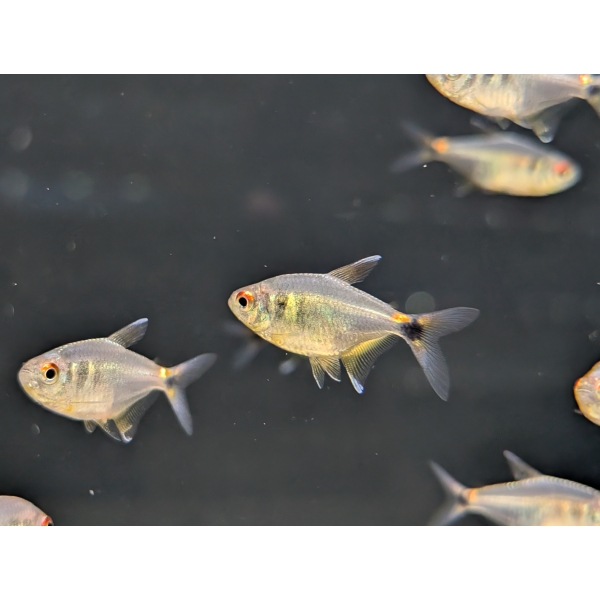
This small, schooling fish typically grows to about 3.8 to 5 cm in length. Its slender, silvery body is adorned with two prominent, reflective spots that give it its common name:
- Head Light: A bright, often reddish or golden, iridescent spot located just behind the gill plate, near the eye.
- Tail Light: A similarly coloured, but usually larger, iridescent spot at the base of the caudal (tail) fin, often accompanied by a dark blotch underneath it.
These “lights” are particularly noticeable under proper lighting, creating a shimmering effect as the fish swim. While generally silver, some individuals may exhibit a faint reddish tint along their flanks, especially when healthy and settled.
Behavior and Temperament
Head & Tail Light Tetras are peaceful, schooling fish that do best in groups of six or more. Keeping them in larger numbers not only makes them feel more secure but also encourages their natural schooling behavior, which is a joy to observe. They are active swimmers and will occupy the middle and upper levels of the aquarium.
Their calm demeanor makes them excellent tank mates for other peaceful, similarly sized fish, such as other small tetras, rasboras, corydoras, and dwarf cichlids. Avoid housing them with aggressive or much larger fish that might intimidate or prey on them.
Aquarium Requirements
To ensure the well-being of Head & Tail Light Tetras, consider the following aquarium parameters:
- Tank Size: A minimum of 10 gallons (38 liters) is recommended for a small school, though larger tanks are always better for stability and more space.
- Water Parameters:
- Temperature: 23-27c
- pH: 5.5-7.0 (slightly acidic to neutral is preferred)
- Hardness: 2-15 dGH (soft to moderately hard)
- Filtration: A good quality filter is essential to maintain clean water. Gentle filtration is preferred as they don’t appreciate strong currents.
- Substrate: Darker substrates can help bring out their colors and reduce stress.
- Lighting: Moderate lighting is ideal.
- Decor: Provide plenty of live plants (e.g., Java Fern, Anubias, Amazon Sword) to offer hiding spots and a sense of security. Driftwood and leaf litter can also mimic their natural habitat and help maintain slightly acidic conditions. Ensure open swimming areas are also available.
Diet
Head & Tail Light Tetras are omnivores and are not particularly picky eaters. A varied diet is crucial for their health and vibrant coloration. Offer a mix of:
- High-quality flake or micro-pellet food as a staple.
- Small live or frozen foods such as bloodworms, daphnia, and brine shrimp as treats.
- Vegetable matter, such as blanched spirulina flakes.
Feed them small amounts multiple times a day rather than one large meal.
Breeding
Breeding Head & Tail Light Tetras in a home aquarium can be challenging but rewarding. They are egg-scatterers and do not exhibit parental care.
- Breeding Tank: A separate breeding tank with soft, acidic water, dim lighting, and fine-leaved plants (like Java Moss) or a spawning mop is recommended.
- Conditioning: Condition a pair or a small group with plenty of live and frozen foods.
- Spawning: Spawning usually occurs in the morning. The female will scatter eggs among the plants, which the male will then fertilize.
- Post-Spawning: Remove the adult fish immediately after spawning, as they will eat the eggs.
- Hatching: Eggs typically hatch within 24-36 hours.
- Fry Care: Feed the fry infusoria or liquid fry food for the first few days, then transition to newly hatched brine shrimp as they grow.
Common Health Issues
Like most aquarium fish, Head & Tail Light Tetras can be susceptible to common freshwater fish diseases if water quality is poor or they are stressed. Maintaining stable water parameters, a balanced diet, and avoiding overcrowding are key to preventing illness.
Conclusion
The Head & Tail Light Tetra is a resilient, beautiful, and peaceful fish that makes an excellent addition to a well-maintained community aquarium. Their schooling behavior and distinctive “lights” provide continuous visual interest, making them a favorite among both beginner and experienced aquarists.
Convenient nationwide delivery; you’re only a click away!
General Enquiries
There are no enquiries yet.