
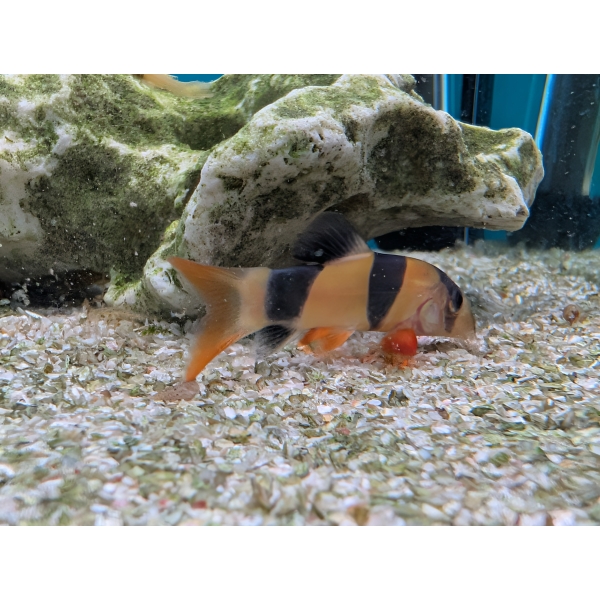

Lambchop Rasbora Trigonostigma espei
£4.00
Bulk Offer – 6 for £22.00
Discount will apply at checkout.
- Description
- Store Policies
- Enquiries
Description
Lambchop Rasbora (Trigonostigma espei)
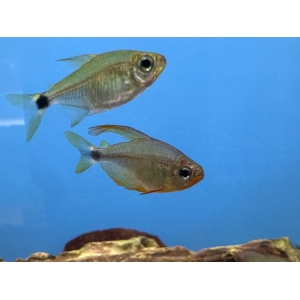
The Lambchop Rasbora, scientifically known as Trigonostigma espei (often confused with Trigonostigma heteromorpha, the Harlequin Rasbora), is a highly popular and attractive freshwater fish in the aquarium hobby. Renowned for its vibrant coppery-orange body and distinctive “lambchop” or “hatchet” shaped black marking, this small, schooling fish brings a lively and colourful presence to any peaceful community aquarium.
Origin and Habitat
Lambchop Rasboras are native to the slow-moving, often blackwater streams, swamps, and peat bogs of Southeast Asia, particularly found in Thailand, Cambodia, and parts of the Malay Peninsula. Their natural habitat is characterised by dense submerged vegetation, roots, and leaf litter, which contribute to the soft, acidic, and often tannin-stained water conditions they prefer. They typically inhabit the mid-water column, schooling among plants.
Appearance and Characteristics
The Lambchop Rasbora typically grows to about 1-1.2 inches (2.5-3 cm) in length, making it a perfect size for smaller community tanks. Its most distinctive features are:
- Body Shape: A slender, somewhat elongated body, slightly compressed laterally.
- Colouration: A beautiful coppery-orange to reddish-orange base colour, which becomes more intense when the fish is healthy and settled.
- Black Marking: A prominent, triangular or “lambchop”-shaped black marking on its flank, which is narrower and more elongated towards the tail compared to the broader triangle of the Harlequin Rasbora. This distinct marking is what gives it its common name.
- Fins: Fins are typically clear or faintly tinted with the body colour.
The vibrant colouration and unique marking make them stand out, especially when observed in a school.
Behaviour and Temperament
Lambchop Rasboras are peaceful and highly social schooling fish. Keeping them in a group of at least eight to ten individuals is crucial for their well-being. This promotes their natural schooling behaviour, reduces stress, and allows them to display their most vibrant colours and interactions. When kept alone or in too small a group, they can become shy, stressed, and prone to illness.
They are active mid-water swimmers and will spend most of their time hovering and moving together in a tight school among plants. Their calm demeanour makes them excellent tank mates for other peaceful, similarly sized community fish that prefer soft, acidic water conditions. Suitable companions include various other small tetras (e.g., Neon Tetras, Cardinal Tetras), other Rasboras (e.g., Harlequin Rasboras, Chili Rasboras), Corydoras catfish, Otocinclus catfish, and dwarf cichlids (e.g., German Blue Rams). Avoid housing them with large, aggressive, or fin-nipping fish that might intimidate or prey on them.
Aquarium Requirements
To ensure the health and vibrant display of Lambchop Rasboras, specific aquarium conditions are essential, closely mimicking their natural blackwater habitats:
- Tank Size: A minimum of 45 litres is recommended for a small school. However, larger tanks (60 litres or more) are highly preferred for a thriving group, as this provides more stable water parameters and ample schooling space.
- Water Parameters:
- Temperature: 25-28°C (75-82°F) – consistent, warm temperatures are vital.
- pH: 6.0-6.8 (acidic to neutral is preferred; they thrive in slightly acidic conditions).
- Hardness: 2-10 dGH (soft water is crucial for their long-term health and colouration).
- Filtration: A good quality filter is essential to maintain pristine water quality. Gentle filtration is crucial, as they do not appreciate strong currents. Sponge filters or baffled hang-on-back filters are excellent choices.
- Substrate: A fine, dark substrate like sand or fine gravel is ideal. Darker substrates help to enhance their colours and reduce stress.
- Lighting: Dim to moderate lighting is preferred. Bright lighting can make them feel exposed and dull their colours.
- Decor: Provide plenty of live plants (e.g., Java Fern, Anubias, Amazon Sword, stem plants, floating plants) to offer hiding spots, a sense of security, and break up lines of sight. Driftwood and leaf litter (e.g., Indian Almond leaves) are highly recommended as they release tannins, mimicking their natural blackwater environment, lowering pH, and providing beneficial antibacterial properties. Ensure open swimming areas are also available in the mid-water column for their schooling behaviour.
Diet
Lambchop Rasboras are omnivores, primarily feeding on small invertebrates and zooplankton in the wild. A varied and balanced diet is crucial for their health and to maintain their vibrant colours.
- Primary Diet: High-quality flake or micro-pellet food as a staple, specifically formulated for small tropical fish.
- Supplements: Offer small live or frozen foods such as bloodworms, daphnia, brine shrimp, and micro-worms as treats. These are excellent for conditioning and enhancing colour.
- Vegetable Matter: Blanched spirulina flakes or very finely crushed vegetable flakes can be offered occasionally.
Feed them small amounts two to three times a day, ensuring all food is consumed within a few minutes.
Breeding
Breeding Lambchop Rasboras in a home aquarium is challenging but possible. They are egg-layers and typically scatter their eggs on the underside of broad-leaved plants. They do not exhibit parental care.
- Breeding Tank: A separate, small breeding tank (20-30 litres) with very soft (0-2 dGH), acidic (pH 5.0-6.0) water, dim lighting, and broad-leaved plants (e.g., Cryptocoryne, Anubias) or a spawning mop is essential. The water must be extremely clean.
- Conditioning: Condition a healthy pair or a small group (e.g., two males to one female) with plenty of high-protein live and frozen foods.
- Spawning: Spawning usually occurs in the morning, with the fish scattering tiny, clear eggs on the underside of leaves.
- Post-Spawning: Remove the adult fish immediately after spawning, as they will eat the eggs.
- Hatching: Eggs are light-sensitive and typically hatch within 24-36 hours. Keep the tank dark during this period.
- Fry Care: The fry are tiny and require microscopic food initially, such as infusoria or specialised liquid fry food. After a few days, they can transition to newly hatched brine shrimp and finely crushed flake food as they grow.
Common Health Issues
Lambchop Rasboras are generally hardy once established but can be susceptible to common freshwater fish diseases, particularly Ich (white spot disease), especially when stressed or introduced to new environments with unstable water parameters. Maintaining pristine water quality, stable parameters, a balanced diet, and a stress-free environment are key to preventing illness.
Conclusion
The Lambchop Rasbora is an undeniably beautiful, peaceful, and active fish that can bring immense joy and a vibrant visual spectacle to an aquarist. Its unique marking and schooling behaviour make it a delightful addition to a well-planted, blackwater-style aquarium. With proper care, attention to its specific needs, and a suitable environment, Lambchop Rasboras can thrive and become a cherished and fascinating inhabitant of your aquatic world.
Convenient nationwide delivery; you’re only a click away!
General Enquiries
There are no enquiries yet.