


Madagascan Rainbowfish
£14.00
Madagascan Rainbowfish
Bulk Offer – 3 for £22.50
Discount will apply at checkout.
- Description
- Store Policies
- Enquiries
Description
Species Profile: Madagascan Rainbowfish
Bedotia madagascarensis
Overview and Conservation
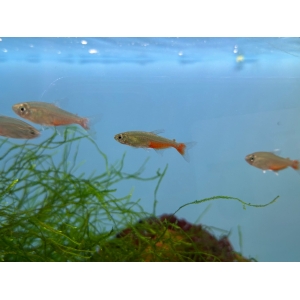
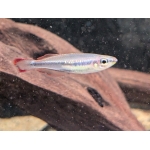
Bedotia madagascarensis is one of the foundational species of Madagascan Rainbowfish encountered in the aquarium hobby. Endemic to the island nation of Madagascar, this fish originates from the eastern part of the island.
While relatively common in the trade, wild populations are under severe threat due to rapid deforestation, habitat degradation, and competition from introduced invasive species like the African Tilapia. Consequently, responsible sourcing and captive breeding are vital for their preservation.
Key Characteristics and Appearance
Origin and Habitat
- Origin: Eastern drainages of Madagascar, specifically in the Fénérive Est and Maroansetra areas.
- Habitat: They thrive in clear, slow-moving coastal streams, rivers, and tributaries, often preferring areas with heavy shading from marginal vegetation and a substrate of sand or mud. They are typically found in the upper water columns.
Appearance
- Size: Adults usually grow to a maximum of 8-9 cm (3.1-3.5 inches).
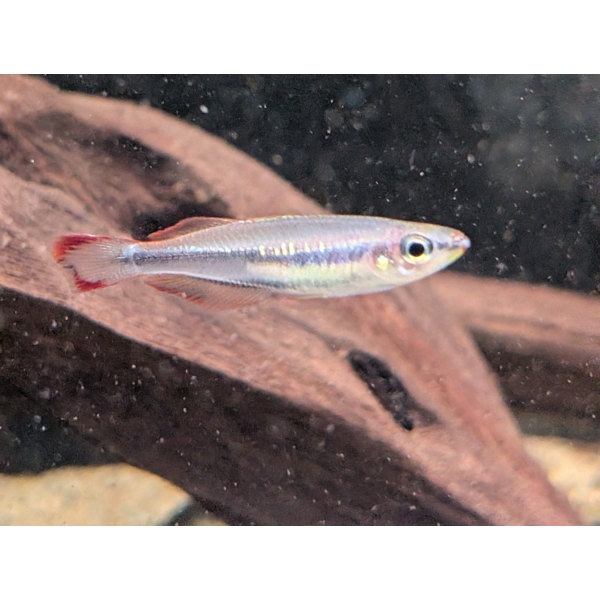
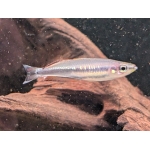
- Body Shape: Classic rainbowfish shape—elongated, torpedo-like, and laterally compressed, designed for active swimming.
- Colouration:
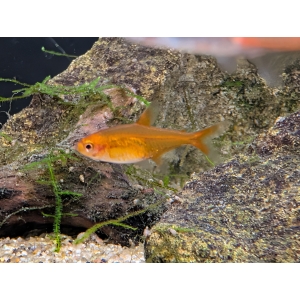
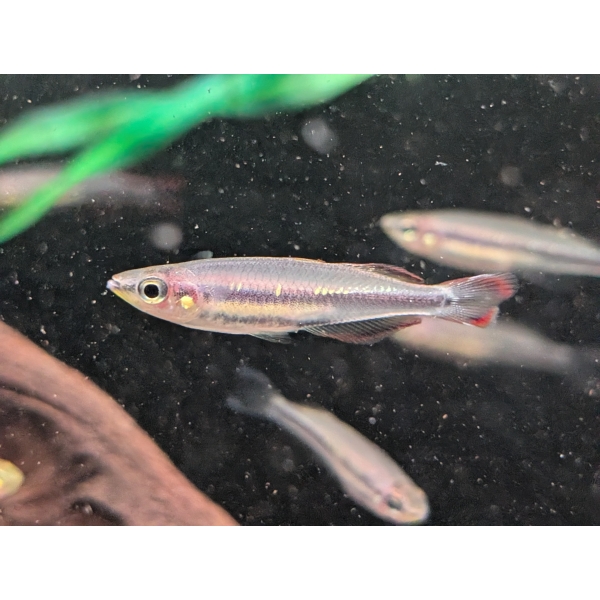
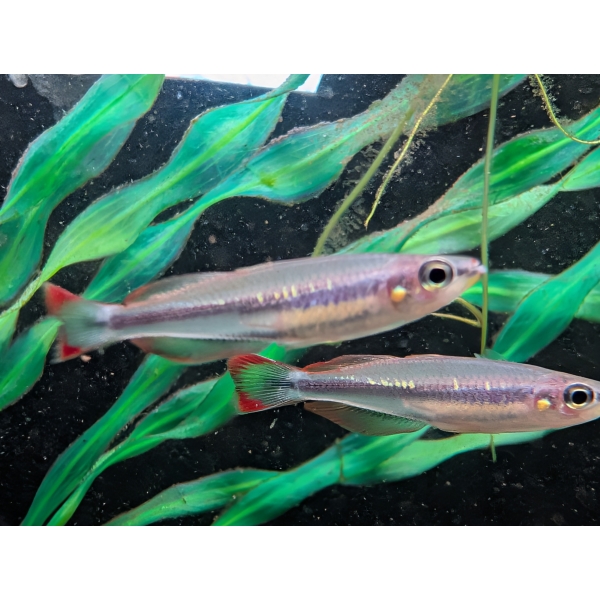
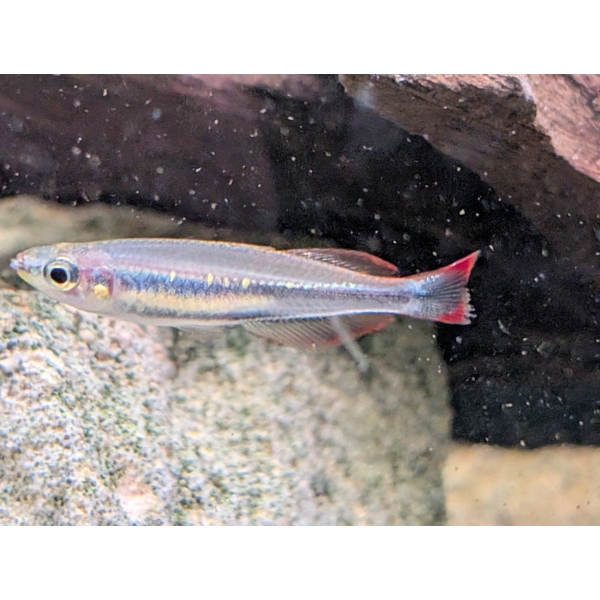
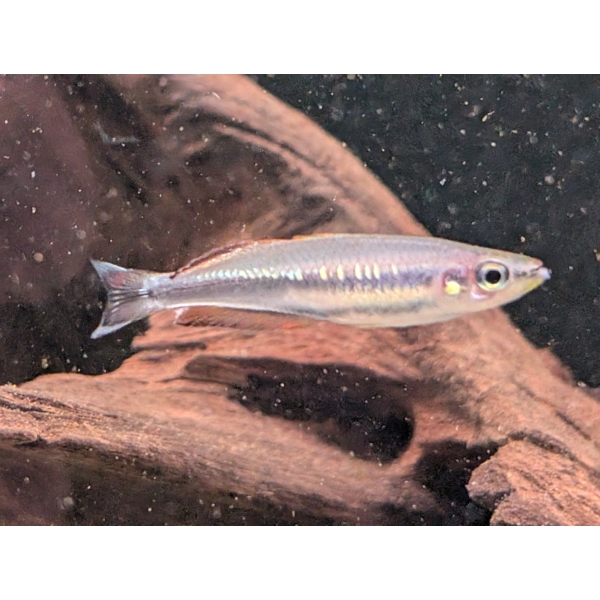
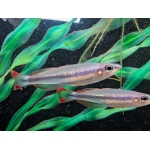
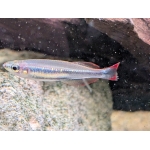
- Body: The base colour is a translucent, silvery-gold to olive tone with a strong iridescence that catches the light beautifully.
- Markings: The most defining feature is a series of dark, often incomplete lateral lines or zig-zag stripes running from the gill cover to the base of the caudal fin.
- Fins: The dorsal, anal, and caudal fins are often translucent with subtle yellow, pink, or orange pigments, especially when the fish is displaying.
- Sexual Dimorphism:
- Males: More brightly coloured with noticeably elongated, pointed dorsal and anal fins. They are also generally more slender.
- Females: Plumper, less colourful, and have rounder fins.
Aquarium Requirements and Water Parameters
Maintaining pristine water quality is crucial for the health and vibrancy of Bedotia madagascarensis.
Tank Size
- Minimum: Due to their active nature as shoaling fish, a minimum tank size of 100 litres (approx. 22 UK Gallons) is essential. A 90 cm (3 ft) tank length provides sufficient swimming lanes.
Water Chemistry (Soft and Neutral)
- Temperature: 22C – 26C (72 – 79F).
- pH: 6.5 – 7.5. While hardy, extreme alkalinity should be avoided.
- Hardness: Soft to moderately hard water (gH: 5-15).
- Maintenance: They are sensitive to ammonia and nitrates. Regular, small water changes (at least 25% weekly) are mandatory.
Decor and Environment
- Planting: The tank should be densely planted, particularly at the back and sides, to mimic their naturally shaded habitat and provide safe havens. Cryptocorynes, Java Fern, and floating plants are excellent choices.
- Swimming Space: Leave a large, open area in the centre of the aquarium for active swimming and shoaling.
- Substrate and Wood: A dark substrate is recommended to minimise reflected light and encourage the best colour display. Driftwood and Catappa (Indian almond) leaves can be added to release beneficial tannins and buffer the water slightly.
- Filtration: Strong filtration is required to maintain clarity, but the flow should be gentle to moderate, mimicking a slow-moving stream.
Diet and Nutrition (Omnivore)
Bedotia madagascarensis are opportunistic omnivores. A varied, high-quality diet is necessary to maintain their immune system and display colours.
Food Requirements
- Staple: High-quality, colour-enhancing flake or small pellet food should make up the majority of the diet.
- Live/Frozen Supplements: These are crucial for conditioning and should be offered several times a week.
- Recommended: Brine shrimp, Daphnia, white worms, and chopped earthworms.
- Vegetable Content: They will also graze on algae and accept blanched greens like spinach, kale, and shelled peas.
Feeding Regime
Feed two to three times daily, only offering an amount they can consume within three minutes to avoid water fouling.
Social Behaviour and Compatibility
This species is highly social, peaceful, and ideally suited for large, established community tanks.
Shoaling Behaviour
- Mandatory Group Size: As quintessential shoaling fish, B. madagascarensis must be kept in groups of at least 6-8 individuals. Keeping smaller numbers leads to stress, shyness, and a noticeable lack of colour display.
- Male Rivalry: The presence of multiple males in a group encourages natural, non-harmful sparring displays, which results in the best colouration and healthiest social dynamic.
Compatibility
- Ideal Tank Mates: They mix excellently with most other peaceful species that share similar water requirements.
- Suitable companions include small characins (Tetras), peaceful Rasboras, Corydoras catfish, dwarf cichlids (Apistogramma), and most other non-aggressive rainbowfish species.
- Caution: Avoid placing them with overly boisterous, aggressive, or large predatory fish. They are also unsuitable for nano tanks due to their activity level.
Breeding
Bedotia madagascarensis are relatively easy to breed and are prolific, continuous egg-scatterers.
- Spawning: Spawning typically occurs in the early morning. Females scatter small, non-adhesive eggs among fine-leaved plants (such as Java moss, Myriophyllum, or synthetic spawning mops).
- Conditioning: A diet rich in live and frozen foods and a slight increase in temperature ($26^{\circ}\text{C}$) can induce spawning.
- Rearing: Parents will predate on their eggs and fry. If breeding is the goal, either remove the adults after spawning or move the spawning medium to a separate rearing tank. Fry are tiny and require initial feeds of infusoria, moving quickly onto microworms and then powdered dry foods.
Convenient nationwide delivery; you’re only a click away!
Our nationwide delivery service makes it easy to receive your fish directly at your door, anywhere in the UK, for a flat rate of just £30. This convenient service allows you to order up to 10kg of fish, with the assurance that they will arrive in excellent condition. To make the fishes journey as comfortable as possible we use Oxygen in the fish bags and heat packs in all the boxes of fish we send out.
Please put your desired delivery day in the Order Notes on the Checkout page.
General Enquiries
There are no enquiries yet.