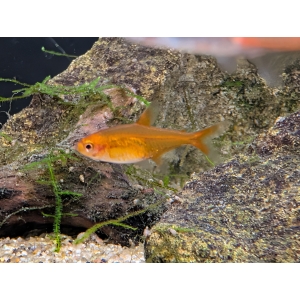

Moth Catfish (E.hara)
£14.00
Bulk Offer – 3 for £39.00
Discount will apply at checkout.
- Description
- Store Policies
- Enquiries
Description
Moth Catfish (Hara jerdoni)
The Moth Catfish, scientifically known as Hara jerdoni, is a small, peaceful species of catfish originating from slow-moving streams and rivers in South Asia, including India and Bangladesh. Its common name comes from its unique, flattened appearance and large pectoral fins, which give it a distinct moth-like look when it’s at rest. A fantastic addition to a nano or community tank, this shy and nocturnal fish is a true delight to observe.
Key Facts
- Scientific Name: Hara jerdoni
- Common Names: Moth Catfish, Asian Stone Catfish
- Origin: South Asia (India, Bangladesh)
- Size: Up to 4 cm (1.5 inches)
- Temperament: Extremely peaceful
- Lifespan: 3–5 years
- Diet: Omnivore
- Water Temperature: 22–26°C (72–79°F)
- pH Range: 6.0–7.5
- Hardness: Soft to moderately hard (2–15 dGH)
Housing Requirements
Due to its small size, the Moth Catfish is suitable for smaller aquariums. A tank of at least 30 litres (approx. 8 gallons) is sufficient for a small group. However, a larger tank is always better for providing more stable water parameters.
- Substrate: A soft, fine sand substrate is ideal. The fish will spend most of its time foraging for food and resting on the bottom, and sharp gravel can damage its delicate barbels.
- Decor: This species is shy and requires plenty of hiding places. Provide lots of driftwood, smooth rocks arranged to form small caves, and live plants. They will often wedge themselves into crevices during the day, so ensure there are numerous secure spots for them to retreat to.
- Water Flow: A gentle to moderate water flow is recommended, mimicking its natural habitat.
- Lighting: Dim lighting is best. If your tank has bright lights, consider using floating plants to help diffuse the light and make the fish feel more secure.
Diet and Feeding
The Moth Catfish is an omnivorous bottom-feeder. They are not fast eaters, so it’s important to ensure they get enough food.
- Foods: Offer a varied diet of sinking pellets, small granules, and a mix of frozen or live foods such as bloodworms, daphnia, and brine shrimp.
- Feeding Schedule: They are nocturnal, so it is best to feed them after the aquarium lights have been turned off. This ensures the food reaches the bottom and is not eaten by faster, mid-water fish.
Temperament and Tank Mates
Moth Catfish are incredibly peaceful and will not bother any other inhabitants. They are a schooling species and should be kept in groups of at least 3–5 individuals. This will encourage them to be more active and confident.
Suitable tank mates include:
- Small, peaceful tetras (e.g., Neon, Ember, Cardinal)
- Dwarf Rasboras
- Corydoras catfish (of a similar size)
- Peaceful Dwarf Cichlids
- Other small, non-aggressive species
Avoid keeping them with:
- Large, predatory, or overly aggressive fish that may bully or prey on them.
- Fast, competitive eaters that will snatch all the food before it reaches the bottom.
Breeding
Breeding the Moth Catfish in a home aquarium has been reported but is not common. It is thought to involve a change in water parameters, possibly mimicking a rainy season, to trigger spawning. The fish are egg scatterers, and the parents may eat the eggs. A separate breeding tank with a suitable medium for the eggs to attach to would be required.
Summary
The Moth Catfish is a charming and unique little fish that thrives in a peaceful, well-planted aquarium with a soft substrate and plenty of hiding spots. Keeping them in a small group and feeding them after dark will ensure they feel secure and can be observed at their best.
Convenient nationwide delivery; you’re only a click away!
General Enquiries
There are no enquiries yet.