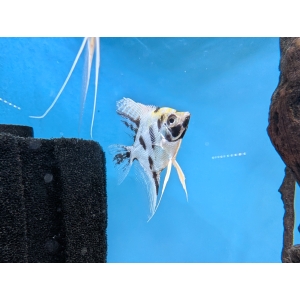


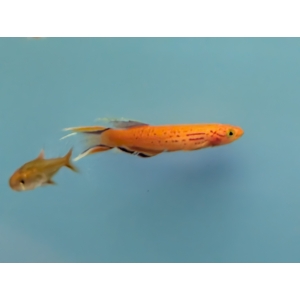
Panda Angelfish Pterophyllum scalare var. ‘Panda’
£12.00
Panda Angelfish
Bulk Offer – 3 for £33.00
Discount will apply at checkout.
- Description
- Store Policies
- Enquiries
Description
Panda Angelfish (Pterophyllum scalare var. ‘Panda’):
Care Guide:
The Panda Angelfish is a highly popular, selectively bred colour variant of the classic freshwater Angelfish. Characterised by its striking, high-contrast patches of jet-black and creamy-white patterning, this elegant cichlid adds a dramatic visual element to large, mature planted aquaria.
Species Overview
-
- Scientific Name: Pterophyllum scalare (var. ‘Panda’)
- Common Name: Panda Angelfish, Black and White Angelfish
- Family: Cichlidae
- Origin: Captive-bred variant (Wild ancestors originate from the Amazon River basin)
- Adult Size: 15 cm (approx. 6 inches) long, reaching up to 20 cm (approx. 8 inches) in height including fins
- Lifespan: 8 to 12 years
- Diet: Omnivore
Tank Setup and Parameters
Panda Angelfish require spacious accommodation due to their tall, lateral body shape and long, trailing fins. They thrive in stable water conditions with minimal fluctuations.
Water Conditions
-
- Temperature: 24°C to 28°C
- pH Range: 6.0 to 7.4
- Water Hardness: 2 to 12 dGH
Aquarium Requirements
-
- Minimum Tank Size: 110 litres (approximately 30 gallons) for a single individual or a confirmed pair. A minimum of 200 litres (approximately 55 gallons) is required for a small group.
- Tank Height: A tall aquarium (minimum 50 cm high) is critical to prevent their long vertical fins from dragging on the substrate or cramping.
- Filter Flow: Gentle to moderate water movement. Strong, turbulent currents will buffet the fish and cause unnecessary stress.
- Aquascaping: Utilise tall, broad-leaved plants like Amazon Swords (Echinodorus), tall Vallisneria, and smooth vertical driftwood roots. This mimics their natural river reed environment and provides security.
Diet and Feeding
Panda Angelfish are opportunistic feeders with a hearty appetite. Providing a high-quality, varied diet ensures excellent growth and vibrant health.
-
- Base Diet: High-quality slow-sinking cichlid pellets, flakes, and freeze-dried foods.
- Live and Frozen Foods: Bloodworms, brine shrimp, daphnia, and Mysis shrimp.
- Vegetable Matter: Occasional spirulina-enriched flakes or blanched spinach to aid digestion.
- Feeding Frequency: Feed young fish two to three times daily. Adult angelfish should be fed once or twice daily.
Behaviour and Compatibility
While peaceful when young, Panda Angelfish are true cichlids. They establish a strict pecking order and can become territorial, particularly during spawning cycles.
-
- Schooling Numbers: It is best to keep them singly, as a confirmed male-female pair, or in a larger group of 5 or more individuals to distribute internal aggression. Avoid keeping them in groups of three or four, as weaker individuals will be bullied.
- Ideal Tankmates: Medium-sized, peaceful community fish. Good choices include Corydoras catfish, larger tetras (such as Bleeding Heart, Lemon, or Diamond Tetras), rasboras, and peaceful dwarf cichlids.
- Incompatible Tankmates:
-
- Avoid fast, notorious fin-nippers like Tiger Barbs or Buenos Aires Tetras, which will shred the angelfish’s trailing fins.
- Avoid very small neon tetras or micro-fishes, as adult angelfish will naturally view them as a food source.
-
Sexual Dimorphism and Breeding
-
- Males: Marginally larger with a steeper, more pronounced forehead (sometimes developing a small nuchal hump). Their breeding tube (papilla) is pointed and narrow.
- Females: Rounder body shape. Their breeding tube is broader, blunt, and rounded when they are ready to lay eggs.
Breeding Summary
Panda Angelfish are excellent parents and breed readily in the home aquarium once a compatible pair forms.
- Setup: Provide a dedicated breeding tank with soft, slightly acidic water and flat vertical surfaces, such as a slate tile, ceramic cone, or broad plant leaves.
- Method: They are substrate spawners. The pair will meticulously clean the chosen site before the female deposits rows of adhesive eggs, which the male then fertilises.
- Parental Care: Both parents will aggressively guard the eggs, fanning them with their pectoral fins to keep them clean. The eggs hatch in 2 to 3 days, and the parents will move the “wigglers” to a new location.
- Rearing: Once the fry are free-swimming (usually 5 to 7 days later), they must be fed freshly hatched baby brine shrimp (Artemia nauplii) or specialized liquid fry foods.
Convenient nationwide delivery; you’re only a click away!
Our nationwide delivery service makes it easy to receive your fish directly at your door, anywhere in the UK, for a flat rate of just £30. This convenient service allows you to order up to 10kg of fish, with the assurance that they will arrive in excellent condition. To make the fishes journey as comfortable as possible we use Oxygen in the fish bags and heat packs in all the boxes of fish we send out.
For your peace of mind we enclose a slip which will explain what to do in the event of a fish not traveling too well.
We use a licensed courier to deliver your fish directly to you door and will be with you by 1pm the next day.
Our delivery days are as follows:
Tuesday for Wednesday delivery
Wednesday for Thursday delivery
Thursday for Friday delivery
Please put your desired delivery day in the Order Notes on the Checkout page.
General Enquiries
There are no enquiries yet.