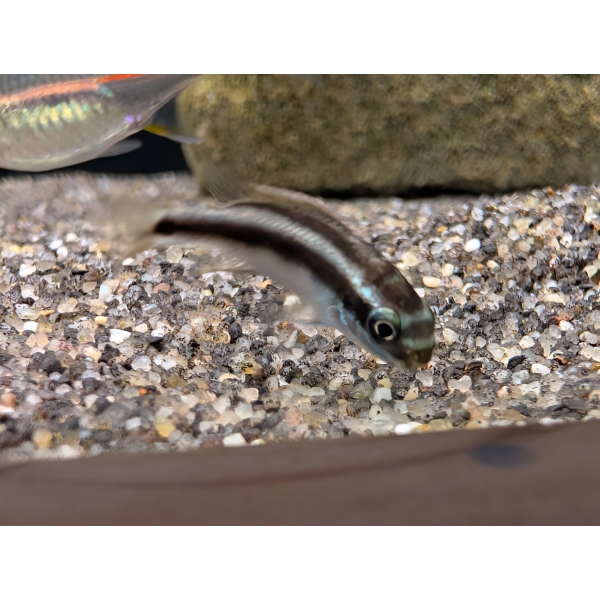


Pelvicachromis Sacrimontis F1
£6.50
Bulk Offer – 3 for £16 .50
Discount will apply at checkout.
Pelvicachromis Sacrimontis F1
- Description
- Store Policies
- Enquiries
Description
Pelvicachromis sacrimontis
Species Profile:
This document provides a comprehensive guide to the identification, care, and natural history of Pelvicachromis sacrimontis, a vibrant species of dwarf cichlid from West Africa.
1. Introduction
Pelvicachromis sacrimontis is a striking member of the cichlid family, closely related to the more common Kribensis (Pelvicachromis pulcher). Historically, it was often confused with P. pulcher or categorised as a subspecies, but it was elevated to distinct species status in the past few decades.
Sometimes referred to in the trade as the “Giant Krib” (owing to its robust build rather than significantly larger length) or by morph-specific names referencing their intense red colouration, this species is highly sought after by enthusiasts. They are appreciated for their brilliant colours, fascinating pair-bonding behaviour, and relative suitability for planted community aquariums.
2. Natural Habitat and Distribution
-
Geography: The species is native to West Africa, with its primary distribution centered in Southeastern Nigeria.
-
Environment: P. sacrimontis inhabits slow-moving forest streams and rivers, often found in areas with shallow water. The riverbeds in these regions are typically covered with fine sand or mud, overlaid with a significant layer of fallen leaf litter and submerged wood.
-
Water Conditions: The water in their natural habitat is usually soft, acidic, and often stained tea-coloured by tannins released from decaying organic matter.
3. Appearance and Identification
Pelvicachromis sacrimontis is a robust dwarf cichlid. Mature adults typically reach between 8 cm and 10 cm (3 to 4 inches), with males generally being larger than females.
A key characteristic differentiating them from P. pulcher is often a more intense, solid patch of red on the belly, and a darker, more defined band running along the lateral line.
Sexual Dimorphism (Differences between sexes):
-
Males: Males grow larger and possess a more elongated body shape. Their dorsal and anal fins develop pointed, trailing extensions, and the caudal (tail) fin is typically spade-shaped, often featuring distinct spots on the upper lobe.
-
Females: Females are smaller with a noticeably rounder, plumper body, especially when gravid (carrying eggs). Their fins are rounded. When in breeding condition, females display an incredibly intense, almost glowing, cherry-red belly, which is usually more pronounced than in the male.
4. Aquarium Care
Providing an environment that mimics their natural forested habitat will ensure the best colouration and natural behaviour.
-
Tank Size: While they are dwarf cichlids, they are active and territorial when breeding. A minimum aquarium length of 80 cm (approximately 100–120 litres) is recommended for a single established pair.
-
Substrate and Décor: A fine sand substrate is essential, as these fish enjoy sifting through the bottom looking for food and will dig pits when spawning. The aquarium must be provided with numerous caves to serve as potential spawning sites; overturned terracotta pots, coconut shells, or structures formed from bogwood and slate are ideal.
-
Planting: Dense planting is highly recommended. It provides security, breaks lines of sight to reduce aggression, and mimics their natural environment. Robust plants like Anubias, Java Fern (Microsorum pteropus), and Cryptocoryne species work well.
-
Filtration: Good water quality is paramount, but flow should be moderate rather than torrential.
5. Water Parameters
While captive-bred specimens are somewhat adaptable, wild-caught individuals require conditions resembling their natural habitat.
-
Temperature: 24°C – 27°C
-
pH: 6.0 – 7.0 (Slightly acidic to neutral is ideal. They may tolerate up to 7.5, but breeding is less likely).
-
Hardness: Soft to moderately hard water (1 – 12 dGH).
6. Diet and Feeding
In the wild, they are omnivorous detritivores, feeding on algae, organic debris, and small benthic invertebrates found in the substrate.
In the aquarium, they are unfussy feeders. A staple diet of high-quality sinking Cichlid pellets or flakes should be supplemented regularly with live and frozen foods. Offerings of frozen bloodworm, Daphnia, and brine shrimp (Artemia) are essential for bringing fish into breeding condition and enhancing their red colouration.
7. Behaviour and Compatibility
-
Temperament: Outside of breeding periods, P. sacrimontis is relatively peaceful and can be kept in a community of appropriately sized fish. However, during spawning, they become vigorously territorial and will defend the area around their chosen cave aggressively.
-
Social Structure: They are best kept as bonded pairs. Buying a group of juveniles and allowing them to pair off naturally is the most reliable method.
-
Tank Mates: Ideal tank mates are species that inhabit the middle and upper water layers, acting as “dither fish” to encourage the cichlids out of hiding. Good choices include medium-sized tetras (e.g., Congo Tetras), rasboras, and hatchetfish.
-
Caution: Care must be taken with other bottom dwellers like Corydoras catfish; in smaller tanks, a breeding pair of P. sacrimontis may harass them relentlessly. Avoid keeping them with other Pelvicachromis species to prevent hybridisation and intense territorial battles.
8. Breeding
Pelvicachromis sacrimontis are secretive cave spawners that exhibit excellent biparental care.
-
The Process: The female initiates courtship, displaying her intense red belly to the male and luring him towards a chosen cave. Eggs are usually laid on the roof or side of the cave interior.
-
Brood Care: Once spawned, the female typically remains inside the cave guarding the eggs and fanning them with fresh water, while the male patrols the territory outside fiercely. The eggs hatch in 2–3 days, and the fry become free-swimming roughly a week later.
-
Raising Fry: Once free-swimming, both parents will guide the shoal of fry around the tank to forage, protecting them from other fish. The fry are relatively large and can immediately eat microworms or newly hatched brine shrimp nauplii.
9. Conclusion
Pelvicachromis sacrimontis is a rewarding species for the intermediate aquarist. Their robust nature, stunning breeding dress, and engaging parental behaviours make them a standout choice for a well-structured, planted West African biotope aquarium.
Convenient nationwide delivery; you’re only a click away!
Please put your desired delivery day in the Order Notes on the Checkout page.
General Enquiries
There are no enquiries yet.