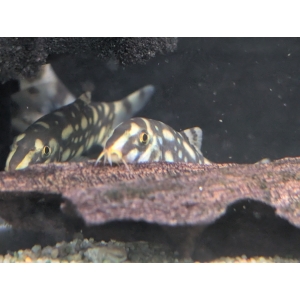
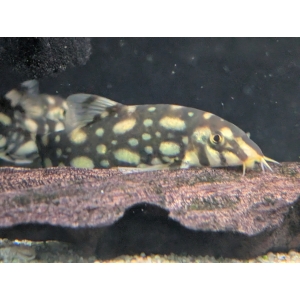
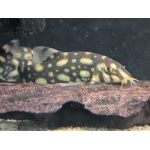

Polka Dot Loach (Botia kubotai)
£14.00
Polka Dot Loach
Bulk Offer – 3 for £39.00
Discount will apply at checkout.
- Description
- Store Policies
- Enquiries
Description
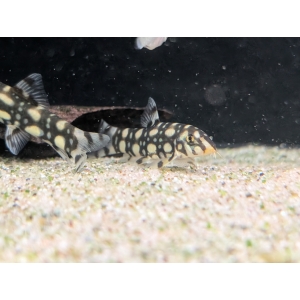
Polka Dot Loach (Botia kubotai)
Care Guide:
The Polka Dot Loach (Botia kubotai), also frequently known as the Angelicus Loach, Marble Loach, or Burmese Border Loach, is a highly attractive and energetic freshwater fish. Discovered relatively recently in the Salween River basin along the border of Myanmar (Burma) and Thailand, this species has become immensely popular in the fishkeeping hobby due to its striking patterns and playful demeanour.
Species Overview
| Common Name | Polka Dot Loach, Angelicus Loach, Burmese Border Loach |
| Scientific Name | Botia kubotai |
| Family | Botiidae |
| Origin | Myanmar and Thailand (Salween River basin) |
| Adult Size | 10 to 13 cm (4 to 5 inches) |
| Lifespan | 8 to 12 years with optimal care |
| Minimum Tank Size | 120 litres (approx. 30 gallons) for a small group |
Appearance and Colouration
The Polka Dot Loach possesses an elongated, streamline body shape typical of the Botia genus, complete with a downward-facing mouth surrounded by active sensory barbels.
Their colour pattern is both distinctive and dynamic. Juvenile fish display a high-contrast black-and-yellow or black-and-white chain-like pattern. As the fish matures, this pattern changes subtly; the dark areas expand, and the lighter patches break apart into smaller, intricate internal spots, creating a beautiful “polka dot” or marbled effect.
Because their markings are highly individual, no two specimens look exactly alike.
Aquarium Setup and Habitat
In the wild, Botia kubotai inhabits clear, fast-flowing forest streams and rivers. Replicating these conditions is key to ensuring their long-term health.
Substrate and Structure
-
Substrate: A soft, fine sand or very smooth, rounded gravel is absolutely essential. These loaches actively sift through the substrate and dig with their delicate sensory barbels, which can easily be cut or eroded by sharp-edged materials.
-
Hiding Places: This species requires an abundance of caves, crevices, and hiding spots. Use smooth river stones, bogwood, slate, and terracotta piping to create a labyrinth of structures where they can retreat to rest or shelter.
-
Plants: Hardy plants such as Anubias, Java Fern, and Cryptocoryne species can be used. Be sure to anchor them securely to wood or rocks, as these loaches may uproot loose plants during their energetic foraging.
Water Movement and Filtration
-
Flow: They thrive in well-oxygenated water with a moderate-to-high current. The addition of an extra powerhead or an efficient spray bar attached to an external canister filter will simulate their natural stream environment.
-
Security: A tight-fitting aquarium lid is mandatory. Polka Dot Loaches are notorious escape artists and can easily squeeze through incredibly small gaps in hood fittings or filter inlets.
Water Parameters
Like most scaleless or small-scaled fish, the Polka Dot Loach is sensitive to poor water quality and sudden chemistry fluctuations.
-
Temperature: 23°C to 28°C (73°F to 82°F)
-
pH: 6.0 to 7.5
-
Hardness: 5 to 12 dGH
-
Maintenance: Pristine water conditions are vital. Perform weekly water changes of 30% to 50% to maintain near-zero levels of ammonia, nitrite, and nitrate.
Diet and Feeding
Botia kubotai is an enthusiastic omnivore. They are bottom-dwellers that will eagerly consume almost any aquarium fare that reaches the lower levels of the tank.
-
Commercial Foods: High-quality sinking catfish pellets, loach wafers, and flake foods should form the staple diet.
-
Live and Frozen Foods: Supplement regularly with bloodworms, daphnia, tubifex, and brine shrimp to maintain vibrant colouration and condition.
-
Snail Control: Like many botiid loaches, they are excellent natural predators of nuisance aquarium snails (such as bladder or ramshorn snails), using their sharp mouthparts to click and extract the snail from its shell.
-
Vegetable Matter: They appreciate occasional blanched vegetables like cucumber, courgette (zucchini), or shelled peas.
Behaviour and Tank Mates
The Polka Dot Loach is a highly social, gregarious species that must be kept in a group of its own kind.
Social Structure
-
Group Size: A minimum of 5 to 6 individuals is highly recommended. When kept alone or in pairs, they often become chronically stressed, reclusive, or overly aggressive toward other tank inhabitants.
-
The Pecking Order: Within a group, they will establish a complex social hierarchy, often led by an alpha female. Minor skirmishes or “shadow boxing” between group members is perfectly normal behaviour. During these interactions or at feeding times, they may emit an audible clicking sound.
Compatibility
They are generally peaceful and make excellent additions to medium-sized community aquariums.
-
Suitable Tank Mates: Robust, active, top-to-mid-dwelling fish such as Danios, Rasboras, Barbs (e.g., Cherry or Odessa Barbs), Tetras, and peaceful Gouramis. They also coexist well with other robust bottom-dwellers like Corydoras catfish or alternative loach species.
-
Incompatible Tank Mates: Avoid pairing them with very slow-moving, long-finned fish (such as Fancy Goldfish or male Bettas), as the loaches’ playful, hyperactive nature may stress them. Ornamental shrimps (like Cherry or Crystal shrimp) should also be avoided, as they will likely be eaten.
Breeding
To date, there are very few, if any, documented cases of accidental or natural spawning of Botia kubotai in home aquaria. The vast majority of specimens available in the aquatic trade are either wild-caught sustainably or bred in large-scale commercial facilities via the use of hormones. They are not considered a viable species for amateur home breeding projects.
Convenient nationwide delivery; you’re only a click away!
Our nationwide delivery service makes it easy to receive your fish directly at your door, anywhere in the UK, for a flat rate of just £30. This convenient service allows you to order up to 10kg of fish, with the assurance that they will arrive in excellent condition. To make the fishes journey as comfortable as possible we use Oxygen in the fish bags and heat packs in all the boxes of fish we send out.
Our delivery days are as follows:
Please put your desired delivery day in the Order Notes on the Checkout page.
General Enquiries
There are no enquiries yet.