

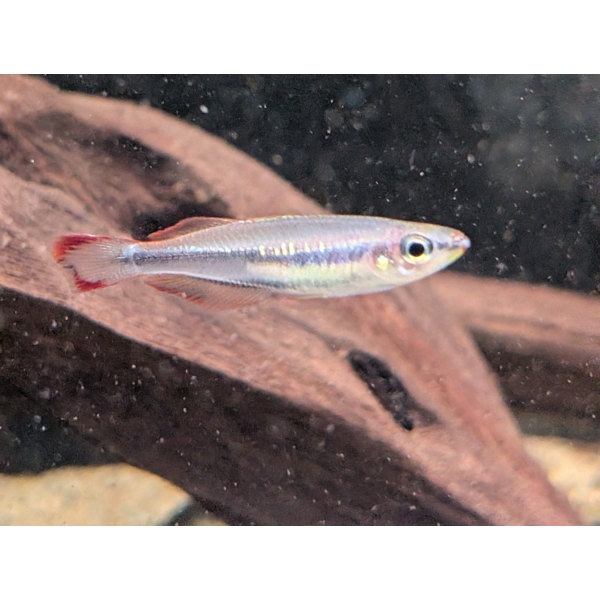
Scarlet Badis Dario dario
£6.50
Scarlet Badis Dario dario
Bulk Offer – 6 for £35.00
Discount will apply at checkout.
- Description
- Store Policies
- Enquiries
Description
Species Profile: Scarlet Badis (Dario dario)
Overview and Introduction
The Scarlet Badis, often referred to as the Scarlet Gem or Dario Dario, is a captivating micro-fish known for the intense, ruby-red and iridescent blue markings of the male. Despite its appearance, which is similar to a dwarf cichlid, it belongs to the Badidae family, closely related to the perch-like fish. It is highly prized by nano-aquarium enthusiasts and aquascapers.
Key Characteristics and Appearance
Origin and Habitat
- Origin: Endemic to the lower catchment of the Brahmaputra River in parts of West Bengal, India.
- Habitat: They inhabit shallow, slow-moving or stagnant waters, often found among dense aquatic vegetation, leaf litter, and root structures in clear water streams and ponds. They are often found near the margins where the water is less than 1 metre deep.
Appearance
- Size: They are exceptionally small, reaching a maximum adult size of only 2.5 cm (1 inch).
- Body Shape: Small, robust, and deep-bodied, giving them a stocky, muscular appearance despite their size.
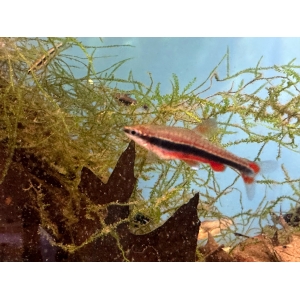
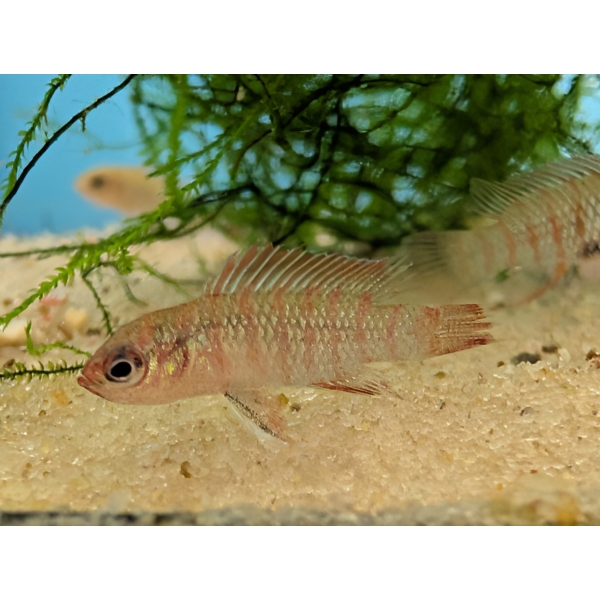
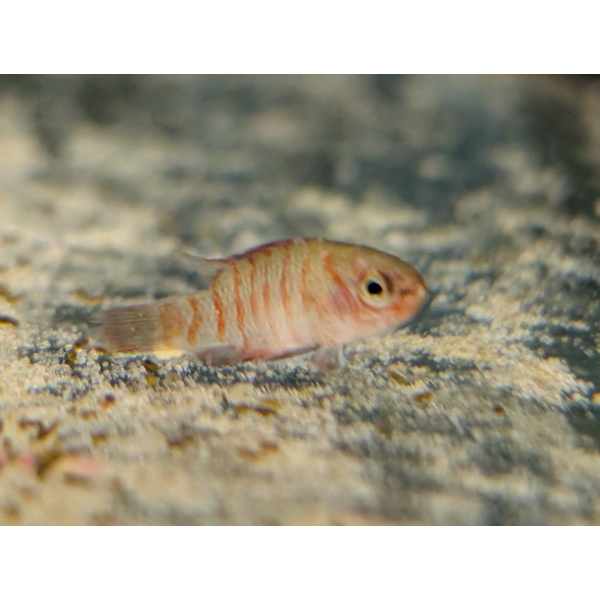
- Colouration (Male): The male is one of the most vividly coloured freshwater fish available. The body is dominated by striking, alternating vertical bars of deep scarlet-red and iridescent blue or turquoise. The fins are similarly patterned.
- Colouration (Female): Females are significantly duller and often difficult to acquire in the trade. They are a plain, translucent olive-brown or tan and lack the strong barring.
Sexual Dimorphism
The gender difference is pronounced. Males display vibrant colours and barring, while females are plain and possess a less intense body shape. If a fish shows no red or blue colouring, it is almost certainly a female or a stressed juvenile.
Aquarium Requirements and Water Parameters
Due to their small size, the Scarlet Badis is ideal for small, mature tanks, but requires a highly structured environment to thrive.
Tank Size
- Minimum: A minimum of 30 litres (approx. 7 UK Gallons) is required for a small group or a single male and multiple females. Length is more important than height.
Water Chemistry
- Temperature: 20C – 26C (68F – 79F). They prefer the cooler end of this range.
- pH: 6.5 – 7.5. Slightly acidic to neutral conditions are best.
- Hardness: Soft to moderately hard water (gH: 3-12).
- Maintenance: Water changes should be small and frequent to ensure stability.
Decor and Environment
- Filtration and Flow: Gentle water movement is essential. They are poor swimmers and strong current will stress them. A sponge filter or a baffled flow from a small hang-on-back filter is ideal.
- Planting: The tank must be densely planted, providing ample structure and shade. Floating plants (e.g., Water Spangles, Frogbit) are vital for diffusing light.
- Hiding Places: They must have lots of hiding spots using leaf litter (Catappa leaves), small pieces of driftwood, rock crevices, or dense thickets of fine-leaved plants like Java Moss.
Diet and Nutrition (Micro-predator / Obligate Carnivore)
This is the most critical aspect of keeping the Scarlet Badis. They are notoriously fussy and often refuse dry or processed foods.
Food Requirements
- Crucial Requirement: Dario dario must be fed live or frozen invertebrate prey. They rarely, if ever, accept flake or pellet foods.
- Recommended Live Foods:
- Essential: Microworms, newly hatched brine shrimp, and Grindal worms.
- Adults: Small white worms and small Daphnia.
- Recommended Frozen Foods:
- Frozen bloodworms (chopped finely), frozen Daphnia, or frozen brine shrimp may be accepted if wiggled directly in front of them, but this is not guaranteed.
Feeding Regime
Due to their tiny stomachs and carnivorous nature, feed small amounts two or three times a day.
Social Behaviour and Compatibility
The Scarlet Badis is a relatively sedentary fish that spends most of its time near the substrate or middle layer, navigating the plants.
Social Structure
- Territoriality: Males are highly territorial towards other males, despite their small size. They will stake out a territory (often a specific leaf or rock structure) and display intensely to rivals. This rarely results in physical harm but is stressful in small groups.
- Recommended Group: Best kept in a species-only tank in a ratio of one male to two or three females. If keeping multiple males, the tank must be large (over 60 litres) and extremely well-furnished with visual barriers.
Compatibility
- Tank Mates: Due to their shy nature, slow movements, and specific dietary needs, they are best kept alone. If tank mates are necessary, choose only the most peaceful and equally tiny species that do not compete for food.
- Suitable: Caridina or Neocaridina shrimp (although the Badis may eat the smallest shrimp fry), tiny peaceful Boraras species (e.g., Chili Rasbora), or Otocinclus catfish.
- Unsuitable: Any mid-sized or fast-moving fish, including common Tetras, larger Rasboras, or Cories, as the Badis will be outcompeted and starve.
Breeding
The Scarlet Badis is an egg-scatterer that is relatively easy to breed in a well-established, species-only aquarium.
- Spawning: The male will court the female, often displaying his intense colours to encourage her to his chosen spawning site (usually the underside of a broad leaf or a moss clump).
- Egg Laying: The female deposits a few non-adhesive eggs at the site, which the male fertilises. The male guards the eggs and fry, driving the female away.
- Rearing: The male should be removed shortly after the eggs hatch (usually within 2-3 days). The fry are minute and require extremely small first foods, such as Infusoria, Paramecium, or commercially prepared liquid fry food, before graduating to newly hatched brine shrimp nauplii.
Convenient nationwide delivery; you’re only a click away!
Our nationwide delivery service makes it easy to receive your fish directly at your door, anywhere in the UK, for a flat rate of just £30. This convenient service allows you to order up to 10kg of fish, with the assurance that they will arrive in excellent condition. To make the fishes journey as comfortable as possible we use Oxygen in the fish bags and heat packs in all the boxes of fish we send out.
Please put your desired delivery day in the Order Notes on the Checkout page.
General Enquiries
There are no enquiries yet.