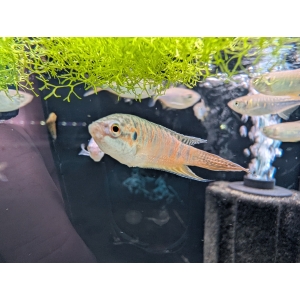

Steel Blue Killifish Fundulopanchax gardneri
£22.00
Steel Blue Killifish.
Price is per Pair
- Description
- Store Policies
- Enquiries
Description
The Steel Blue Killifish (Fundulopanchax gardneri):
Species Profile:
The Steel Blue Killifish (Fundulopanchax gardneri), also frequently traded as the Blue Lyretail or Gardner’s Killifish, is widely considered the quintessential “beginner” killifish. Originating from the streams, swamps, and marshes of Nigeria and Cameroon in West Africa, this non-annual species is celebrated for its striking coloration, hardy nature, and relative ease of breeding in captivity.
Morphology and Identification
-
Sexual Dimorphism: This species displays significant sexual dimorphism, making it straightforward to distinguish between the sexes.
-
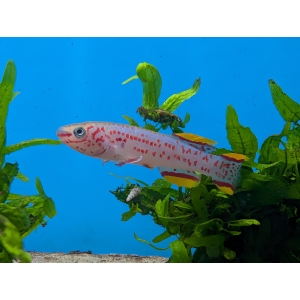
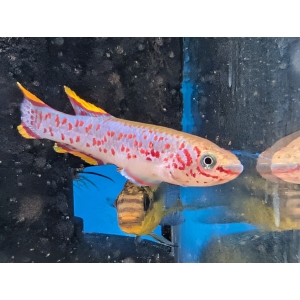
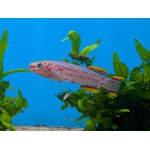
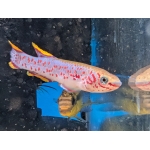
Males: Boast a brilliant electric-blue body adorned with longitudinal rows of red spots. They grow larger than females, often reaching up to 6–7 cm, and develop elongated, lyre-shaped fins with vibrant yellow-and-blue edging.
-
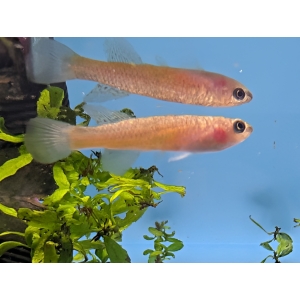
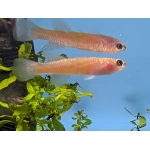
Females: Are notably more modest, possessing a drab olive-brown body with subtle brown spotting. They remain smaller and more rounded in shape.
-
-
Lifespan: Unlike many annual killifish that live for only a single season, the Steel Blue Killifish is a non-annual species with a typical lifespan of 2–3 years in a well-maintained aquarium.
Aquarium Requirements
Despite their vibrant appearance, Fundulopanchax gardneri are remarkably adaptable and do not require complex water chemistry.
-
Tank Setup: A tank of 40–50 litres is suitable for a trio (one male and two females). The tank should be densely planted with species such as Java Fern, Java Moss, and floating plants (e.g., Amazon Frogbit) to provide shade and security.
-
Water Parameters: They thrive in slightly acidic to neutral water. Aim for a pH of 6.0–7.0 and a temperature range of 22–26°C. While they are tolerant of varying hardness, stable conditions are always preferred over trying to artificially manipulate parameters.
-
Essential Precautions: A tight-fitting lid is mandatory. These fish are expert jumpers and even a small gap can lead to them escaping the aquarium.
-
Filtration: A gentle filtration system is sufficient; strong current is not required and may even stress the fish.
Diet and Feeding
Often described as the “Labrador of the killifish world,” these fish are rarely fussy eaters.
-
Live and Frozen Foods: Their natural diet consists of insect larvae and small crustaceans, so they particularly thrive on frozen bloodworms, brine shrimp, daphnia, and mosquito larvae.
-
Prepared Foods: Most individuals will readily accept high-quality flake or micro-pellet food. A varied diet is the key to maintaining their vibrant colouration.
Behaviour and Compatibility
-
Temperament: They are generally peaceful but can be territorial. Males may display aggression towards one another, so it is best to keep only one male per tank unless the aquarium is very large and heavily planted with multiple hiding spots.
-
Tank Mates: While they can be kept in a “specialist community” tank, they are best suited to species-only setups. If pairing with others, choose small, peaceful fish like Corydoras or small tetras. Avoid fin-nippers or overly boisterous species.
Breeding
This species is prized for its “non-annual” breeding behaviour, meaning it does not require a dry-out period for its eggs.
-
Spawning: They will readily spawn in dense clumps of Java Moss or dark-coloured acrylic spawning mops.
-
Incubation: Eggs can be collected and placed on damp peat or in a shallow dish of tank water. At 24°C, they typically hatch within 14–21 days.
-
Fry Care: Newly hatched fry are large enough to accept freshly hatched baby brine shrimp or microworms immediately.
Summary Table
| Feature | Details |
| Scientific Name | Fundulopanchax gardneri |
| Common Names | Steel Blue Killifish, Blue Lyretail |
| Adult Size | 5–7 cm |
| pH Range | 6.0 – 7.0 |
| Temperature | 22°C – 26°C |
| Lifespan | 2 – 3 years |
| Difficulty | Beginner-friendly |
The Steel Blue Killifish (Fundulopanchax gardneri), also frequently traded as the Blue Lyretail or Gardner’s Killifish, is widely considered the quintessential “beginner” killifish. Originating from the streams, swamps, and marshes of Nigeria and Cameroon in West Africa, this non-annual species is celebrated for its striking coloration, hardy nature, and relative ease of breeding in captivity.
Morphology and Identification
-
Sexual Dimorphism: This species displays significant sexual dimorphism, making it straightforward to distinguish between the sexes.
-
Males: Boast a brilliant electric-blue body adorned with longitudinal rows of red spots. They grow larger than females, often reaching up to 6–7 cm, and develop elongated, lyre-shaped fins with vibrant yellow-and-blue edging.
-
Females: Are notably more modest, possessing a drab olive-brown body with subtle brown spotting. They remain smaller and more rounded in shape.
-
-
Lifespan: Unlike many annual killifish that live for only a single season, the Steel Blue Killifish is a non-annual species with a typical lifespan of 2–3 years in a well-maintained aquarium.
Aquarium Requirements
Despite their vibrant appearance, Fundulopanchax gardneri are remarkably adaptable and do not require complex water chemistry.
-
Tank Setup: A tank of 40–50 litres is suitable for a trio (one male and two females). The tank should be densely planted with species such as Java Fern, Java Moss, and floating plants (e.g., Amazon Frogbit) to provide shade and security.
-
Water Parameters: They thrive in slightly acidic to neutral water. Aim for a pH of 6.0–7.0 and a temperature range of 22–26°C. While they are tolerant of varying hardness, stable conditions are always preferred over trying to artificially manipulate parameters.
-
Essential Precautions: A tight-fitting lid is mandatory. These fish are expert jumpers and even a small gap can lead to them escaping the aquarium.
-
Filtration: A gentle filtration system is sufficient; strong current is not required and may even stress the fish.
Diet and Feeding
Often described as the “Labrador of the killifish world,” these fish are rarely fussy eaters.
-
Live and Frozen Foods: Their natural diet consists of insect larvae and small crustaceans, so they particularly thrive on frozen bloodworms, brine shrimp, daphnia, and mosquito larvae.
-
Prepared Foods: Most individuals will readily accept high-quality flake or micro-pellet food. A varied diet is the key to maintaining their vibrant colouration.
Behaviour and Compatibility
-
Temperament: They are generally peaceful but can be territorial. Males may display aggression towards one another, so it is best to keep only one male per tank unless the aquarium is very large and heavily planted with multiple hiding spots.
-
Tank Mates: While they can be kept in a “specialist community” tank, they are best suited to species-only setups. If pairing with others, choose small, peaceful fish like Corydoras or small tetras. Avoid fin-nippers or overly boisterous species.
Breeding
This species is prized for its “non-annual” breeding behaviour, meaning it does not require a dry-out period for its eggs.
-
Spawning: They will readily spawn in dense clumps of Java Moss or dark-coloured acrylic spawning mops.
-
Incubation: Eggs can be collected and placed on damp peat or in a shallow dish of tank water. At 24°C, they typically hatch within 14–21 days.
-
Fry Care: Newly hatched fry are large enough to accept freshly hatched baby brine shrimp or microworms immediately.
Summary Table
| Feature | Details |
| Scientific Name | Fundulopanchax gardneri |
| Common Names | Steel Blue Killifish, Blue Lyretail |
| Adult Size | 5–7 cm |
| pH Range | 6.0 – 7.0 |
| Temperature | 22°C – 26°C |
| Lifespan | 2 – 3 years |
| Difficulty | Beginner-friendly |
The Steel Blue Killifish (Fundulopanchax gardneri), also frequently traded as the Blue Lyretail or Gardner’s Killifish, is widely considered the quintessential “beginner” killifish. Originating from the streams, swamps, and marshes of Nigeria and Cameroon in West Africa, this non-annual species is celebrated for its striking coloration, hardy nature, and relative ease of breeding in captivity.
Morphology and Identification
-
Sexual Dimorphism: This species displays significant sexual dimorphism, making it straightforward to distinguish between the sexes.
-
Males: Boast a brilliant electric-blue body adorned with longitudinal rows of red spots. They grow larger than females, often reaching up to 6–7 cm, and develop elongated, lyre-shaped fins with vibrant yellow-and-blue edging.
-
Females: Are notably more modest, possessing a drab olive-brown body with subtle brown spotting. They remain smaller and more rounded in shape.
-
-
Lifespan: Unlike many annual killifish that live for only a single season, the Steel Blue Killifish is a non-annual species with a typical lifespan of 2–3 years in a well-maintained aquarium.
Aquarium Requirements
Despite their vibrant appearance, Fundulopanchax gardneri are remarkably adaptable and do not require complex water chemistry.
-
Tank Setup: A tank of 40–50 litres is suitable for a trio (one male and two females). The tank should be densely planted with species such as Java Fern, Java Moss, and floating plants (e.g., Amazon Frogbit) to provide shade and security.
-
Water Parameters: They thrive in slightly acidic to neutral water. Aim for a pH of 6.0–7.0 and a temperature range of 22–26°C. While they are tolerant of varying hardness, stable conditions are always preferred over trying to artificially manipulate parameters.
-
Essential Precautions: A tight-fitting lid is mandatory. These fish are expert jumpers and even a small gap can lead to them escaping the aquarium.
-
Filtration: A gentle filtration system is sufficient; strong current is not required and may even stress the fish.
Diet and Feeding
Often described as the “Labrador of the killifish world,” these fish are rarely fussy eaters.
-
Live and Frozen Foods: Their natural diet consists of insect larvae and small crustaceans, so they particularly thrive on frozen bloodworms, brine shrimp, daphnia, and mosquito larvae.
-
Prepared Foods: Most individuals will readily accept high-quality flake or micro-pellet food. A varied diet is the key to maintaining their vibrant colouration.
Behaviour and Compatibility
-
Temperament: They are generally peaceful but can be territorial. Males may display aggression towards one another, so it is best to keep only one male per tank unless the aquarium is very large and heavily planted with multiple hiding spots.
-
Tank Mates: While they can be kept in a “specialist community” tank, they are best suited to species-only setups. If pairing with others, choose small, peaceful fish like Corydoras or small tetras. Avoid fin-nippers or overly boisterous species.
Breeding
This species is prized for its “non-annual” breeding behaviour, meaning it does not require a dry-out period for its eggs.
-
Spawning: They will readily spawn in dense clumps of Java Moss or dark-coloured acrylic spawning mops.
-
Incubation: Eggs can be collected and placed on damp peat or in a shallow dish of tank water. At 24°C, they typically hatch within 14–21 days.
-
Fry Care: Newly hatched fry are large enough to accept freshly hatched baby brine shrimp or microworms immediately.
Summary Table
| Feature | Details |
| Scientific Name | Fundulopanchax gardneri |
| Common Names | Steel Blue Killifish, Blue Lyretail |
| Adult Size | 5–7 cm |
| pH Range | 6.0 – 7.0 |
| Temperature | 22°C – 26°C |
| Lifespan | 2 – 3 years |
| Difficulty | Beginner-friendly |
Convenient nationwide delivery; you’re only a click away!
Our nationwide delivery service makes it easy to receive your fish directly at your door, anywhere in the UK, for a flat rate of just £30. This convenient service allows you to order up to 10kg of fish, with the assurance that they will arrive in excellent condition. To make the fishes journey as comfortable as possible we use Oxygen in the fish bags and heat packs in all the boxes of fish we send out.
Please put your desired delivery day in the Order Notes on the Checkout page.
General Enquiries
There are no enquiries yet.