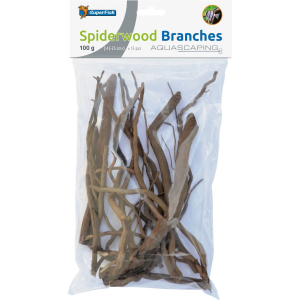

SuperFish Spiderwood Branches 100g
£7.00
SuperFish Spiderwood Bracnhes 100g
- Description
- Brand
- Store Policies
- Enquiries
Description
SuperFish Spiderwood Branches:
A Guide to Nature’s Architecture
In the aquascaping community, Spiderwood (often derived from the roots of Rhododendron or Azalea species) is considered the gold standard for creating intricate, “nature-style” layouts. SuperFish Spiderwood is a premium selection of these roots, prized for its spindly, branching structure that mimics the tangled undergrowth of a tropical riverbank or a fallen forest canopy.
Whether you are building a high-tech “Iwagumi-hybrid” or a simple “low-tech” community tank, Spiderwood offers a unique aesthetic that bulkier woods, like Bogwood or Mopani, simply cannot replicate.
Around 15-25cm in length.
1. Physical Characteristics
SuperFish Spiderwood is distinct for its “spider-like” appearance—featuring a central trunk that radiates into numerous fine, twisting branches.
-
Colour: When dry, the wood is a pale, sandy tan. Once submerged, it deepens into a rich, warm reddish-brown.
-
Texture: The wood is relatively soft compared to hardwoods. It has a smooth bark-like surface that is excellent for the attachment of epiphytic plants.
-
Buoyancy: Spiderwood is notoriously buoyant. Unlike heavy African hardwoods, it will almost certainly float when first introduced to the aquarium.
2. Pre-Treatment and Preparation
To ensure the best results and avoid “aquarium-water-woes,” proper preparation is essential.
The “Soaking” Period
Because Spiderwood is light and dry, it can take anywhere from 1 to 3 weeks to become fully waterlogged.
-
Option A (Patience): Weigh the wood down in a bucket of dechlorinated water using a heavy stone until it stays down on its own.
-
Option B (Anchor): Secure the wood to a piece of slate or a heavy rock using aquarium-safe screws or cyanoacrylate gel (super glue) and bury the anchor in the substrate.
Tannin Release
Like all natural woods, Spiderwood releases tannins into the water.
-
The Effect: This will tint your water a light “tea” colour. This is actually beneficial for many fish (like Tetras and Bettas) as it has mild antibacterial properties and mimics their natural environment.
-
The Cure: If you prefer “crystal clear” water, boil the wood for 1–2 hours before use or use a chemical filtration media like Seachem Purigen in your filter to strip the tint.
3. The “White Slime” Phenomenon
A common concern for hobbyists new to Spiderwood is the appearance of a thick, translucent white “fuzz” or fungus a few days after submersion.
-
What is it? This is a harmless bio-film caused by naturally occurring sugars and nutrients leaching from the wood, which are then consumed by bacteria.
-
The Solution: You do not need to remove the wood. It will eventually disappear on its own. Alternatively, Amano Shrimp, Bristlenose Plecs, or Snails view this slime as a gourmet delicacy and will clear it in days.
4. Aquascaping Techniques
Spiderwood is the “skeleton” of a planted aquarium. Its fine branches provide the perfect scaffolding for aquatic flora.
-
Epiphyte Attachment: The many nooks and crannies are ideal for wedging or gluing Anubias Nana Petite, Java Fern, or Bucephalandra.
-
Moss Trees: By tying Christmas Moss or Java Moss to the tips of the branches, you can create the illusion of miniature underwater trees.
-
Depth and Perspective: Position the wood so the branches point towards the front of the glass. This creates “lines of sight” that draw the eye deeper into the tank, making a small aquarium feel much larger.
5. Benefits for Livestock
Spiderwood isn’t just a decorative item; it serves several biological functions:
-
Hiding Spots: The dense branch network provides a “safe zone” for fry and shy species like Cichlids or Shrimp.
-
Grazing Surface: As the wood slowly breaks down, it creates a surface for biofilm and algae to grow, providing a constant natural food source for grazing fish.
-
Water Chemistry: It provides a very slight acidification of the water, which is preferred by most South American and Southeast Asian species.
6. The Verdict
The Pros:
-
Unrivalled Intricacy: No other wood offers such fine, delicate branching.
-
Fish Safe: 100% natural and non-toxic.
-
Lightweight: Easy to position and move during the “hardscaping” phase.
The Cons:
-
Buoyancy: Can be frustratingly difficult to keep down initially.
-
Slime Growth: The initial bio-film can be unsightly for a week or two.
-
Softness: Will eventually decompose faster (5+ years) than denser woods like Mopani.
SuperFish Spiderwood is the ultimate choice for the “creative” aquarist. It allows for the construction of dynamic, 3D environments that provide both aesthetic beauty and a functional, natural habitat for your aquatic inhabitants.
Brand
Superfish
General Enquiries
There are no enquiries yet.