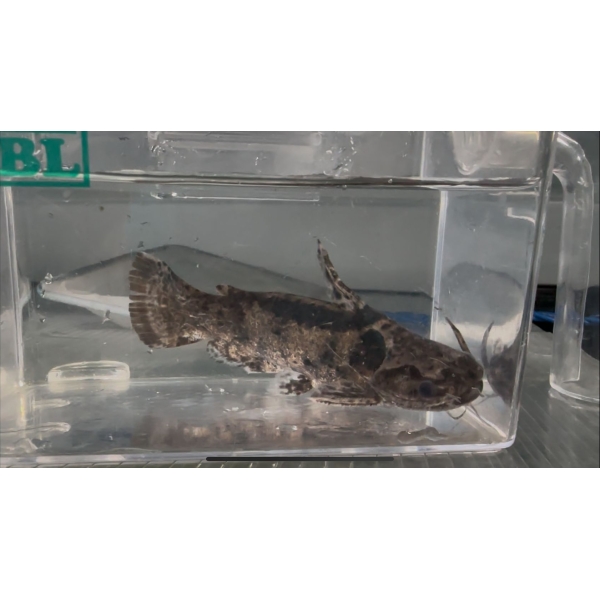


Trachelyichthys cf. insignis
£40.00
- Description
- Store Policies
- Enquiries
Description
Species Care Guide: Dwarf Talking Catfish
Trachelyichthys cf. insignis (Dwarf Talking Catfish)
The Dwarf Talking Catfish (Trachelyichthys cf. insignis) is a rarely seen, yet highly personable member of the Doradidae family (Thorny Catfishes). Unlike its much larger relatives, this species remains small and is known for its peaceful, shy nature. Native to the Amazon basin, its secretive, nocturnal behaviour means it needs specific décor to thrive in the home aquarium.
I. General Characteristics and Sizing
| Characteristic | Detail |
|---|---|
| Common Name | Dwarf Talking Catfish, Miniature Talking Catfish |
| Origin | Amazon River basin (likely Peru and Brazil) |
| Adult Size | Up to 10–12 cm (approx. 4–5 inches) |
| Temperament | Peaceful but Nocturnal/Shy. Will not bother tank mates. |
| Lifespan | 5 – 8 years with proper care |
| Housing | Best kept in a small group (shoal) of 3–5 individuals to encourage boldness. |
II. Aquarium Requirements (Husbandry)
Dwarf Talking Catfish are bottom-dwellers that spend most of the day hiding. Providing a secure, densely decorated environment is key to their well-being.
| Requirement | Recommendation |
|---|---|
| Minimum Volume | 100 Litres (approx. 22 Imperial Gallons). A tank with a large footprint is preferred over a tall one. |
| Filtration | Standard, good-quality biological and mechanical filtration. Water movement should be gentle to moderate, mimicking slow-moving river areas. |
| Lighting | Dim or subdued is mandatory. Bright light causes them stress and keeps them hidden. Use floating plants or dense patches of tall plants to create shade. |
| Substrate | Fine, smooth sand is highly recommended. As bottom-feeders, they root through the substrate, and sharp gravel can damage their sensory barbels. |
| Decoration | Provide extensive hiding places. This should include numerous caves, smooth stones, and particularly driftwood (logs, roots, and branches). They enjoy resting inside narrow pipes or hollow logs. Tannin-stained water is beneficial. |
III. Water Quality and Parameters
This species requires consistent, warm, and clean water, often favouring the soft, acidic conditions typical of blackwater rivers.
| Parameter | Optimal Range | Notes |
|---|---|---|
| Temperature | 24°C – 28°C (75°F – 82°F) | They need warm water, crucial for Amazonian species. |
| pH | 6.0 – 7.0 | Prefers slightly acidic to neutral. Soft water also encourages their best health. |
| Hardness (dGH) | 3 – 10 dGH (Very Soft to Soft) | Keep hardness low. Hard, alkaline water can lead to long-term health issues. |
| Maintenance | Regular weekly water changes of 20–25% are essential. Maintaining high water quality is more important than their wide pH tolerance. |
IV. Diet and Nutrition
The Dwarf Talking Catfish is an opportunistic omnivore/carnivore. Since they are nocturnal, they must be fed after the main lights have been turned off to ensure they get enough to eat.
- Staple Diet: High-quality sinking catfish wafers, tablets, or small, sinking pellets.
- Meaty Foods: Offer frozen foods such as bloodworms, brine shrimp, and tubifex worms several times a week.
- Live Foods: Live micro-worms or small earthworms are excellent conditioning foods.
- Important Note: They feed slowly and may be easily out-competed by quicker fish like Barbs or Tetras if fed during daylight hours.
V. Compatibility and Behaviour
These catfish are generally excellent for community tanks but thrive best when housed with equally peaceful, smaller species.
- Shoaling: While they are not strict shoalers, they are more confident and visible when kept in small groups (3+) and will often share a favoured hiding spot.
- Tank Mates: Excellent companions include small, peaceful Characins (Neon Tetras, Pencilfish), Dwarf Cichlids (e.g., Rams), and peaceful surface dwellers (e.g., Hatchetfish).
- Avoid: Highly aggressive or overly boisterous fish that might harass them, and large, predatory fish that could see them as food. They are safe with small shrimp, though their foraging may occasionally disturb them.
- “Talking” Behaviour: Like other Doradids, they can produce audible, squeaking or drumming sounds by rubbing their fin spines against grooves on their pectoral girdle, usually when stressed or excited.
The Dwarf Talking Catfish is a fascinating, low-maintenance fish once its needs for shade and hiding places are met. Observe them quietly after dark to catch them exploring their environment!
Convenient nationwide delivery; you’re only a click away!
Please put your desired delivery day in the Order Notes on the Checkout page.
General Enquiries
There are no enquiries yet.