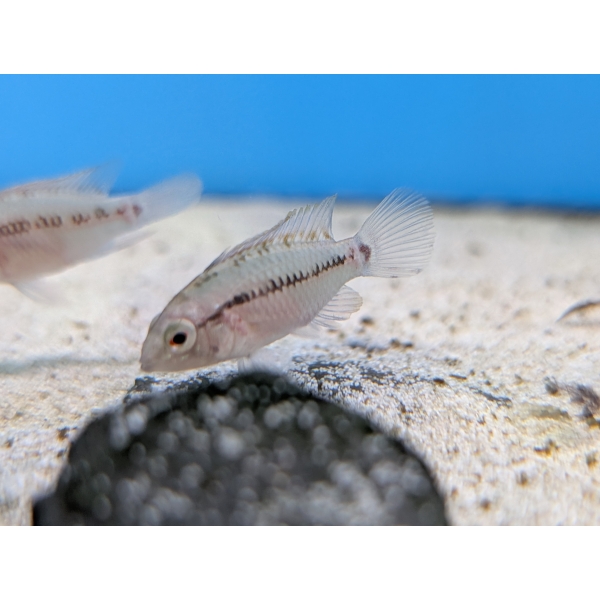
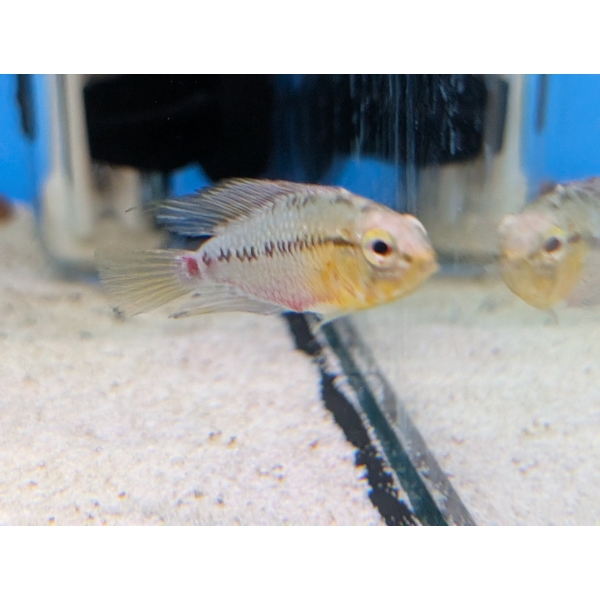



Apistogramma Hongsloi
£30.00
Price is per pair
Apistogramma Hongsloi
- Description
- Store Policies
- Enquiries
Description
Apistogramma hongsloi
This document serves as a guide to the identification, habitat, care, and breeding of Apistogramma hongsloi, a popular and colourful species of dwarf cichlid.
1. Introduction
Apistogramma hongsloi is a well-regarded species in the aquarium hobby, known for the vibrant colouration of mature males and their interesting, complex social behaviours. As a dwarf cichlid, it is suitable for smaller aquariums than many of its larger cousins, making it a favourite for community tanks and biotope setups alike.
2. Natural Habitat and Distribution
-
Geography: This species is native to South America, specifically the Orinoco River basin in Colombia and Venezuela.
-
Habitat: They are typically found in slow-moving tributaries, creeks, and backwaters. These habitats are characterised by leaf litter on the substrate, submerged tree roots, and aquatic vegetation, which provide ample hiding places.
-
Water Conditions: The water in their natural environment is generally soft, acidic, and often stained clear-tea colour by tannins from decaying organic matter (blackwater).
3. Appearance and Identification
Apistogramma hongsloi exhibits sexual dimorphism, meaning males and females have distinctly different appearances.
-
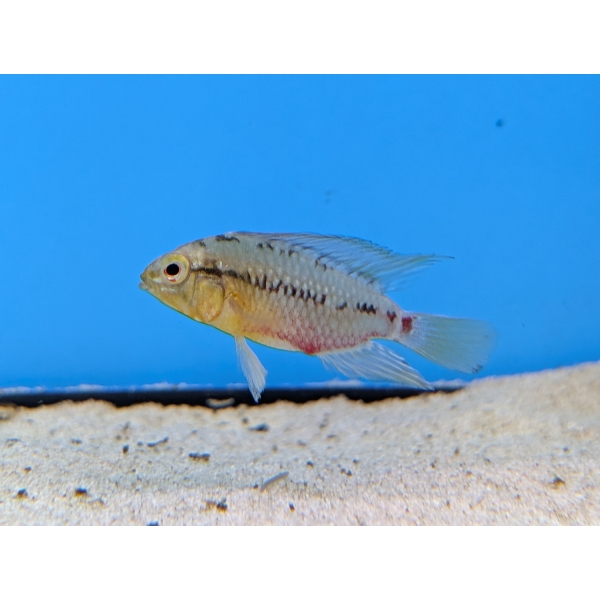
Males: Mature males are larger, reaching approximately 6–7 cm (2.4–2.8 inches) in length. They develop elaborate fins and a high-backed body shape. Colouration is variable depending on the specific population or selectively bred strain, but typically features a grey-blue body with striking patches of yellow and red, particularly on the lower parts of the body, caudal peduncle, and fins.
-
Females: Females are smaller, usually staying under 5 cm (2 inches). Their colouration is more subdued, generally a yellowish-grey. However, during breeding, females adopt a bright, intense yellow body colour with distinct black markings to signal their readiness to spawn and to caution other fish.
4. Aquarium Care
Providing a well-structured environment is key to the health and happiness of Apistogramma hongsloi.
-
Tank Size: A minimum tank size of 60 cm (approx. 54 litres) is suitable for a single pair or a trio (one male, two females).
-
Décor: The aquarium should be provided with numerous hiding places to allow weaker individuals to retreat and to serve as potential spawning sites. This can be achieved using bogwood, rocks, dense planting, and dried leaf litter (such as oak or Indian almond leaves). Place small terracotta pots or coconut caves on their sides to encourage breeding.
-
Substrate: A fine sand substrate is preferred, as these fish enjoy sifting through the bottom layer for food.
-
Filtration and Flow: Filtration should be efficient but gentle. Avoid strong currents, as they prefer calmer waters. Peat filtration can be beneficial to help acidify the water and add tannins.
5. Water Parameters
Maintaining stable and appropriate water quality is crucial.
-
Temperature: 23°C – 28°C
-
pH: 5.5 – 7.0 (Aim for acidic conditions, especially for wild-caught specimens or breeding purposes)
-
Hardness: Very soft to moderately soft (1 – 10 dGH)
6. Diet and Feeding
In the wild, they are micropredators, feeding on small aquatic invertebrates, insect larvae, and zooplankton.
-
In the Aquarium: They should be offered a varied diet. High-quality small sinking pellets or flakes can form the staple. This should be regularly supplemented with live and frozen foods such as Artemia (brine shrimp), Daphnia, and bloodworm to enhance their condition and colour.
7. Behaviour and Compatibility
-
Temperament: They are generally peaceful towards non-cichlid species but can be territorial, especially amongst themselves and other dwarf cichlids. This territorial behaviour becomes much more pronounced during breeding.
-
Social Structure: They are best kept in pairs or harems (one male with several females), provided the tank is large enough for each female to establish her own small territory.
-
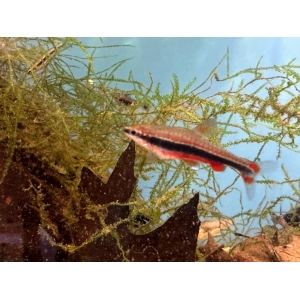
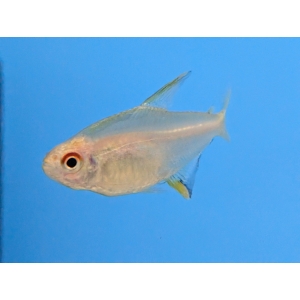
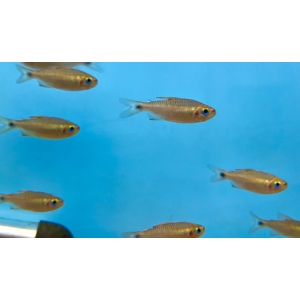
Tank Mates: Good companions include small, peaceful schooling fish like tetras, rasboras, and hatchetfish, which occupy the upper water layers and act as “dither fish,” encouraging the Apistogramma to be more outgoing. Peaceful bottom dwellers like Corydoras catfish can also be kept, though care should be taken in smaller tanks during breeding times.
8. Breeding
Apistogramma hongsloi are substrate spawners that practice brood care, typically with the female taking the primary role.
-
The Process: The female will select and clean a cave-like site (e.g., under a piece of wood, inside a pot). She lays her eggs on the roof or side of the cave, which are then fertilised by the male.
-
Brood Care: The female guards the eggs fiercely, fanning them with her fins to keep them oxygenated. The male defends the wider territory around the spawning site. The eggs hatch in 2–4 days, and the fry become free-swimming a few days later. The female will then lead her shoal of fry around the tank to forage, continuing to protect them.
-
Fry Feeding: Newly free-swimming fry are very small and require microscopic food such as infusoria or microworms, followed by newly hatched brine shrimp nauplii.
9. Conclusion
Apistogramma hongsloi is a characterful and beautiful dwarf cichlid that makes a rewarding subject for the intermediate aquarist. By meeting their specific requirements for water chemistry and habitat structure, their fascinating natural behaviours can be observed right in the home aquarium.
Convenient nationwide delivery; you’re only a click away!
Please put your desired delivery day in the Order Notes on the Checkout page.
General Enquiries
There are no enquiries yet.