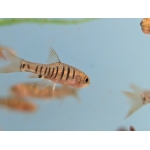


African Banded Barb
£8.50
African Banded Barb
Bulk Offer – 6 for £48.00
Discount will apply at checkout.
- Description
- Store Policies
- Enquiries
Description
The African Banded Barb:
A Guide for Aquarists
The African banded barb (Enteromius fasciolatus) is a beautiful and peaceful freshwater fish native to the river systems of Central and Southern Africa. Known for its striking horizontal stripes and active nature, it is a great addition to a community aquarium. This guide will cover its care requirements, behaviour, and breeding.
Care Requirements
African banded barbs are relatively hardy and easy to care for, making them suitable for aquarists of all levels.
- Tank Size: A minimum of 80 litres (20 gallons) is recommended for a small group of 6-8 fish. A larger tank is always better to provide more swimming space.
- Water Parameters: They thrive in soft, slightly acidic water.
- Temperature: ()
- pH:
- Hardness: dGH
- Filtration: A good filter is essential to maintain clean water. A canister or hang-on-back filter is ideal for this size of tank.
- Tank Setup: Create a natural environment with a sand or fine gravel substrate. Provide plenty of plants (such as Java fern or Anubias) and driftwood or rocks to offer hiding places. They appreciate some open swimming space in the middle of the tank.
Diet
African banded barbs are omnivores and will readily accept a variety of foods.
- Staple Diet: High-quality flake or micro-pellet food should form the bulk of their diet.
- Live/Frozen Foods: Supplement their diet with live or frozen foods like brine shrimp, daphnia, and bloodworms to provide essential nutrients and mimic their natural diet. Feeding these a few times a week will ensure they stay healthy and colourful.
Behaviour and Tank Mates
These fish are generally peaceful but are a shoaling species and must be kept in groups of at least 6 individuals. Keeping them in smaller groups can lead to stress and aggression towards other tank mates.
- Temperament: They are active and playful. In a well-populated shoal, their vibrant colours become more pronounced as they interact with each other.
- Suitable Tank Mates: Good tank mates include other peaceful, similarly sized fish such as neon tetras, corydoras, rasboras, and other small barbs. Avoid keeping them with long-finned or slow-moving fish, as they may occasionally nip fins.
Breeding
Breeding African banded barbs is possible in a home aquarium.
- Spawning Tank: Set up a separate breeding tank with soft, slightly acidic water and a temperature of around (). The tank should have a spawning mop or fine-leaved plants for the eggs to fall into.
- Spawning Process: A conditioned pair will typically spawn in the morning. The female will scatter up to 200 adhesive eggs among the plants.
- Rearing the Fry: The eggs will hatch in approximately 24-48 hours. The fry can be fed with infusoria or liquid fry food for the first few days, followed by newly hatched brine shrimp.
By providing the right environment and diet, the African banded barb will be a rewarding and colourful addition to your aquarium.
Convenient nationwide delivery; you’re only a click away!
General Enquiries
There are no enquiries yet.