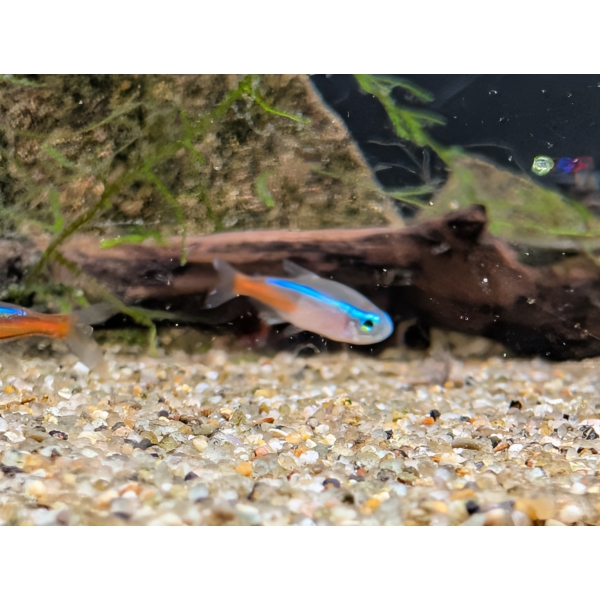


Neon Tetra Paracheirodon innesi
£4.00
Bulk Offer – 6 for £22.00
Discount will apply at checkout.
- Description
- Store Policies
- Enquiries
Description
Neon Tetra (Paracheirodon innesi)
Species Fact Sheet
Overview:
The Neon Tetra is one of the most popular and recognizable freshwater aquarium fish. Native to the blackwater and clearwater streams of the Amazon basin in South America, particularly in Peru, Colombia, and Brazil, these small, peaceful, and vibrantly coloured fish are a staple in community aquariums worldwide. Their striking iridescent blue and red colouration makes them a captivating addition to any tank.
Physical Characteristics:
* Size: Typically grows to about 4 cm in length.
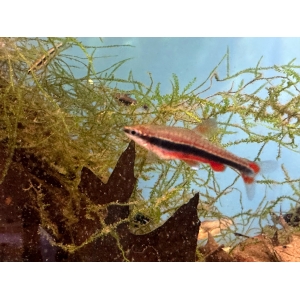
* Colouration: Distinctive iridescent blue stripe running horizontally from the nose to the adipose fin, with a bright red stripe extending from the middle of the body to the base of the caudal fin. The belly is silvery-white.
* Body Shape: Torpedo-shaped, slender body.
* Fins: Transparent fins, including a small adipose fin characteristic of characins.
Habitat and Distribution (Wild):
* Native Region: Amazon basin, South America (Peru, Colombia, Brazil).
* Preferred Habitat: Slow-moving, clearwater or blackwater tributaries and floodplains. They are often found in areas with dense vegetation, submerged roots, and leaf litter.
* Water Parameters (Wild):
* Temperature: 20-26°C (68-79°F)
* pH: 4.0-6.0 (acidic)
* Hardness: Very soft water (1-2 dGH)
Aquarium Care:
* Tank Size: Minimum 38 liters (10gallons) for a small school, though larger is always better for stability and a larger school.
* Social Behavior: Highly social schooling fish. Should be kept in groups of at least 6-10 individuals, preferably more, to reduce stress and display natural schooling behavior.
* Temperament: Peaceful and ideal for community tanks with other small, non-aggressive fish.
* Water Parameters (Aquarium):
* Temperature: 21-27°C (70-81°F)
* pH: 5.5-7.5 (slightly acidic to neutral)
* Hardness: Soft to moderately hard (1-10 dGH) – consistent parameters are more important than exact numbers within this range.
* Filtration: Gentle filtration is preferred, as they do not like strong currents. Sponge filters or hang-on-back filters with adjustable flow are suitable.
* Lighting: Moderate lighting.
* Substrate: Dark substrate can help enhance their colours.
* Decor: Densely planted tanks with plenty of hiding spots (driftwood, rocks, plants) mimic their natural habitat and make them feel secure. Open swimming areas are also appreciated. Floating plants can help diffuse light.
Diet:
* Omnivore: In the wild, they feed on small invertebrates, algae, and detritus.
* Aquarium Diet: High-quality flake or micro-pellet food as a staple. Supplement with small live or frozen foods such as daphnia, brine shrimp, and bloodworms to provide essential nutrients and variety. Vegetable matter like spirulina flakes can also be beneficial. Feed small amounts several times a day.
Breeding:
* Difficulty: Moderately difficult in a home aquarium.
* Requirements:
* Separate breeding tank with very soft, acidic water (pH 5.0-6.0, dGH < 4).
* Dim lighting or complete darkness as eggs are light-sensitive.
* Spawning mops or fine-leaved plants (e.g., Java moss) for egg laying.
* Parents should be removed after spawning as they will eat the eggs.
* Eggs: Very small, clear, and adhesive. Hatch in approximately 24-36 hours.
* Fry Care: Fry are tiny and require infusoria or specialized liquid fry food for the first few days, then progress to newly hatched brine shrimp.
Common Health Issues:
* Neon Tetra Disease (NTD): A highly contagious and often fatal disease caused by a microsporidian parasite (Pleistophora hyphessobryconis). Symptoms include loss of colour, erratic swimming, fin rot, and cysts. No known cure, prevention through quarantine and good husbandry is key.
* Ich (White Spot Disease): Common parasitic infection, treatable with medication.
* Fin Rot: Often caused by poor water quality or stress.
* Stress: Can lead to a dulling of colours and susceptibility to disease.
Compatibility:
Excellent community fish. Compatible with:
* Other small tetras (e.g., Cardinal Tetras, Ember Tetras)
* Rasboras (e.g., Harlequin Rasboras)
* Small, peaceful Corydoras catfish
* Otocinclus catfish
* Dwarf gouramis (e.g., Honey Gourami)
* Small, peaceful livebearers (e.g., Endler’s Livebearers, Guppies – provided they aren’t too boisterous)
* Shrimp (e.g., Cherry Shrimp – with caution, very small fry may be prey)
Convenient nationwide delivery; you’re only a click away!
General Enquiries
There are no enquiries yet.