

African Butterfly Fish Pantodon bucholzi
£12.00
Bulk Offer – 3 for £33.00
Discount will apply at checkout.
- Description
- Store Policies
- Enquiries
Description
African Butterfly Fish (Pantodon bucholzi)
The African Butterfly Fish, scientifically known as Pantodon bucholzi, is a truly unique and fascinating freshwater fish in the aquarium hobby. Renowned for its distinctive wing-like pectoral fins and surface-dwelling habits, this fish brings an exotic and intriguing presence to any appropriate top-level aquarium setup.
Origin and Habitat
African Butterfly Fish are native to the slow-moving, often stagnant or heavily vegetated waters of West Africa, particularly in countries like Nigeria, Cameroon, and the Congo Basin. Their natural habitat includes swamps, quiet pools, and slow-flowing rivers, where they spend most of their time at the water’s surface, camouflaged among floating vegetation, waiting to ambush insects. They are accustomed to soft, acidic to neutral water conditions.
Appearance and Characteristics
The African Butterfly Fish typically grows to about 4-5 inches (10-13 cm) in length. Its most distinctive features are:
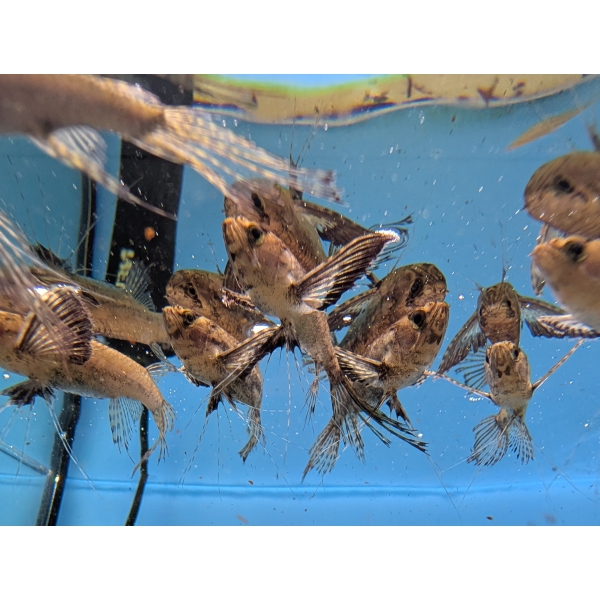
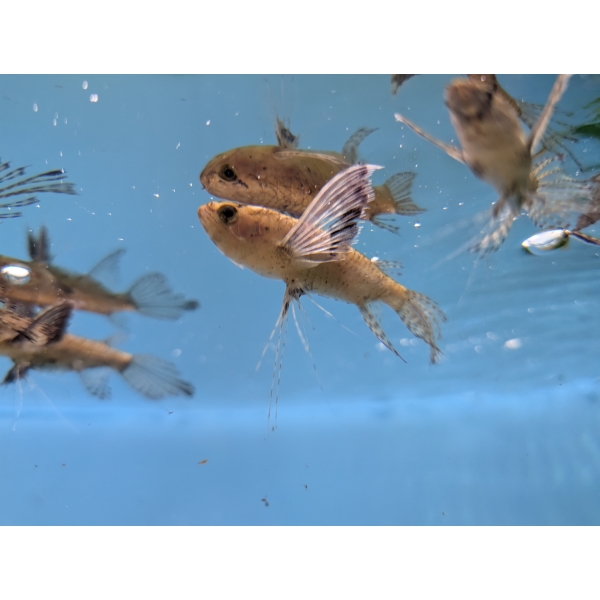
- Body Shape: A flattened, elongated body with a broad, upturned mouth and large, upward-facing eyes, perfectly adapted for surface feeding.
- Wing-like Fins: Its most striking feature is its greatly enlarged, fan-shaped pectoral fins, which resemble butterfly wings. These fins are used for gliding across the water surface and can even aid in short, clumsy leaps out of the water to catch flying insects.
- Colouration: The body is typically a mottled brown, grey, or olive green, providing excellent camouflage among floating plants and surface debris. Subtle darker patterns may be present.
- Ventral Fins: They possess long, filamentous ventral fins that trail beneath them, resembling roots, further enhancing their camouflage.
Behaviour and Temperament
African Butterfly Fish are generally peaceful towards fish that inhabit the middle and bottom levels of the aquarium, but they are highly predatory towards any fish small enough to fit into their large mouths, including small tetras or fry. They are best kept individually or in a pair in a spacious tank. Keeping multiple individuals can lead to territorial disputes, especially between males, unless the tank is very large and offers ample surface territory.
They are primarily surface dwellers, spending almost all their time just beneath the water’s surface, often remaining motionless, waiting for prey. They are most active during dusk and dawn. Their unique hunting method involves patiently waiting for insects to land on the water or fly near the surface, then leaping or snapping to catch them.
Aquarium Requirements
Due to their specialised surface-dwelling habits and predatory nature, African Butterfly Fish require specific aquarium conditions:
- Tank Size: A minimum of 80 litres is recommended for a single specimen. For a pair, 120 litres or more is highly preferred to provide ample surface area and minimise territorial disputes. A tank with a large surface area is more important than depth.
- Water Parameters:
- Temperature: 24-27°C (75-81°F) – consistent, warm temperatures are vital.
- pH: 6.0-7.2 (slightly acidic to neutral is preferred).
- Hardness: 5-15 dGH (soft to moderately hard water).
- Filtration: A good quality filter is essential to maintain pristine water quality. Gentle filtration is crucial, as strong surface agitation or currents can stress them and make surface feeding difficult. Sponge filters or baffled hang-on-back filters are excellent choices.
- Substrate: Any substrate is suitable, such as fine gravel or sand.
- Lighting: Dim to moderate lighting is preferred, as they are naturally found in shaded, heavily vegetated environments.
- Decor: Provide plenty of floating plants (e.g., Water Lettuce, Frogbit, Amazonian Frogbit) to offer cover and mimic their natural habitat. Submerged plants (e.g., Java Fern, Anubias attached to driftwood) and driftwood branches that break the surface or extend close to it are also excellent. Ensure there are open areas on the surface for them to hunt. A tight-fitting lid is absolutely essential, as they are excellent jumpers.
Diet
African Butterfly Fish are primarily insectivores, feeding on insects and their larvae in the wild. A high-quality, varied diet of surface-dwelling or floating foods is essential for their health and well-being in the aquarium.
- Primary Diet: Floating pellets or flakes specifically formulated for carnivorous top-feeders.
- Supplements: Offer a variety of live or frozen foods such as crickets, mealworms, grasshoppers (small), bloodworms, brine shrimp, and mosquito larvae. Live insects are particularly good for encouraging their natural hunting behaviours.
- Feeding Frequency: Feed them once a day, or small amounts twice a day, ensuring all food is consumed from the surface.
Breeding
Breeding African Butterfly Fish in a home aquarium is challenging but possible. They are egg-layers, and specific environmental cues are often required.
- Spawning: Spawning typically occurs at the water surface, with the female laying large, floating eggs that are often clear or slightly amber.
- Post-Spawning: The eggs are buoyant and will float. They can be carefully removed to a separate rearing tank to protect them from being eaten by the adults or other tank inhabitants.
- Hatching: Eggs typically hatch within 2-3 days.
- Fry Care: The fry are tiny and require microscopic food initially, such as infusoria or specialised liquid fry food, transitioning to newly hatched brine shrimp as they grow. Maintaining high water quality in the fry tank is crucial.
Common Health Issues
African Butterfly Fish are generally hardy once established but can be susceptible to common freshwater fish diseases, particularly if water quality is poor or they are stressed. Fin rot can occur if their delicate fins are damaged or if water conditions are suboptimal. Maintaining pristine water quality, stable parameters, a balanced diet, and a stress-free environment are key to preventing illness.
Conclusion
The African Butterfly Fish is a truly unique, captivating, and elegant species that can bring an unparalleled sense of the wild to a dedicated aquarium. Its distinctive appearance, graceful movements, and fascinating surface-hunting behaviours make it a rewarding fish for the experienced aquarist. With proper care, ample surface area, and a suitable environment, this long-lived fish can become a cherished and intriguing inhabitant of your aquatic world for many years.
Convenient nationwide delivery; you’re only a click away!
General Enquiries
There are no enquiries yet.