

Apistogramma Cacatuoides Double Red
£15.00
Apistogramma Cacatuoides Double Red
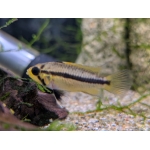
Price is for 1 x Female only
- Description
- Store Policies
- Enquiries
Description
Apistogramma cacatuoides
“Double Red” – The Cockatoo Cichlid:
If you’re looking for a fish with “big cichlid energy” but only have a modest-sized tank, the “Double Red” Cockatoo Cichlid is arguably the finest candidate for the job. Famous for its magnificent, flame-like dorsal fin—which resembles the crest of a cockatoo—this selective-bred variety is a showstopper in any planted aquarium.
Unlike some of its more “diva-ish” Apistogramma cousins, the cacatuoides is surprisingly hardy and adaptable, making it the perfect “gateway” dwarf cichlid for British hobbyists.
Vital Statistics
What Makes it a “Double Red”?
The “Double Red” designation refers specifically to the intense red and black “tiger-stripe” patterning found on two distinct areas:
-
The Dorsal Fin: The tall, jagged crest that gives the fish its name.
-
The Caudal Fin (Tail): A full, rounded tail sporting the same fiery hues.
Note: Males are the true stars here; females are significantly smaller and usually a duller yellow/grey, though they turn a brilliant “banana yellow” when they are in breeding dress and protecting their “patch.”
Creating the Perfect Territory
These fish are highly territorial but in a “polite” way. They don’t want to kill their neighbours; they just want everyone to know where the property line is.
-
The Cave is King: Females are “cave spawners.” You must provide small, narrow-mouthed caves (half-coconut shells or ceramic pipes work brilliantly). Ensure there is at least one cave per female.
-
Sand Substrate: Like the Hoplisoma catfish, Apistogramma are “earth-eaters.” They enjoy sifting through sand for morsels of food.
-
Planting & Shelter: They love a heavily planted environment. Use your Superfish Plant Scissors to maintain low-growing plants like Cryptocoryne or Anubias, which provide excellent “line-of-sight” breaks. If the fish can’t see each other constantly, they are much less likely to squabble.
Behaviour and Tank Mates
The Double Red is a peaceful community resident but will become a “tiny terror” if they have eggs to protect.
-
Ideal Mates: They get along famously with Tetras (especially Nannostomus pencilfish), Hatchetfish, and the Schwartz’s Catfish we discussed earlier.
-
The Social Dynamic: They can be kept in a bonded pair or a “harem” (one male to several females). Never keep two males in a tank smaller than 120cm in length, or they will spend all their time bickering rather than looking pretty.
Feeding and Nutrition
To keep those “Double Red” colours popping, diet is everything.
-
Dry Food: They will accept high-quality crushed flakes or small sinking pellets, but don’t make this the “main course.”
-
The Good Stuff: To see their best colouration, provide frozen or live Bloodworm, Artemia (Brine Shrimp), and Cyclops. The carotene in these foods acts as a natural “colour enhancer” for their red fins.
A Word on Maintenance
Cleanliness is Godliness: While they are hardier than other dwarf cichlids, they are still sensitive to high nitrates. A weekly water change of 20–30% is non-negotiable if you want them to reach their full 3-to-5-year lifespan.
Convenient nationwide delivery; you’re only a click away!
Our nationwide delivery service makes it easy to receive your fish directly at your door, anywhere in the UK, for a flat rate of just £30. This convenient service allows you to order up to 10kg of fish, with the assurance that they will arrive in excellent condition. To make the fishes journey as comfortable as possible we use Oxygen in the fish bags and heat packs in all the boxes of fish we send out.
Please put your desired delivery day in the Order Notes on the Checkout page.
General Enquiries
There are no enquiries yet.