
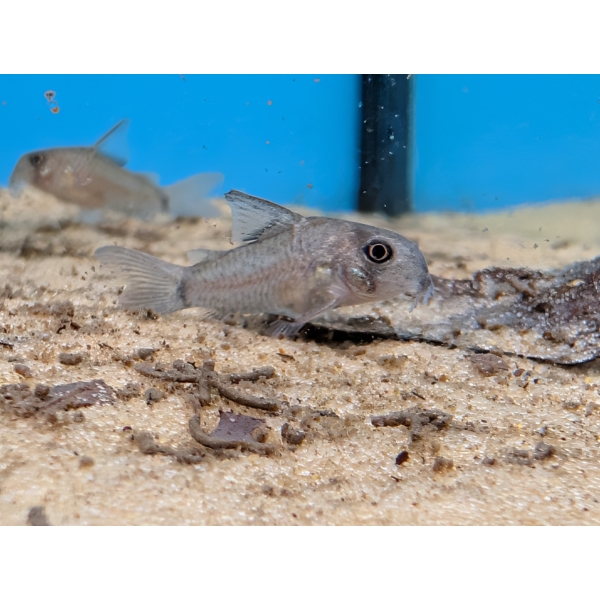

Bloodfin Tetra
£4.00
Bulk Offer – 6 for £22.00
Bloodfin Tetra
- Description
- Store Policies
- Enquiries
Description
Bloodfin Tetra (Aphyocharax anitsitsi)
Species Profile:
Common Names: Bloodfin Tetra, Redfin Tetra.
Scientific Name: Aphyocharax anitsitsi (Note: Historically and commonly traded as Aphyocharax anisitsi or Aphyocharax rubropinnis).
Family: Characidae (Characins).
1. Introduction
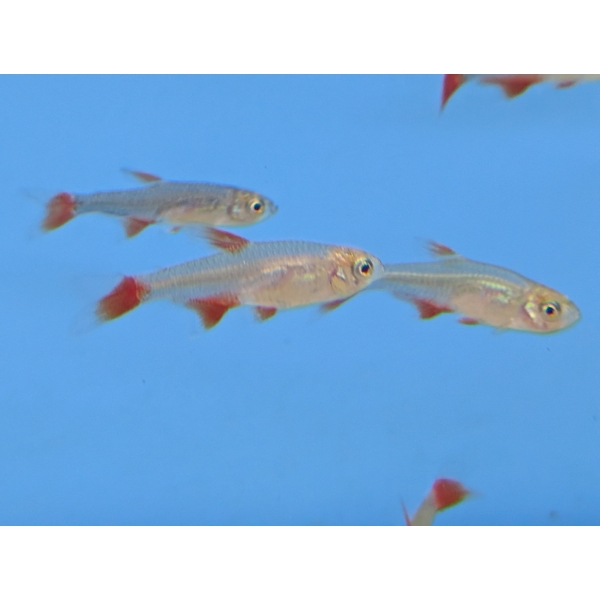
The Bloodfin Tetra is a classic and highly popular species in the aquarium hobby. Originating from South America, this lively characin is celebrated for its silvery, streamlined body and its contrasting, striking cherry-red fins, which give it its common name.
Known for its hardiness, active nature, and peaceful schooling behaviour, the Bloodfin Tetra is an excellent choice for beginner aquarists and makes a beautiful, dynamic addition to a stable community tank.
2. Natural Habitat and Distribution
-
Geography: Native to the river systems of South America, primarily found in the Paraná River basin, spanning across Argentina, Paraguay, and Southern Brazil.
-
Environment: They inhabit clear-water streams, tributaries, and flooded plains. These waters are typically well-oxygenated, with dense marginal vegetation and areas of open water for fast swimming.
-
Water Conditions: They are highly adaptable fish, naturally tolerating a wide range of temperatures and pH levels, but prefer cooler, slightly acidic water.
3. Appearance and Identification
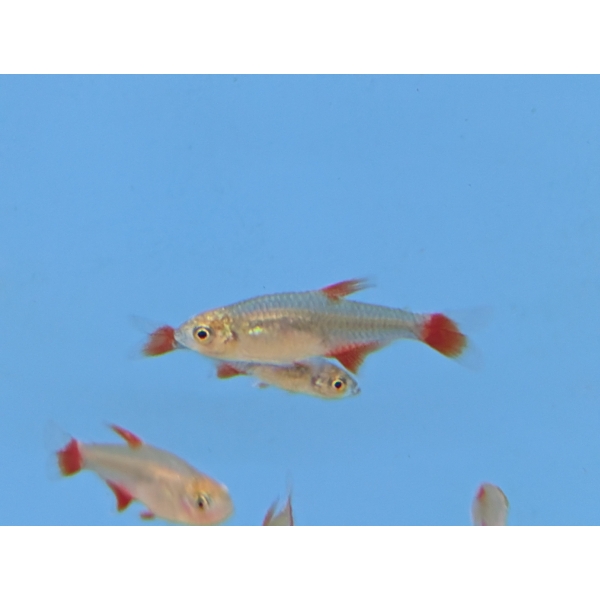
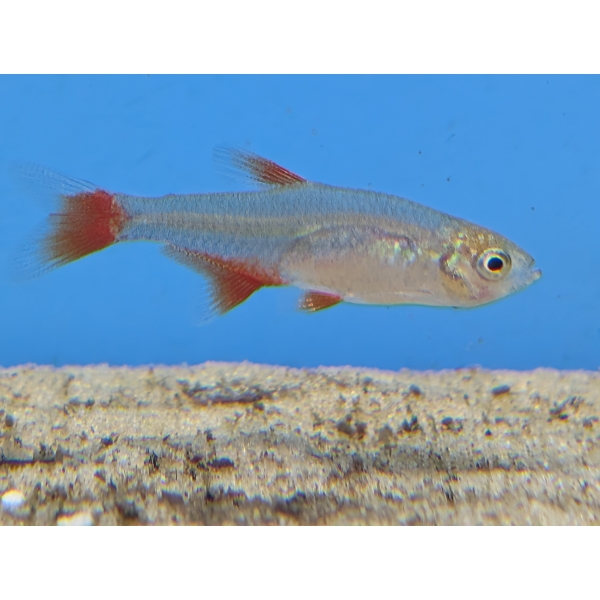
The Bloodfin Tetra is instantly recognisable by its distinct colouration.
-
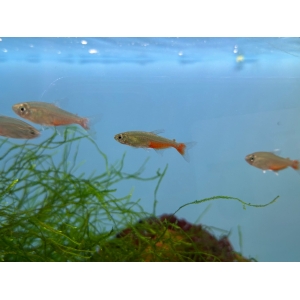
Body: The body is streamlined, laterally compressed, and possesses a classic tetrahedral shape. The scales are reflective, giving the fish a bright, silvery-white sheen that appears almost translucent under certain lighting.
-
Fins (Defining Feature): All fins—caudal (tail), anal, dorsal, and pectoral—are a deep, vibrant red or blood-orange colour, providing a dramatic contrast to the silver body. The intensity of this colour is a good indicator of the fish’s health and happiness.
-
Size: They are medium-sized Tetras, reaching an adult length of approximately 4.5 cm to 5.5 cm (1.8 to 2.2 inches).
4. Aquarium Requirements
The Bloodfin Tetra’s lively nature and speed mean it requires adequate space, despite its relatively small size.
-
Tank Size: Due to their requirement for large schools and their fast swimming speed, a minimum tank length of 90 cm (approximately 120 litres or 30 imperial gallons) is recommended.
-
Water Temperature: 20°C – 25°C (68°F – 77°F). They prefer cooler conditions than many tropical fish, making them an ideal choice for unheated or mildly heated aquariums in warmer climates, or as companions for cold-tolerant species.
-
Filtration and Flow: They thrive in clean, well-oxygenated water. Provide robust filtration and a moderate water flow, mimicking their natural stream environment.
-
Décor: The tank should have plenty of open swimming space in the middle and front, but with areas of cover provided by dense planting around the perimeter. Use driftwood and smooth rocks to create visual interest.
-
Lighting: Standard aquarium lighting is suitable. Their silvery bodies look spectacular under focused illumination.
5. Water Parameters
-
pH: 6.0 – 7.5 (Highly adaptable, but slightly acidic is ideal).
-
Hardness: Soft to moderately hard water (5 – 15 dGH).
-
Maintenance: They are robust but require regular, partial water changes to maintain stability. They tolerate minor water quality fluctuations better than many other Tetras.
6. Diet and Feeding
Bloodfin Tetras are opportunistic omnivores.
-
Staple Diet: High-quality flake or micro-pellet food suitable for mid-water feeders.
-
Supplemental Foods: A varied diet is essential for maintaining their vibrant red colouration. Regularly offer small frozen or live foods, such as Daphnia, brine shrimp (Artemia), and bloodworm.
-
Feeding: Feed small amounts 2 to 3 times per day—only what they can consume in a few minutes.
7. Behaviour and Compatibility
-
Schooling (Crucial): Bloodfin Tetras are strong, tight schoolers. They must be kept in groups of at least 8 to 10 individuals, and ideally more. Keeping them in small numbers will make them stressed, shy, and prone to fin nipping.
-
Temperament: When kept in a proper school, they are peaceful and active. They may occasionally fin-nip slow-moving, long-finned fish if stressed or kept in too small a group.
-
Tank Mates: Excellent community fish due to their hardiness and speed.
-
Suitable Companions: Other peaceful Tetras (e.g., Black Skirt, Serpae), Rainbowfish, Dwarf Cichlids (Apistogramma), Corydoras catfish, and most Gouramis.
-
Avoid: Very large or highly aggressive fish, or very slow-moving fish (like some long-finned Bettas).
-
8. Breeding (Brief Overview)
Bloodfin Tetras are relatively easy egg-scatterers to breed in captivity.
-
Setup: A dedicated breeding tank with a low pH (around 6.0), soft water, and an egg-catching substrate (like a mesh or spawning mop) is required.
-
Process: The pair will scatter numerous clear, non-adhesive eggs among the fine-leaved plants or mops, typically at dawn. The parents should be removed immediately after spawning, as they will readily consume the eggs.
-
Fry Care: The eggs hatch quickly (around 24 hours). The tiny fry require infusoria, followed by newly hatched brine shrimp nauplii.
9. Summary Checklist
| Requirement | Specification |
| Minimum School Size | 8–10+ individuals (Essential) |
| Minimum Tank Size | 120 Litres (90 cm length) |
| Temperature | 20°C – 25°C (Cooler Tropical) |
| Diet | Omnivore (Flake/pellets + varied frozen/live food) |
| Décor | Open swimming space with planted borders |
| Temperament | Active and Peaceful (if schooled properly) |
| Adult Size | 4.5–5.5 cm |
Convenient nationwide delivery; you’re only a click away!
Please put your desired delivery day in the Order Notes on the Checkout page.
General Enquiries
There are no enquiries yet.