


Boesemani Rainbowfish Melanotaenia boesemani
£10.00
Bulk Offer – 3 for £27.00
Discount will apply at checkout.
- Description
- Store Policies
- Enquiries
Description
Melanotaenia boesemani:
A Comprehensive Overview
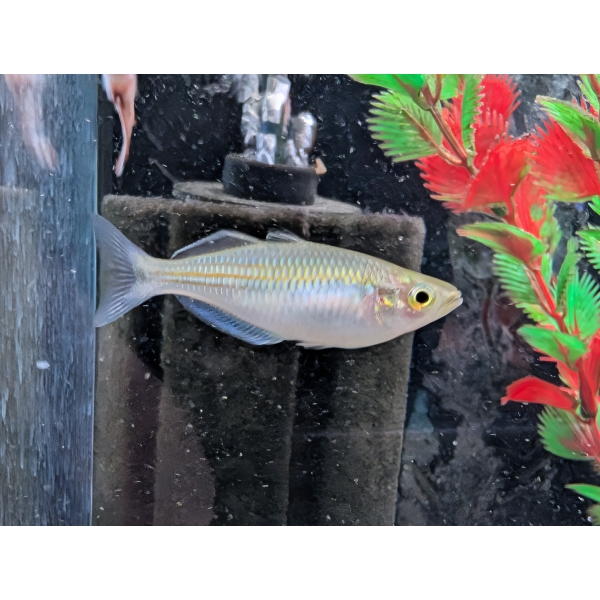
Melanotaenia boesemani, commonly known as the Boeseman’s Rainbowfish or Boesmani Rainbowfish, is an iconic and exceptionally popular species of freshwater fish belonging to the family Melanotaeniidae. Native to West Papua, Indonesia, this active and strikingly coloured rainbowfish is celebrated for its unique bicolouration, with the front half of its body often blue or purple and the rear half vibrant orange or yellow. Its peaceful nature and captivating schooling behaviour make it a highly sought-after addition to larger community aquariums.
Taxonomy and Classification
- Kingdom: Animalia
- Phylum: Chordata
- Class: Actinopterygii
- Order: Atheriniformes
- Family: Melanotaeniidae (Rainbowfishes)
- Genus: Melanotaenia
- Species: Melanotaenia boesemani
The species is named after Dr. M. Boeseman, a Dutch ichthyologist who collected the type specimens.
Habitat and Distribution
Melanotaenia boesemani is endemic to a few small, isolated lakes in the Bird’s Head Peninsula (Vogelkop) of West Papua, Indonesia, specifically Lakes Ajamaru, Hain, and Uter. These natural habitats typically consist of clear, relatively shallow, and often heavily vegetated waters. The water parameters are generally hard and alkaline, with temperatures ranging from 27-30°C (81-86°F). They are often found among submerged plants, roots, and fallen branches.
Physical Characteristics
The Boeseman’s Rainbowfish is a medium-sized fish, usually reaching an adult size of approximately 10-15 cm (4-6 inches) in total length, with males typically growing larger and developing more intense colouration and a more pronounced high-backed profile. Its most distinctive feature is its striking bicolouration.
Key physical characteristics include:
- Body Shape: Laterally compressed and elongated, with a characteristic high-backed profile that becomes more pronounced in mature males.
- Colouration: The anterior (front) half of the body is typically iridescent blue, purple, or grey, while the posterior (rear) half transitions sharply to a brilliant orange, yellow, or reddish-orange. This distinct bicolouration is unique to the species. Males display more vibrant and contrasting colours than females, especially during breeding or display. Females are generally more subdued, with fainter colours and a less pronounced transition.
- Fins: Transparent or lightly tinted, often with a subtle orange or reddish hue, especially in males. The dorsal and anal fins are often elongated and pointed in mature males.
- Eyes: Relatively large and prominent.
Diet and Feeding
In its natural habitat, Melanotaenia boesemani is an omnivore, feeding on small aquatic invertebrates, insect larvae, algae, and detritus. In an aquarium setting, they are unfussy eaters and will readily accept a wide variety of high-quality foods.
Suitable foods include:
- Flake Food & Pellets: High-quality flake food and small sinking pellets should form the staple of their diet.
- Frozen Foods: Frozen brine shrimp, daphnia, bloodworms, and mysis shrimp are excellent protein supplements.
- Live Foods: Live daphnia, microworms, and baby brine shrimp are eagerly accepted and can help enhance their colouration and condition for breeding.
- Vegetables: Occasional blanched vegetables like spinach or spirulina flakes can also be offered.
A varied diet is crucial for maintaining their vibrant colouration and overall health.
Behaviour and Temperament
The Boeseman’s Rainbowfish is a peaceful, active, and highly social schooling fish. They thrive when kept in groups of at least 6-8 individuals, and ideally more. Keeping them in larger groups encourages their natural shoaling behaviour, reduces stress, and allows males to display their full colour potential as they interact and compete for female attention. They are an excellent choice for community aquariums with other similarly sized, peaceful fish. Their active nature means they appreciate ample swimming space, particularly in the mid to upper levels of the water column.
Reproduction
Melanotaenia boesemani are egg-scatterers and typically spawn among fine-leaved plants or spawning mops. Breeding in captivity is achievable and can be quite rewarding.
- Spawning: Females scatter small, adhesive eggs over fine-leaved plants or a spawning mop, which the male then fertilises. Spawning often occurs over several days, with a few eggs laid each day.
- Parental Care: There is no parental care; adults may predate on eggs and fry.
- Fry Care: Eggs usually hatch within 7-10 days, and the fry are very small, initially requiring infusoria or liquid fry food, gradually moving to newly hatched brine shrimp as they grow. A separate breeding tank with a spawning mop or fine-leaved plants is recommended for successful rearing.
Conservation Status
Melanotaenia boesemani is listed as “Endangered” by the IUCN Red List. Its wild populations are severely threatened by over-collection for the aquarium trade, habitat degradation due to pollution from agriculture and human settlement around its native lakes, and the potential introduction of invasive species. Strict conservation efforts, including habitat protection and the promotion of sustainable aquaculture, are crucial for its long-term viability in both the wild and the aquarium trade. Aquarists are strongly encouraged to seek out captive-bred specimens to reduce pressure on wild stocks.
Aquarium Care
For aquarists interested in keeping Boeseman’s Rainbowfish, here are some essential care guidelines:
- Tank Size: A minimum of 150 litres (40 gallons) for a small group (6-8 fish). Larger tanks (200+ litres / 50+ gallons) are highly recommended to provide ample swimming space and maintain stable water parameters.
- Water Parameters:
- Temperature: 27-30°C (81-86°F) – they prefer warmer water than many other rainbowfish.
- pH: 7.0-8.5 (neutral to alkaline)
- Hardness: 10-20 dGH (moderately hard to hard)
- Filtration: Good filtration is essential to maintain high water quality, with a moderate flow rate that mimics their natural flowing water environment.
- Decor: Provide open swimming areas along with some areas of dense planting, driftwood, and rocks to offer hiding spots and visual breaks.
- Substrate: Fine gravel or sand is suitable.
- Lighting: Moderate to bright lighting is generally suitable, which will significantly enhance their iridescent colours.
- Tank Mates: Excellent tank mates include other peaceful rainbowfish species, larger tetras, rasboras, gouramis, peaceful dwarf cichlids (that prefer similar water parameters), and corydoras. Avoid housing them with large, aggressive, or very shy species that might be outcompeted for food.
- Maintenance: Regular weekly water changes (25-30%) are crucial for maintaining pristine water quality, which is vital for their health and vibrant colouration.
By providing a stable, well-maintained environment with appropriate water parameters and a varied diet, the Boeseman’s Rainbowfish can be a truly spectacular and engaging addition to a freshwater aquarium.
Convenient nationwide delivery; you’re only a click away!
Our nationwide delivery service makes it easy to receive your fish directly at your door, anywhere in the UK, for a flat rate of just £30. This convenient service allows you to order up to 10kg of fish, with the assurance that they will arrive in excellent condition. To make the fishes journey as comfortable as possible we use Oxygen in the fish bags and heat packs in all the boxes of fish we send out.
General Enquiries
There are no enquiries yet.