
Borneo Sucker
£8.50
Borneo Sucker
Bulk Offer – 3 for £22.50
Discount will apply at checkout.
- Description
- Store Policies
- Enquiries
Description
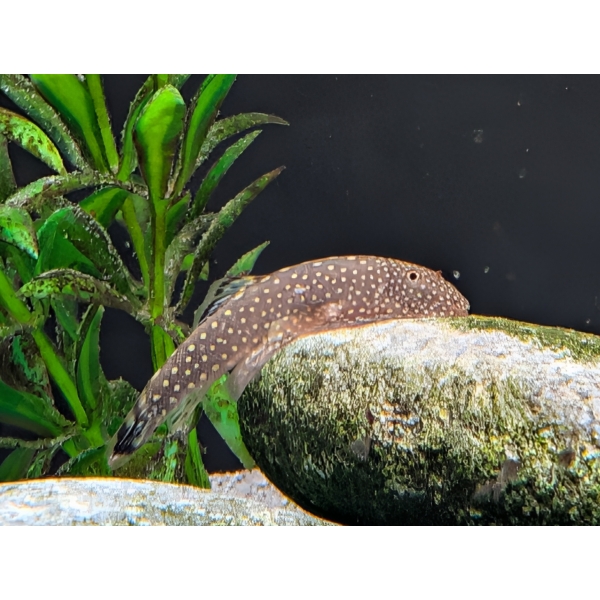
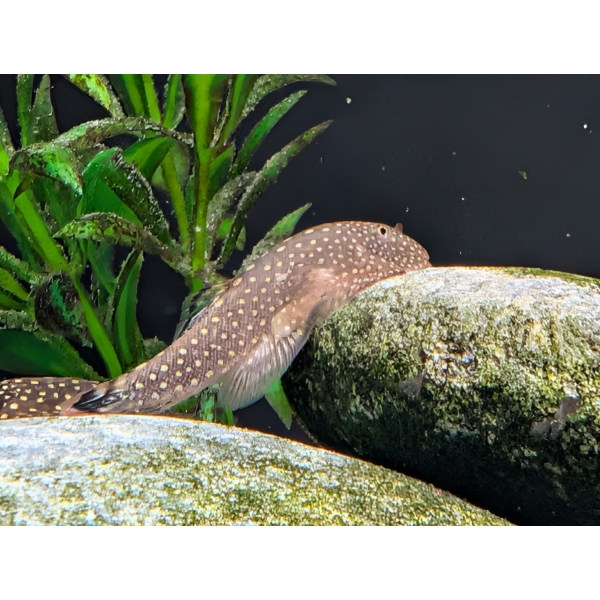
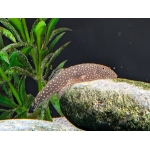
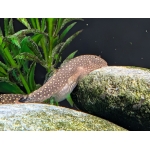
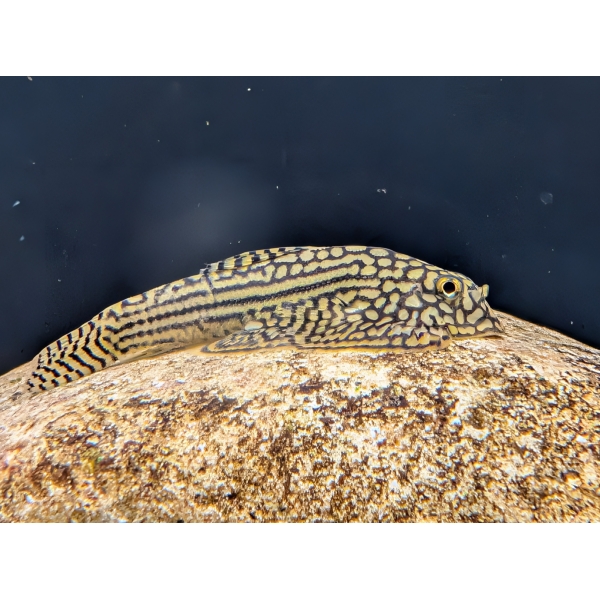
Borneo Sucker (Gastromyzon scitulus)
Care Guide
Gastromyzon scitulus, often referred to as the Borneo Sucker or the Bornean Hillstream Loach, is a beautiful, highly specialised fish native to Southeast Asia. These loaches are masters of adhesion, possessing flattened bodies and modified fins that act as a giant suction cup, allowing them to cling to submerged rocks in very fast-flowing, oxygen-rich mountain tributaries.
Key Requirements: The Biotope
To keep the Borneo Sucker successfully, you must create a “Hillstream Tank” environment. This involves replicating three non-negotiable elements of their natural habitat: extreme flow, high oxygen levels, and cool temperatures.
1. Water Flow and Oxygenation
- Current: High flow is paramount. Use an oversized external canister filter and supplement the flow with one or more powerheads directed to create continuous, laminar movement across the substrate. The water should be visibly rushing.
- Oxygen: The water must be saturated with oxygen. Ensure all filter returns and powerheads are aimed at the water surface, creating intense ripples and movement to maximise gas exchange.
- Aesthetics: The Borneo Sucker will only exhibit natural behaviour (clinging to rocks, rapid grazing) when the current is strong enough to pin a piece of soft food to the glass.
2. Aquascaping and Substrate
- Substrate: Fine, smooth sand or small, rounded river gravel. Avoid sharp substrate.
- Hardscape: The most important feature. Provide numerous smooth, flat river stones and slate pieces. The loaches spend of their time on these surfaces, either resting or grazing on biofilm. Arrange rocks to create areas of shade and current refuges, but ensure plenty of exposed, smooth surface area.
Water Parameters and Maintenance
Gastromyzon scitulus is highly sensitive to pollutants and temperature fluctuations. They are not suitable for tropical community tanks with higher temperatures.
| Parameter | Recommended Range |
|---|---|
| Temperature | to |
| to |
|
| Hardness () | Soft to moderately hard ( to ) |
| Ammonia/Nitrite | |
| Nitrate | Below (As low as possible) |
Maintenance: Due to the requirement for low nitrates, weekly water changes of – are strongly recommended. When cleaning filter sponges, use water siphoned from the tank to preserve the beneficial bacteria.
Diet and Feeding
The primary food source for the Borneo Sucker is the algal biofilm that naturally grows on rocks and glass surfaces. They graze continuously throughout the day.
- Primary Food: Biofilm and soft diatoms. If you do not have enough algae growth, you must supplement heavily.
- Supplemental Foods:
- High-quality algae wafers or sinking pellets rich in spirulina.
- Blanched vegetables like courgette (zucchini), shelled peas, or spinach, weighted down with a rock or clip.
- Frozen foods (e.g., small bloodworms, daphnia) offered sparingly, ensuring they reach the bottom quickly before being swept away by the current.
Social Behaviour and Tank Mates
- Social Grouping: These loaches are social and thrive in groups. A minimum of three or more individuals is essential to encourage natural behaviour and reduce stress.
- Temperament: Generally peaceful, though they may chase each other for dominance over prime grazing rocks. This territorial skirmishing is harmless and part of their natural hierarchy.
- Compatibility: They are best kept with other cool-water, current-loving fish, such as White Cloud Mountain Minnows, Danio species, and other Hillstream Loaches. Avoid large, aggressive, or slow-moving fish.
Health Alert
Like other hillstream species, the Borneo Sucker is considered scaleless and is extremely sensitive to common aquarium medications, particularly those containing copper or formalin. If treating for a parasitic infection (such as White Spot or Ich), always use specialist medication labelled as safe for loaches and scaleless fish, or administer half the recommended dose. Stress due to low oxygen or high temperature is the most frequent cause of illness.
Convenient nationwide delivery; you’re only a click away!
General Enquiries
There are no enquiries yet.