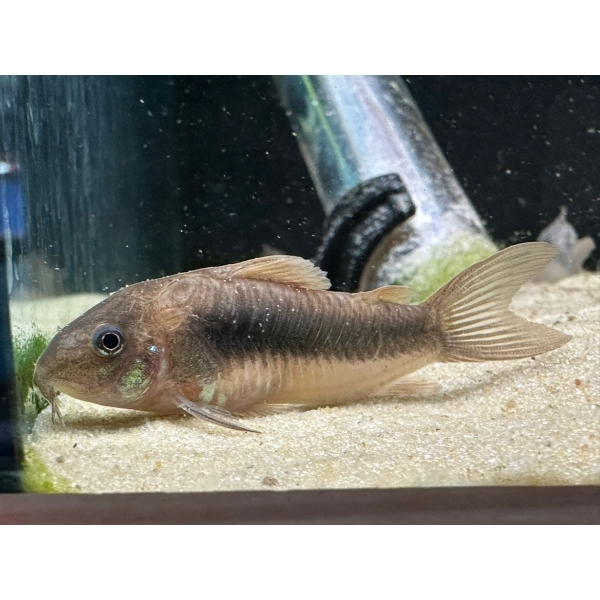
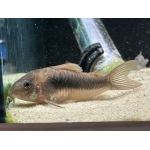

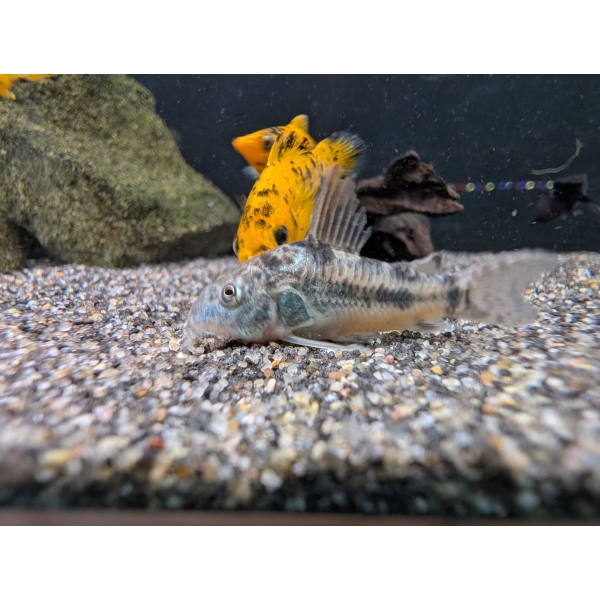
Bronze Corydoras (Osteogaster aeneus)
£6.50
Bulk Offer – 3 for £16.50
Discount will apply at checkout.
- Description
- Store Policies
- Enquiries
Description
Bronze Corydoras (Osteogaster aeneus)
Care Guide:
Bronze Corydoras (Osteogaster aeneus), traditionally known to aquarists worldwide as Corydoras aeneus, is one of the most resilient, charming, and enduringly popular bottom-dwelling freshwater fish in the aquarium hobby. Native to a vast range across South America—stretching from Trinidad and Colombia down to the Río de la Plata basin—this small, armoured catfish is highly recommended for fishkeepers of all experience levels due to its peaceful nature and exceptional hardiness.
Taxonomic Note: Following a landmark 2024 phylogenomic revision of the subfamily Corydoradinae (Dias et al.), the classic “aeneus group” was moved out of the overstuffed Corydoras catch-all category. The historical genus Osteogaster was officially resurrected, making Osteogaster aeneus (sometimes written as Osteogaster aenea) its current scientifically valid name.
Species Overview
| Common Name | Bronze Corydoras, Bronze Catfish, Green Corydoras |
| Scientific Name | Osteogaster aeneus (formerly Corydoras aeneus) |
| Family | Callichthyidae |
| Origin | South America (widespread distribution east of the Andes) |
| Adult Size | 6 to 7.5 cm (2.5 to 3 inches) |
| Lifespan | 5 to 10 years with proper care |
| Minimum Tank Size | 60 litres (approx. 15 gallons) for a small shoal |
Appearance and Varietals
The Bronze Corydoras features a classic, wedge-shaped profile protected by overlapping plates of body armour (scutes) rather than traditional scales. They possess a downward-facing mouth equipped with three pairs of highly sensitive sensory barbels used to locate food items buried within the substrate.
-
Colouration: The wild-type displays a metallic bronze-to-brown body with a prominent, shimmering iridescent green or blue sheen along its flanks. The belly is a contrasting cream or pale yellow colour.
-
Common Varieties: Due to decades of extensive commercial breeding, several selectively bred variants are widely available. These include the Albino Corydoras (pinkish-white body with red eyes) and various long-finned strains. Their care requirements remain identical to the wild-type.
Aquarium Setup and Habitat
In the wild, Osteogaster aeneus inhabits shallow, slow-moving rivers, streams, and flooded forest floors, typically foraging over soft, muddy, or sandy riverbeds.
Substrate (Critical)
Because these fish spend their entire lives interacting with the bottom of the tank, substrate selection is paramount.
-
Recommendation: A soft, fine aquarium sand is the ideal choice. If gravel must be used, it must be exceptionally small, smooth, and rounded.
-
Warning: Sharp-edged gravel or coarse substrates will erode and damage their delicate barbels. Damaged barbels hinder their ability to feed effectively and leave the fish highly susceptible to secondary, often fatal, bacterial infections.
Décor and Plants
-
Shelter: Provide plenty of shaded retreat areas using smooth bogwood, twisted roots, and dried Indian Almond leaves (which release beneficial tannins).
-
Vegetation: They thrive in heavily planted aquaria. Tall, broad-leafed plants like Amazon Swords or dense mats of Java Moss provide excellent cover and replicate their native habitat.
Atmospheric Breathing
Like all members of its lineage, Osteogaster aeneus possesses a modified, highly vascularised intestine that allows it to swallow air from the water’s surface and extract oxygen. It is completely normal behaviour to see them dart quickly to the surface for a gulp of air. Always ensure there is a gap of open air between the water’s surface and the aquarium lid.
Water Parameters
The Bronze Corydoras is famously adaptable and can tolerate a wider range of water chemistry parameters than many other Amazonian species, making it highly forgiving of minor errors.
-
Temperature: 21°C to 27°C (70°F to 80°F)
-
pH: 6.0 to 8.0 (6.5 to 7.2 is optimal)
-
Hardness: 5 to 19 dGH
-
Maintenance: Ensure efficient filtration that gently circulates water without creating an overwhelming current. Regular weekly water changes of 25% to 30% are essential, coupled with a thorough vacuuming of the sand to remove trapped organic waste.
Diet and Feeding
While they are dedicated omnivorous scavengers, Osteogaster aeneus must not be expected to survive solely on tank leftovers or algae. They require a targeted, nutritionally complete diet.
-
Sinking Foods: High-quality sinking catfish pellets, granulates, and crushed wafers should form their daily staple. If faster, mid-water fish are stealing their food during the day, feed them shortly after the aquarium lights have been turned off.
-
Live and Frozen Foods: Supplement regularly with protein-rich treats such as frozen bloodworms, daphnia, tubifex, and enriched brine shrimp to keep them in peak condition.
Temperament and Compatibility
The Bronze Corydoras is a thoroughly peaceful, gregarious species that shows absolutely no aggression toward other tank inhabitants.
Shoaling Behaviour
-
Group Size: They must be kept in groups of at least 5 to 6 individuals, though a larger group of 10 or more is highly recommended if space permits. When kept in numbers, they gain confidence, display much more active, playful behaviours, and form charming, synchronised shoals.
Compatible Tank Mates
They are ideal candidates for the classic community aquarium. Excellent companions include:
-
Small to medium tetras (e.g., Neon, Cardinal, or Rummy-nose tetras)
-
Rasboras and Danios
-
Peaceful dwarf cichlids (e.g., Apistogramma or Ram cichlids)
-
Peaceful livebearers (e.g., Guppies, Platies, and Mollies)
-
Dwarf Gouramis
Avoid housing them with large, aggressive, or highly territorial bottom-dwellers (such as large Central American cichlids) that might treat them as prey or bully them away from feeding zones.
Breeding
The Bronze Corydoras is one of the easiest catfish to breed in the home aquarium, often spawning spontaneously when environmental triggers are met.
-
Conditioning: Feed the group heavily with high-quality live or frozen foods (especially bloodworms) for a fortnight to trigger egg production in females.
-
Triggering the Spawn: Perform a large water change (approx. 50%) using water that is a few degrees cooler than the aquarium water. This simulates the onset of the South American rainy season.
-
The “T-Position”: During courtship, the male and female will engage in a unique dance, forming a “T-shape” where the female attaches her mouth to the male’s pelvic region to stimulate sperm release.
-
Egg Deposit: The female will form a basket pouch with her pelvic fins to hold the sticky eggs, swimming around to deposit them onto clean glass, broad plant leaves, or flat surfaces.
-
Rearing: Because the parents will greedily eat their own eggs if left in the tank, it is best to gently roll the eggs off the glass and move them to a dedicated hatching container. The eggs will hatch in 3 to 5 days, and the fry can be fed powdered fry food, infusoria, or newly hatched baby brine shrimp once their yolk sacs are absorbed.
Convenient nationwide delivery; you’re only a click away!
Our nationwide delivery service makes it easy to receive your fish directly at your door, anywhere in the UK, for a flat rate of just £30. This convenient service allows you to order up to 10kg of fish, with the assurance that they will arrive in excellent condition. To make the fishes journey as comfortable as possible we use Oxygen in the fish bags and heat packs in all the boxes of fish we send out.
Our delivery days are as follows:
Please put your desired delivery day in the Order Notes on the Checkout page.
General Enquiries
There are no enquiries yet.