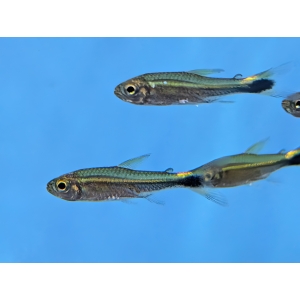
Centipede Knifefish Steatogenys duidae
£24.00
Centipede Knifefish Steatogenys duidae
- Description
- Store Policies
- Enquiries
Description
Centipede Knifefish Steatogenys duidae
Care Guide:
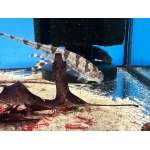
The Centipede Knifefish (Steatogenys duidae) is a truly unusual freshwater fish. Notably, this fascinating nocturnal species originates from the warm river basins of South America, particularly within the Amazon and Orinoco systems. It earns its unique common name from the dark, banded patterns that closely resemble a centipede. Consequently, it has become a highly popular choice for oddball fish collectors.
Tank Size and Benthic Behaviour
In captivity, these slender fish generally grow to a maximum length of about 20 centimetres. Consequently, they require a medium to large aquarium with a generous footprint. Because they are highly secretive bottom-dwellers, they spend most daylight hours hiding. Therefore, you must provide plenty of spacious shelters to ensure they feel safe and comfortable in their environment.
Ideal Aquarium Water Parameters
Maintaining high water quality is highly beneficial for their long-term health and survival. Because they naturally hail from pristine, slow-moving river systems, they are sensitive to sudden environmental fluctuations. The optimal parameters include:
-
- Acidity Range: A stable pH between 6.0 and 7.2.
- Water Hardness: Soft to moderately hard (2–12 dGH).
- Temperature Range: Kept consistently between 24°C and 28°C.
- Filtration: Efficient biological filtration with a gentle current.
Structural Tank Layout and Decor
Furthermore, the physical arrangement of the aquarium must replicate their natural shaded habitats. Incorporating plenty of smooth rocks, natural bogwood, and plastic or clay tubes is highly recommended. Additionally, the substrate must consist of fine sand to protect their delicate skin. If you add floating plants to dim the illumination, they will occasionally venture out during the day.
Dietary Habits and Nutrition
In terms of nutrition, they are specialised carnivores that feed primarily on small invertebrates in the wild. Although they can occasionally be trained to accept sinking pellets, live or frozen foods are absolutely mandatory. Specifically, their nightly feeding routine should regularly incorporate:
-
- Nutritious frozen bloodworms.
- Live or frozen brineshrimp.
- Chopped earthworms or tubifex.
Peaceful Temperament and Coexistence
Finally, these unusual creatures possess a surprisingly peaceful temperament toward other species. However, they do use a weak electric organ to navigate their surroundings and locate food in the dark. While they will completely ignore larger, calm tankmates, they might accidentally swallow tiny shrimp or fry. As a result, you should choose their aquatic companions very carefully.
General Enquiries
There are no enquiries yet.