

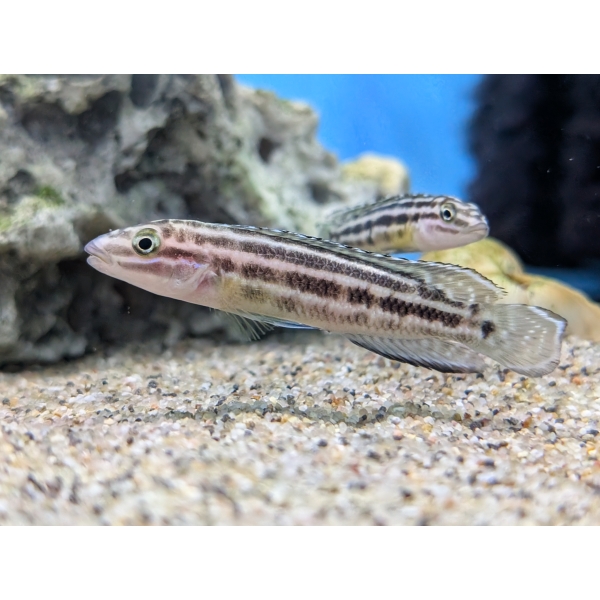
Chalinochromis Ndoboi
£20.00
Chalinochromis Ndoboi
Bulk Offer – 3 for £39.00
Discount will apply at checkout.
- Description
- Store Policies
- Enquiries
Description
Chalinochromis Ndoboi
Care Guide
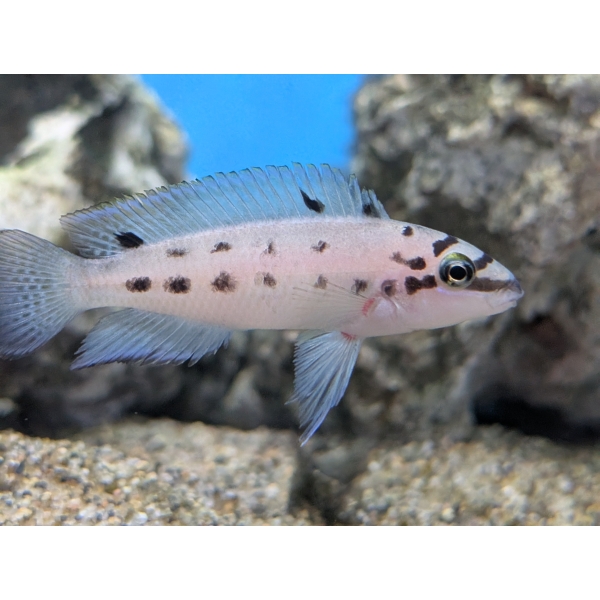
Chalinochromis ndoboi is a beautiful and relatively mild-mannered cichlid from the vast and deep waters of Lake Tanganyika in East Africa. Often called a “Chalino” or sometimes confused with C. popelini, this species is prized by aquarists for its striking horizontal stripes and its unique rock-dwelling habits. It makes an excellent addition to a well-structured, stable Tanganyikan community tank.
Key Characteristics and Origin
- Scientific Name: Chalinochromis ndoboi
- Origin: Endemic to Lake Tanganyika, East Africa. They inhabit the rocky littoral zone, often found foraging vertically on large rock walls and cliffs.
- Maximum Size: Typically grows to ( inches).
- Appearance: They have an elongated, almost torpedo-like body shape. The base colouration is usually pale cream or yellowish-tan, dominated by two bold, dark horizontal stripes running from the gill plate to the caudal fin (tail). Their fins often have subtle blue or white edging.
- Temperament: Generally peaceful but highly territorial, especially towards their own species or fish of similar shape. They are not as aggressive as many Malawian cichlids.
Aquarium Environment and Setup
The tank setup is critical for this species, as they require an environment that mimics the vertical rock cliffs of their natural habitat to feel secure and establish territory.
Tank Size and Filtration
- Minimum Tank Size: A tank of at least litres (approximately UK gallons) is necessary for a single pair, focusing more on height and depth than typical Malawi tanks.
- Filtration: Lake Tanganyika water is pristine, so high-efficiency filtration is non-negotiable. Use a high-capacity external canister filter to maintain crystal-clear water and provide excellent biological stability.
- Aeration: Strong aeration and surface agitation are required to keep the water highly oxygenated.
Aquascape and Decor
- Substrate: Fine-grained inert sand or aragonite is preferred, as they will occasionally dig or use it for breeding sites.
- Decor (Crucial): Use copious amounts of large, inert rock (e.g., slate, limestone, ocean rock) to build extensive, secure, vertical structures that reach near the water surface. Create numerous small crevices, caves, and bolt holes where a pair can retreat and breed. The vertical structure allows them to exhibit their natural grazing behaviour.
- Lighting: Moderate lighting is suitable, often beneficial for encouraging the growth of natural algae or biofilm on the rocks, which they will graze on.
Water Parameters
Stability is key. Tanganyikan cichlids require water that is hard, alkaline, and consistently maintained.
| Parameter | Recommended Range |
|---|---|
| Temperature | () |
| pH | (Highly Alkaline) |
| Hardness (GH/KH) | Hard to Very Hard () |
Diet and Feeding
In the wild, C. ndoboi feeds mainly on small invertebrates and organisms found in the algae/biofilm growing on the rocky substrate. They are insectivores and omnivores.
- Staple Diet: High-quality, sinking pellets or flakes designed for carnivorous/omnivorous cichlids.
- Protein Supplements: A varied diet is essential. Offer small, frozen foods such as Mysis shrimp, brine shrimp, cyclops, and chopped krill several times a week.
- Vegetable Matter: Ensure the diet contains some vegetable matter, either through spirulina-enhanced pellets or high-quality greens, though this is less critical than for herbivorous Mbuna.
- Feeding Frequency: Feed small portions two to three times per day to ensure food reaches the bottom-dwelling fish.
Compatibility and Behaviour
- Social Structure: This species is best kept as a proven male-female pair in the home aquarium. While they can sometimes be kept in groups in vast tanks, they are extremely aggressive towards conspecifics outside of a bonded pair.
- Tank Mates:
- Suitable: Other peaceful, non-cichlids (like Synodontis catfish), and especially other Tanganyikan species that occupy different zones of the tank. Excellent tank mates include open-water species like Cyprichromis (which occupy the top layer) and smaller, territorial rock-dwellers like Julidochromis (which occupy the bottom crevices).
- Avoid: Large, aggressive Frontosa, overly boisterous Malawian cichlids, or any small, slow-moving fish that could be mistaken for prey.
- Breeding: They are maternal mouthbrooders and cave spawners. The pair will breed within a secure, often vertical, cave. The female will hold the eggs in her mouth until the fry are free-swimming (around three weeks). A bonded pair is relatively easy to breed.
This fish is a genuinely spectacular display species when healthy. Since their environment is so specific, would you be interested in a list of other Tanganyikan cichlids that would perfectly complement a vertical rock structure setup?
Convenient nationwide delivery; you’re only a click away!
Our nationwide delivery service makes it easy to receive your fish directly at your door, anywhere in the UK, for a flat rate of just £30. This convenient service allows you to order up to 10kg of fish, with the assurance that they will arrive in excellent condition. To make the fishes journey as comfortable as possible we use Oxygen in the fish bags and heat packs in all the boxes of fish we send out.
General Enquiries
There are no enquiries yet.