



Julidochromis Regani “Zambia”
£15.00
Julidochromis Regani “zambia”
Bulk Offer – 3 for £33.00
Discount will apply at checkout.
- Description
- Store Policies
- Enquiries
Description
Julidochromis Regani “Zambia”
Care Guide
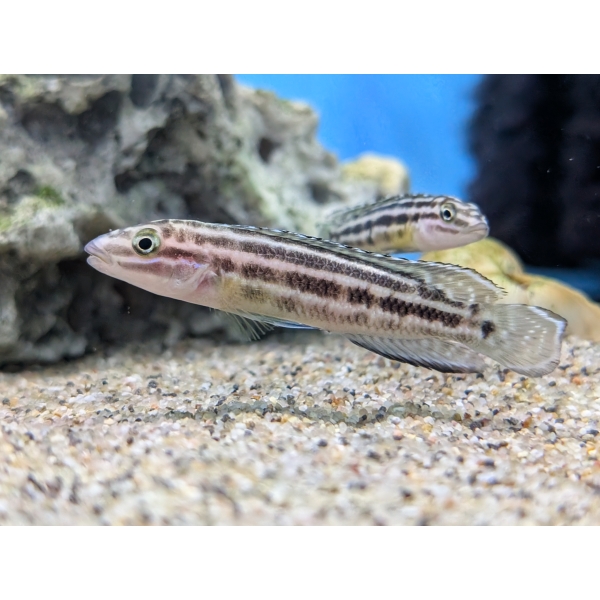
Julidochromis regani, often referred to as the Checkered Julido or Striped Julie, is the largest species within the Julidochromis genus. The “Zambia” locale is highly sought after for its distinctive and robust colouration. These fish are beloved by cichlid enthusiasts for their fascinating social structure and their preference for navigating the rocky terrain of Lake Tanganyika. They are highly territorial but relatively mild toward species that do not share their shape or habitat zone.
Key Characteristics and Origin
- Scientific Name: Julidochromis regani (with “Zambia” denoting the specific collection location)
- Origin: Endemic to Lake Tanganyika, East Africa. The “Zambia” variant is typically collected from the southern regions of the lake along the Zambian coast.
- Maximum Size: Can reach up to ( inches), making it the longest of the Julies.
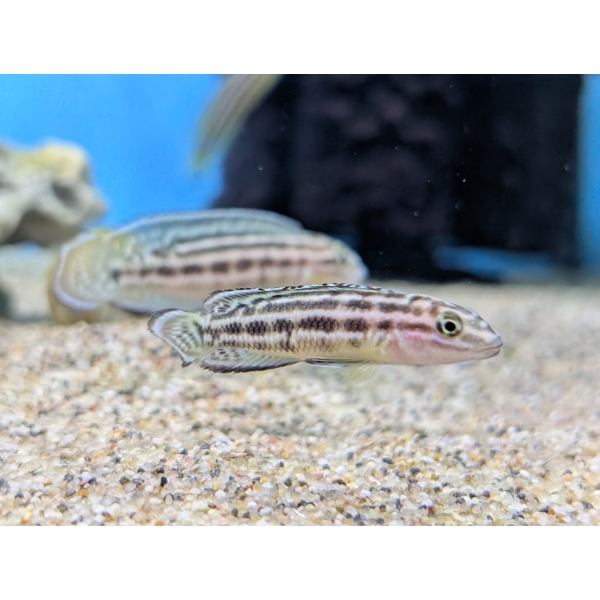
- Appearance: They possess the characteristic elongated, cylindrical body common to the genus. The colouration consists of a pale yellow or cream base, overlaid with three distinct, bold, horizontal black stripes running the length of the body. The “Zambia” variant often shows prominent dark spots or a checkered pattern on the fins.
- Temperament: Territorial and aggressive towards conspecifics. Once a pair forms, they are fiercely defensive of their chosen cave territory but generally peaceful with appropriate, dissimilar tank mates.
Aquarium Environment and Setup
Julidochromis regani are lapidophiles, meaning they spend their lives in the rocky, sediment-poor zones. The aquarium must replicate this environment to reduce stress and provide essential breeding sites.
Tank Size and Filtration
- Minimum Tank Size: Due to their size and territorial nature, a minimum tank size of to litres ( UK gallons) is recommended for a stable pair and suitable tank mates.
- Filtration: As with all Tanganyikan cichlids, water purity is paramount. Use robust mechanical and biological filtration, preferably a powerful external canister filter.
- Aeration: Good water flow and surface agitation are necessary to ensure the high oxygen levels typical of the deep rift lake.
- Maintenance: Perform weekly water changes of to maintain pristine conditions and low nitrate levels.
Aquascape and Decor (Crucial)
- Substrate: Fine inert sand or aragonite-based gravel is ideal, though most of the tank floor should be covered by rocks.
- Decor: This is the most crucial element. Use vast amounts of inert rock (limestone, slate, or basalt) to create massive, layered rock piles that extend from the bottom to near the surface. The design must incorporate numerous narrow, secure caves and crevices. Julies prefer caves that are slightly angled or narrow openings where they can feel protected.
Water Parameters
Stability is absolutely vital. Rapid changes in chemistry or temperature can be fatal to Tanganyikan fish.
| Parameter | Recommended Range |
|---|---|
| Temperature | () |
| pH | (Highly Alkaline) |
| Hardness (GH/KH) | Hard to Very Hard () |
Diet and Feeding
In the wild, J. regani are primarily micro-predators, feeding on small crustaceans, insects, and other organisms within the biofilm and crevices of the rocks.
- Staple Diet: High-quality, sinking cichlid pellets or flakes.
- Protein Supplements: A varied diet of small, frozen foods is necessary for optimal health and colouration. Offer mysis shrimp, brine shrimp, and cyclops several times a week.
- Feeding: Feed small amounts two to three times per day. Ensure the food sinks quickly as they are bottom/rock dwellers and may not compete well with fast-feeding surface fish.
Compatibility and Behaviour
- Social Structure: J. regani are best kept as a monogamous, paired couple. They form strong, long-lasting pair bonds and share the duties of protecting their territory and fry. It is extremely difficult and risky to introduce a third or subsequent Julie once a pair is established, as they will aggressively defend their home.
- Pairing: Since these fish are hard to sex visually, the easiest way to obtain a pair is to start with six or more juveniles and allow them to naturally pair off. Once a pair is established, the remaining fish must be removed promptly.
- Tank Mates:
- Suitable: Other Tanganyikan species that inhabit different water levels are ideal. Good options include Cyprichromis (occupy open water/top layer) and smaller, dissimilar shell-dwelling cichlids like Neolamprologus multifasciatus (occupy the sandy bottom).
- Avoid: Large, highly predatory fish (like Frontosa) and fish of similar shape, size, or behaviour (e.g., other Julidochromis or Chalinochromis species), unless the tank is exceptionally large and divided by rockwork.
- Breeding: They are substrate spawners and are relatively easy to breed once paired. The female lays eggs inside a secure cave or under an overhang, and both parents guard the eggs and fry meticulously. The fry can be fed newly hatched brine shrimp.
Convenient nationwide delivery; you’re only a click away!
Our nationwide delivery service makes it easy to receive your fish directly at your door, anywhere in the UK, for a flat rate of just £30. This convenient service allows you to order up to 10kg of fish, with the assurance that they will arrive in excellent condition. To make the fishes journey as comfortable as possible we use Oxygen in the fish bags and heat packs in all the boxes of fish we send out.
General Enquiries
There are no enquiries yet.