


Clown Loach Chromobotia macracanthus
£15.00
Bulk Offer – 3 for £33.00
Discount will apply at checkout.
- Description
- Store Policies
- Enquiries
Description
Clown Loach (Chromobotia macracanthus)
The Clown Loach, scientifically known as Chromobotia macracanthus, is one of the most popular and easily recognisable freshwater fish in the aquarium hobby. Renowned for its striking orange and black striped pattern, playful personality, and beneficial snail-eating habits, this loach makes a captivating addition to large community aquariums.
Origin and Habitat
Clown Loaches are native to the slow-moving rivers, floodplains, and tributaries of Southeast Asia, particularly in Indonesia (Sumatra and Borneo) and parts of Malaysia. In their natural habitat, they are often found in blackwater environments rich with leaf litter, submerged roots, and driftwood, providing plenty of hiding spots. During the rainy season, they migrate to flooded areas for spawning.
Appearance and Characteristics
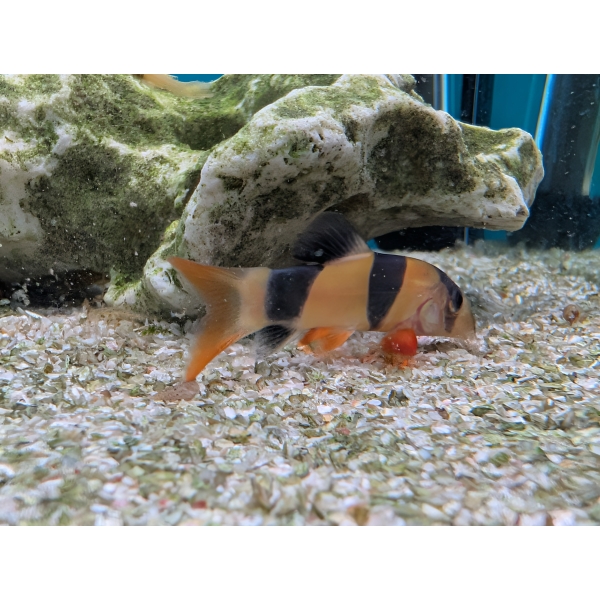
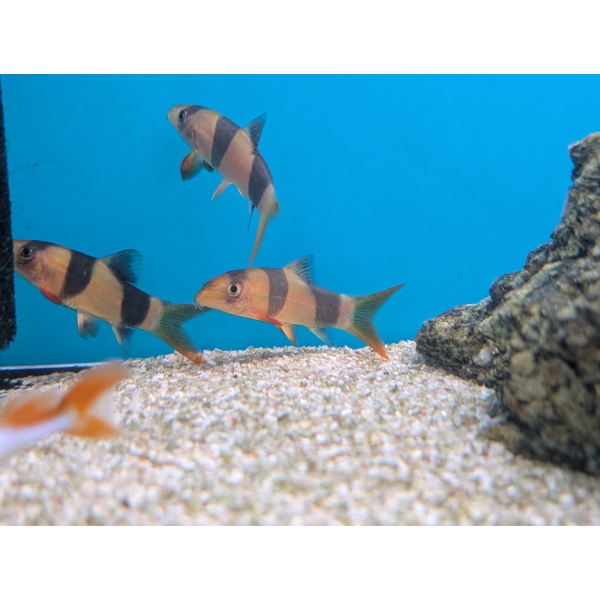
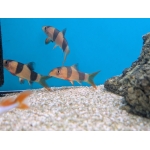
The Clown Loach is easily identified by its elongated, torpedo-shaped body, which is typically bright orange to reddish-orange, adorned with three broad, black, wedge-shaped vertical bands. The first band runs through the eye, the second is located mid-body, and the third is at the base of the caudal (tail) fin. Their fins are often reddish, and their tail is forked. They possess four pairs of barbels around their mouth, which they use to forage for food in the substrate.
A unique feature of Clown Loaches is a retractable spine located beneath each eye, which can be extended when the fish feels threatened or is stressed. Care should be taken when handling them, as these spines can get caught in nets.
Clown Loaches are long-lived fish, often surviving for 10-15 years or more in a well-maintained aquarium, and can grow to an impressive size of 8-12 inches (20-30 cm) or even larger, though they grow slowly.
Behaviour and Temperament
Clown Loaches are highly social and intelligent fish that thrive in groups. Keeping them in a group of at least five to six individuals is crucial for their well-being, as this encourages their natural schooling behaviour, reduces stress, and allows their playful personalities to emerge. When kept alone or in too small a group, they can become shy, stressed, and prone to illness.
They are active bottom-dwellers and will spend much of their time exploring caves, sifting through the substrate, and interacting with their group members. They are particularly active during dawn and dusk. Their peaceful nature makes them excellent tank mates for other similarly sized, non-aggressive fish that prefer similar water conditions. Suitable companions include larger tetras, peaceful cichlids (e.g., Geophagus species), larger gouramis, and various catfish (e.g., Plecos). Avoid housing them with very small, timid fish or highly aggressive species.
A well-known behaviour of Clown Loaches is their tendency to “play dead” by lying on their sides or even upside down, which can alarm inexperienced aquarists. This is a normal behaviour when they are resting or feeling secure.
Aquarium Requirements
Due to their potential size, social nature, and longevity, Clown Loaches require specific and spacious aquarium conditions:
- Tank Size: A minimum of 280 litres is recommended for a small group of juvenile Clown Loaches. However, given their adult size and social needs, a tank of 450 litres or larger is highly recommended for a mature group to ensure ample swimming space and prevent stunting.
- Water Parameters:
- Temperature: 25-30°C (77-86°F) – they prefer warmer, stable temperatures.
- pH: 6.0-7.5 (slightly acidic to neutral is preferred, mimicking their blackwater origins).
- Hardness: 5-12 dGH (soft to moderately soft water).
- Filtration: Excellent and robust filtration is paramount to handle their bioload. A powerful canister filter or multiple large hang-on-back filters providing strong mechanical, biological, and chemical filtration are necessary. Good water movement and aeration are also beneficial.
- Substrate: A fine sand substrate is ideal, as Clown Loaches love to burrow and sift through it with their sensitive barbels. Coarse gravel can damage their delicate barbels.
- Lighting: Moderate to dim lighting is preferred, as they are often more active in lower light conditions.
- Decor: Provide plenty of hiding spots, caves, and tunnels using smooth rocks, driftwood, and PVC pipes. Arrange decor to create numerous nooks and crannies where they can retreat and feel secure. Live plants that can tolerate warmer, slightly acidic water, such as Java Fern, Anubias, and larger Amazon Swords, can be used, but ensure they are well-rooted or attached to decor, as loaches can sometimes uproot them while digging.
Diet
Clown Loaches are omnivores, with a strong preference for meaty foods and a well-known appetite for snails. A varied and balanced diet is crucial for their health and vibrant colouration.
- Primary Diet: High-quality sinking pellets or wafers specifically formulated for loaches or bottom-dwelling fish.
- Supplements: Offer a variety of live or frozen foods such as bloodworms, brine shrimp, daphnia, and tubifex worms.
- Vegetable Matter: Blanched vegetables like zucchini, cucumber, and shelled peas can be offered occasionally.
- Snail Control: They are highly effective at controlling nuisance snail populations in the aquarium. If you have a snail problem, Clown Loaches can be an excellent natural solution.
Feed them small amounts multiple times a day to ensure all individuals get enough food.
Breeding
Breeding Clown Loaches in a home aquarium is extremely challenging and rarely achieved. They are egg-layers, and their complex breeding habits in the wild, which involve seasonal migrations and specific environmental cues, are difficult to replicate in captivity. Most Clown Loaches available in the aquarium trade are either wild-caught or commercially bred using hormone induction.
Common Health Issues
Clown Loaches are generally hardy once established but are susceptible to common freshwater fish diseases, particularly Ich (white spot disease), especially when stressed or introduced to new environments. Their lack of scales (or very small, embedded scales) makes them sensitive to many medications, so always use half the recommended dose or seek specific “loach-safe” treatments. Maintaining pristine water quality, stable parameters, a balanced diet, and a stress-free environment are key to preventing illness.
Conclusion
The Clown Loach is a magnificent, intelligent, and highly engaging fish that can bring immense character and activity to a large, well-maintained community aquarium. Their striking appearance, playful social interactions, and beneficial snail-eating habits make them a truly rewarding species for the dedicated aquarist. With proper care, ample space, and a suitable group, these long-lived loaches can become cherished inhabitants of your aquatic world for many years.
Convenient nationwide delivery; you’re only a click away!
General Enquiries
There are no enquiries yet.