


Thai Glass Catfish Kryptopterus vitreolus
£7.00
Bulk Offer – 3 for £18.00
Discount will apply at checkout.
- Description
- Store Policies
- Enquiries
Description
Thai Glass Catfish (Kryptopterus vitreolus)
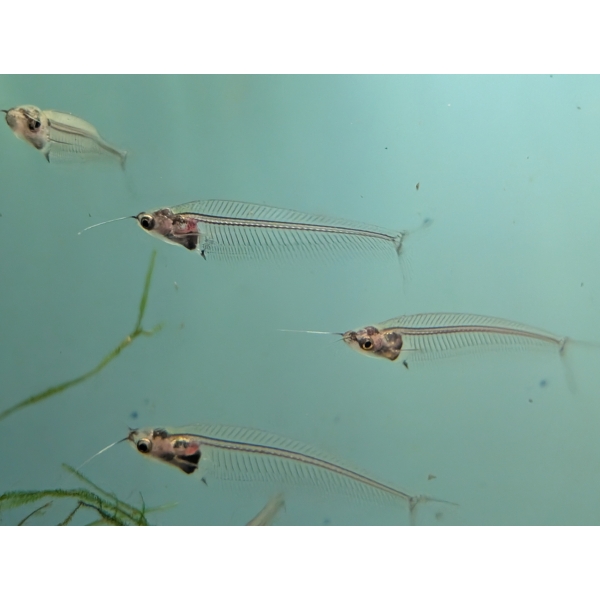
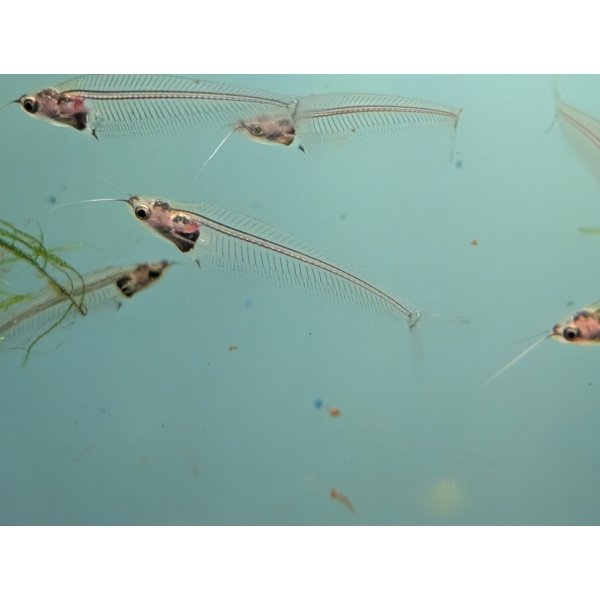
The Thai Glass Catfish, scientifically known as Kryptopterus vitreolus (formerly Kryptopterus bicirrhis), is a truly unique and captivating freshwater fish in the aquarium hobby. Renowned for its almost completely transparent body, which reveals its skeletal structure and internal organs, this schooling fish brings an ethereal and intriguing presence to any peaceful community aquarium.
Origin and Habitat
Thai Glass Catfish are native to the slow-moving, often murky or blackwater rivers and tributaries of Southeast Asia, particularly found in the central and western parts of Thailand (e.g., the Mae Klong and Chao Phraya river basins). Their natural habitat is characterised by dense submerged vegetation, roots, and leaf litter, where they school in the mid-water column. They are accustomed to soft, slightly acidic to neutral water conditions.
Appearance and Characteristics
The Thai Glass Catfish typically grows to about 2.5-3 inches (6-7.5 cm) in length. Its most distinctive feature is its remarkable transparency. The body is almost entirely clear, allowing observers to see its spine, internal organs, and even the movement of its gills. The only visible parts that are not transparent are a faint silvery sheen along the lateral line and two long barbels extending from its mouth.
They possess a very small, almost invisible dorsal fin and a long anal fin that runs along most of their underside, allowing for graceful, almost shimmering movements. Their transparency makes them excellent at camouflaging themselves within their environment.
Behaviour and Temperament
Thai Glass Catfish are peaceful and highly social schooling fish. Keeping them in a group of at least six to ten individuals is crucial for their well-being. This promotes their natural schooling behaviour, reduces stress, and allows them to feel secure. When kept alone or in too small a group, they can become extremely shy, stressed, lose their transparency, and become prone to illness.
They are active mid-water swimmers and will spend most of their time hovering and moving together in a tight school. Their calm demeanour makes them excellent tank mates for other peaceful, similarly sized community fish that prefer similar water conditions. Suitable companions include various tetras (e.g., Neon Tetras, Cardinal Tetras), Rasboras, Corydoras catfish, Otocinclus catfish, and other small, non-aggressive species. Avoid housing them with large, aggressive, or fin-nipping fish that might intimidate or prey on them.
Aquarium Requirements
To ensure the health and unique display of Thai Glass Catfish, specific aquarium conditions are essential, closely mimicking their natural habitat:
- Tank Size: A minimum of 80 litres is recommended for a small school. Larger tanks (120 litres or more) are highly preferred for a thriving group, as this provides more stable water parameters and ample schooling space.
- Water Parameters:
- Temperature: 23-27°C (73-81°F) – consistent, warm temperatures are vital.
- pH: 6.8-7.2 (slightly acidic to neutral is preferred).
- Hardness: 5-15 dGH (soft to moderately hard water). Consistent water parameters are key.
- Filtration: A good quality filter is essential to maintain pristine water quality. Gentle filtration is crucial, as they do not appreciate strong currents. Sponge filters or baffled hang-on-back filters are excellent choices.
- Substrate: A fine sand or smooth gravel substrate is suitable.
- Lighting: Dim to moderate lighting is preferred. Bright lighting can make them feel exposed and stressed, potentially causing them to lose their transparency.
- Decor: Provide plenty of live plants (e.g., Java Fern, Anubias, Amazon Sword, stem plants) to offer hiding spots, a sense of security, and break up lines of sight. Driftwood and smooth rocks can also be included. Ensure open swimming areas are also available in the mid-water column for their schooling behaviour.
Diet
Thai Glass Catfish are primarily carnivorous, feeding on small invertebrates and insect larvae in the wild. A high-quality, varied diet is essential for their health and vitality in the aquarium.
- Primary Diet: High-quality flake or micro-pellet food as a staple, specifically formulated for carnivorous tropical fish.
- Supplements: Offer small live or frozen foods such as bloodworms, daphnia, and brine shrimp as treats. These are excellent for conditioning and encouraging natural feeding behaviours.
- Feeding Frequency: Feed them small amounts two to three times a day, ensuring all food is consumed within a few minutes. Due to their shyness, ensure food reaches them and they are not outcompeted by more aggressive tank mates.
Breeding
Breeding Thai Glass Catfish in a home aquarium is extremely challenging and rarely achieved. They are egg-layers, and their complex breeding habits in the wild, which may involve specific environmental cues or seasonal changes, are very difficult to replicate in captivity. Most Thai Glass Catfish available in the aquarium trade are wild-caught.
Common Health Issues
Thai Glass Catfish are generally hardy once established but are sensitive to poor water quality, especially high levels of ammonia, nitrite, and nitrate. They are also prone to Ich (white spot disease) if stressed or introduced to new environments with unstable water parameters. Maintaining pristine water quality, stable parameters, a balanced diet, and a stress-free environment (including keeping them in a proper school) are key to preventing illness.
Conclusion
The Thai Glass Catfish is a truly unique, peaceful, and captivating species that can bring an ethereal beauty and intriguing dynamic to a well-maintained freshwater aquarium. Its remarkable transparency and strong schooling behaviour make it a rewarding fish for the dedicated aquarist. With proper care, ample space, and a suitable group, these delicate fish can thrive and become a cherished and fascinating inhabitant of your aquatic world.
Convenient nationwide delivery; you’re only a click away!
Our nationwide delivery service makes it easy to receive your fish directly at your door, anywhere in the UK, for a flat rate of just £30. This convenient service allows you to order up to 10kg of fish, with the assurance that they will arrive in excellent condition. To make the fishes journey as comfortable as possible we use Oxygen in the fish bags and heat packs in all the boxes of fish we send out.
Please put your desired delivery day in the Order Notes on the Checkout page.
General Enquiries
There are no enquiries yet.