
Gold Molly
£4.00
Gold Molly
Bulk Offer – 6 for £22.00
Discount will apply at checkout.
- Description
- Store Policies
- Enquiries
Description
Species Care Guide: Gold Molly
Poecilia sphenops
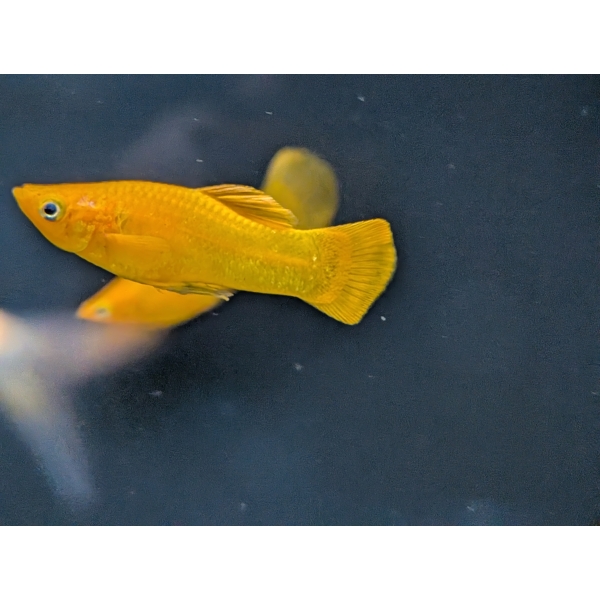
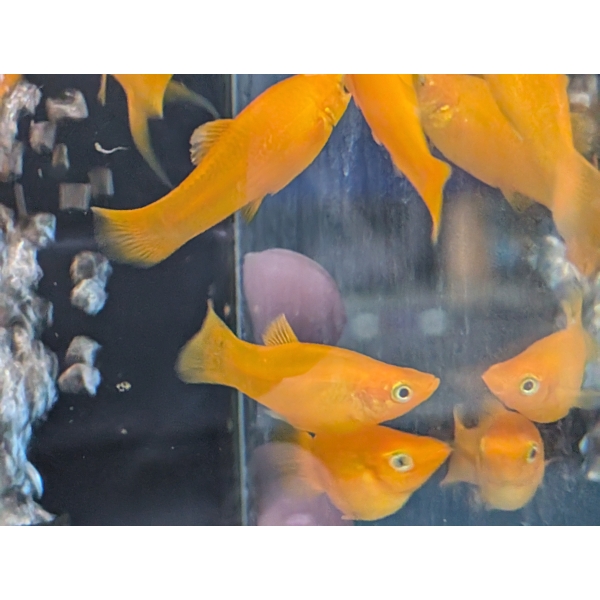
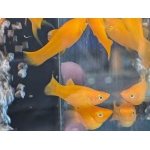
The Gold Molly is a vibrant, selectively bred colour morph derived from various Poecilia sphenops, most commonly the Sailfin Molly (P. latipinna) or the Lyretail Molly (P. velifera). Recognised for its solid, bright yellow-gold colouration, this livebearer is extremely popular due to its hardiness and ability to adapt to a wide range of water conditions, including slightly brackish (lightly salted) water. They are active, peaceful, and excellent scavengers.
1. General Characteristics and Sizing
| Characteristic | Detail |
|---|---|
| Common Name | Gold Molly, Yellow Molly, Golden Sailfin Molly |
| Origin | Captive Bred (Wild Ancestor: Central and South America) |
| Adult Size | Males up to 10 cm (4 inches); Females up to 12 cm (4.7 inches). |
| Temperament | Peaceful and active. Males can become slightly territorial during breeding attempts. |
| Lifespan | 3 – 5 years with optimal care |
| Housing | Should be kept in a group, preferably with a ratio of 1 male to 2–3 females to distribute the male’s attention. |
| Key Features | Uniform, solid gold-yellow colouration. Males often possess large dorsal fins. |
2. Aquarium Requirements (Husbandry)
Mollies are active swimmers and require substantial tank length to move comfortably. They appreciate dense planting for security and to rest.
| Requirement | Recommendation |
|---|---|
| Minimum Volume | 80 Litres (approx. 18 Imperial Gallons) for a small group. A minimum tank length of 80 cm (2.5 feet) is highly recommended. |
| Filtration | Strong biological and mechanical filtration is necessary. Ensure the water flow is moderate; too strong a flow may stress them. |
| Lighting | Moderate lighting is suitable, especially to promote plant growth. |
| Substrate | Fine gravel, sand, or crushed coral is ideal, as these materials help buffer the water to the required high pH. |
| Decoration | Use live plants (such as Java Fern, Anubias, and Cryptocoryne) and smooth rocks. Dense planting is vital to provide cover for females and fry. |
3. Water Quality and Parameters
Mollies thrive in hard, alkaline water and are one of the few tropical freshwater species that can tolerate (and benefit from) the addition of aquarium salt, though they are not strictly brackish fish.
| Parameter | Optimal Range | Notes |
|---|---|---|
| Temperature | 24°C – 28°C (75°F – 82°F) | Consistent warmth promotes activity and immunity. |
| pH | 7.5 – 8.5 (Alkaline) | A high pH is essential for health, vitality, and preventing fungal infections. |
| Hardness (dGH) | 12 – 25 dGH (Hard to Very Hard) | Hard water is critical. This is the same preference as the Regal Peacock Cichlid, though the Molly requires lower salinity. |
| Brackish Option | A small amount of non-iodised aquarium salt can be added (approx. 1 teaspoon per 4 Litres) to aid health, but ensure tank mates can tolerate salt. | |
| Maintenance | Regular weekly water changes (25%) are crucial to maintain low nitrate levels and prevent diseases like ‘shimmies’ or fin clamping. |
4. Diet and Nutrition
Mollies are omnivores with a high requirement for vegetable matter, unlike the purely carnivorous Apistogramma dwarf cichlids.
- Staple Diet: High-quality flake or micro-pellets.
- Vegetable Matter (Essential): They must receive ample plant-based food. Use spirulina flakes or pellets daily. Offer blanched vegetables, such as courgette (zucchini), spinach, or peas, several times a week.
- Meaty Foods: Supplement with frozen foods like brine shrimp or bloodworms sparingly (1–2 times per week) for protein.
5. Compatibility and Behaviour
Gold Mollies are peaceful but are active and can sometimes be mistaken for fin-nippers due to their persistent feeding and curiosity.
- Tank Mates: Excellent companions include other hard-water tolerant livebearers (like the Dumbo Guppy), large peaceful Tetras, Corydoras, and many Rainbowfish.
- Avoid: Extremely timid fish, large aggressive cichlids, or soft-water species that cannot tolerate the high pH and hardness. Avoid fin-nipping fish that might target their large fins.
- Breeding: They are livebearers that breed rapidly and continuously (like the Guppy), dropping large numbers of fry every 4–6 weeks. Dense planting is the best way to ensure fry survival.
Convenient nationwide delivery; you’re only a click away!
Our nationwide delivery service makes it easy to receive your fish directly at your door, anywhere in the UK, for a flat rate of just £30. This convenient service allows you to order up to 10kg of fish, with the assurance that they will arrive in excellent condition. To make the fishes journey as comfortable as possible we use Oxygen in the fish bags and heat packs in all the boxes of fish we send out.
Please put your desired delivery day in the Order Notes on the Checkout page.
General Enquiries
There are no enquiries yet.