
- Description
- Store Policies
- Enquiries
Description
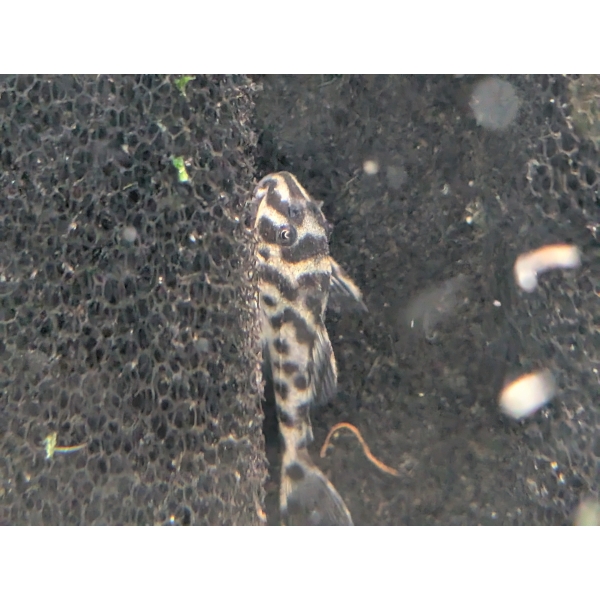
Ocelot Pleco (Hypancistrus yudja, L174)
Species Fact Sheet:
The Ocelot Pleco, historically known by the L-number L174, was formally described in 2025 as Hypancistrus yudja. It is celebrated as one of the smallest members of the Hypancistrus genus, making it highly desirable for specialist aquarists despite its shy nature.
Biological Classification and Origin
- Scientific Name: Hypancistrus yudja.
- Common Names: Ocelot Pleco, Panther Pleco, Spotted Zebra Pleco.
- Origin: Endemic to a very limited area in the Rio Xingu, Brazil, specifically within the Volta Grande region near Altamira.
- Natural Habitat: Inhabits deep, rocky areas of the river, often below 15 metres in depth, where the water is warm and the current is strong.
Physical Characteristics
- Adult Size: One of the smallest plecos, typically reaching only 7–8 cm (approx. 3 inches).
- Appearance: Features a compact body with a white-pinkish base colouration and a grey, ocelot-like pattern consisting of dark dots or irregular “worm-lines”.
- Distinguishing Features: Unlike many other Hypancistrus, this species has notably small eyes and a high-backed, sturdy shape.
- Sexual Dimorphism: Mature males develop longer odontodes (spiny growths) on their pectoral fin rays and gill covers (interopercular region). Males also have broader, more blocky heads, whereas females are rounder when viewed from above, especially when gravid.
Aquarium Care and Maintenance
- Minimum Tank Size: A group of 5–6 individuals should be housed in an aquarium of at least 80–100 litres.
- Water Parameters:
- Temperature: Requires warm water, ideally 27–30°C (81–86°F).
- pH Level: 5.5–7.5; slightly acidic to neutral.
- Hardness: Soft to medium (GH 1–18); pristine water quality with high oxygenation is mandatory.
- Environment: The tank should feature a strong current and plenty of hiding places, such as ceramic caves, slate structures, and smooth rocks. Lighting should be kept dim to suit their shy, nocturnal habits.
Diet and Behaviour
- Feeding: Primarily carnivorous. They should be fed protein-rich foods such as frozen bloodworms, brine shrimp, and high-quality sinking carnivore pellets. They are not effective algae eaters.
- Social Behaviour: Peaceful but shy. They may be territorial toward other bottom-dwellers, so ensure there are more caves available than there are fish to prevent disputes.
- Compatibility: Suitable for community tanks with small, peaceful fish like tetras or Corydoras, provided the tank mates can tolerate the high temperatures required.
Breeding and Conservation
- Breeding: They are cave spawners. The male guards the eggs and fry inside a cave. Clutches are typically small, consisting of 10–20 eggs.
- Conservation Status: This species is considered threatened due to habitat destruction caused by the Belo Monte dam. Because of its fragile status in the wild, captive breeding is highly encouraged within the hobby.
Convenient nationwide delivery; you’re only a click away!
Our nationwide delivery service makes it easy to receive your fish directly at your door, anywhere in the UK, for a flat rate of just £30. This convenient service allows you to order up to 10kg of fish, with the assurance that they will arrive in excellent condition. To make the fishes journey as comfortable as possible we use Oxygen in the fish bags and heat packs in all the boxes of fish we send out.
For your peace of mind we enclose a slip which will explain what to do in the event of a fish not traveling too well.
We use a licensed courier to deliver your fish directly to you door and will be with you by 1pm the next day.
Our delivery days are as follows:
Tuesday for Wednesday delivery
Wednesday for Thursday delivery
Thursday for Friday delivery
Please put your desired delivery day in the Order Notes on the Checkout page.
General Enquiries
There are no enquiries yet.