
L200A Hi Fin Green Phantom Pleco Hemiancistrus subvidris
£75.00
- Description
- Store Policies
- Enquiries
Description
Green Phantom Pleco (Hemiancistrus subviridis)
A Comprehensive Care Guide:
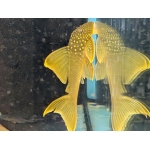
The Green Phantom Pleco, scientifically known as Hemiancistrus subviridis (often still seen as Baryancistrus demantoides in the hobby), is a captivating and peaceful armoured catfish from South America. Its vibrant, neon-green to yellow-green colouration and intricate, dark spotted patterns make it a highly desirable addition to many tropical aquariums. This species is not just a stunning centrepiece, but also an excellent cleaner, though it is not a traditional algae eater. Known for its shy nature and preference for a well-structured habitat, the Green Phantom Pleco is a rewarding fish to keep for aquarists who can meet its specific needs.
Taxonomy and Classification
- Kingdom: Animalia
- Phylum: Chordata
- Class: Actinopterygii
- Order: Siluriformes
- Family: Loricariidae
- Genus: Hemiancistrus
- Species: subviridis
This pleco is part of the Loricariidae family, which is the largest family of catfishes and includes many of the popular sucker-mouthed fish we see in the aquarium trade.
Habitat and Distribution
The Green Phantom Pleco is native to the upper sections of the Orinoco River basin in Venezuela and Colombia. It is typically found in fast-flowing, oxygen-rich waters over rocky bottoms. The fish spends its time clinging to rocks and large pieces of driftwood, where it can feed on biofilm and small organisms. The water in its natural habitat is often soft and slightly acidic.
Physical Characteristics
This pleco has a distinctive, flattened body shape designed for life in fast-moving water.
- Colouration: The most notable feature is its vibrant green to yellow-green body colour, which is covered in a pattern of small, dark spots. The intensity of this colour can vary depending on the fish’s mood, health, and age.
- Size: It typically reaches an adult size of 15–18 centimetres (6–7 inches), making it a manageable size for many home aquariums.
- Dimorphism: Sexual dimorphism is not particularly obvious, although mature males may have broader heads and develop small odontodes (bristles) on their heads and the leading rays of their pectoral fins.
Behaviour and Temperament
The Green Phantom Pleco is a generally peaceful and non-aggressive fish.
- Social Behaviour: It is a solitary species that can be kept with other similar-sized, non-aggressive fish. While they are not known to be aggressive, two males may display some territorial behaviour if the tank is too small or lacks sufficient hiding places.
- Activity: This species is primarily nocturnal, spending most of its day hiding among the rockwork or driftwood. It becomes more active during the night to forage for food.
- Tank Mates: Suitable tank mates include small to medium-sized tetras, rasboras, gouramis, and other peaceful cichlids. Avoid keeping them with aggressive fish that might bully them or outcompete them for food.
Diet and Feeding
The Green Phantom Pleco is a wood-grazing omnivore, meaning its diet is more complex than a typical algae-eating pleco.
- Staple Diet: While it will graze on biofilm and some soft algae, this fish requires a diet rich in vegetable and meaty matter. A high-quality sinking pellet or wafer food designed for carnivorous or omnivorous bottom feeders should form the foundation of its diet.
- Supplements: It is crucial to supplement its diet with blanched vegetables like courgette, cucumber, and shelled peas. Additionally, offer occasional meaty treats such as frozen bloodworms, brine shrimp, and mysis shrimp.
- Essential Wood: Access to driftwood is essential for this species. It will rasp on the wood, which aids in digestion and provides necessary nutrients.
Aquarium Care
Recreating the natural, high-flow, oxygen-rich environment is key to keeping the Green Phantom Pleco healthy.
- Tank Size: A minimum tank size of 150 litres (40 US gallons) is recommended for a single adult. A larger tank is required for a group or if kept with other territorial bottom dwellers.
- Water Parameters:
- Temperature: 24–28°C (75–82°F).
- pH: 6.0–7.5. Soft, slightly acidic water is preferred.
- Hardness: 2–10 dGH (soft to moderately hard water).
- Filtration: Powerful filtration is absolutely essential. This fish requires high oxygen levels and strong water movement to thrive. Canister filters with spray bars or powerheads can be used to create the necessary water flow.
- Decor: The tank must be heavily decorated with plenty of driftwood and smooth, dark rocks. These provide the necessary hiding places and surfaces for the fish to graze on. A fine sand substrate is ideal to prevent injury to its sensitive barbels.
- Maintenance: Perform regular weekly water changes of 25–30% to keep nitrates low. Since this fish is a messy eater and produces a lot of waste, a robust maintenance routine is crucial for its long-term health.
Convenient nationwide delivery; you’re only a click away!
General Enquiries
There are no enquiries yet.