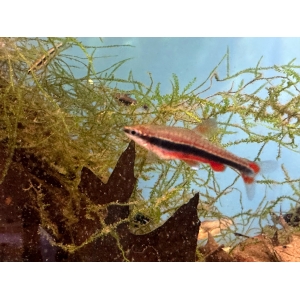
Leopolds Angelfish Pterophyllum leopoldi
£25.00
Leopolds Angelfish Pterophyllum leopoldi
Bulk Offer – 3 for £72.00
Discount will apply at checkout.
- Description
- Store Policies
- Enquiries
Description
Leopold’s Angelfish (Pterophyllum leopoldi):
Care Guide:
Leopold’s Angelfish (Pterophyllum leopoldi) is the smallest and most aggressive of the three recognized wild angelfish species. Discovered primarily in the Amazon River basin, specifically along the Rio Solimões, Rio Negro, and Rio Rupununi, this species is highly prized by biotope purists. It is distinguished from P. scalare and P. altum by a characteristic dark spot on the dorsal tear-line at the base of the dorsal fin, a blunter snout profile, and a more horizontally elongated body shape.
Overview.
- Scientific Name: Pterophyllum leopoldi [1]
- Common Name: Leopold’s Angelfish, Teardrop Angelfish, Roman Nose Angelfish [1]
- Care Level: Medium to hard
- Temperament: Semi-aggressive; highly territorial compared to standard angelfish [1]
- Maximum Size: 10–12 cm (4–5 inches) in length, but significantly shorter vertically than other species
- Lifespan: 8–12 years [1]
Key Requirements.
Water Parameters and Environment
- Water Quality: Highly sensitive to dissolved organic waste. Pristine water conditions with low nitrates are essential.
- Temperature: 26°C to 30°C is optimal.
- pH Range: 5.0–6.5 (firmly prefers soft, highly acidic blackwater conditions).
- Water Hardness: Very soft (1–5 dGH).
- Aquarium Size: Minimum 150 litres for a matched pair; a larger footprint is highly recommended due to their territorial nature. [1]
Tank Setup and Decor.
- Substrate: Soft, fine river sand to allow natural foraging behaviour.
- Hardscape: Arrange tall, vertical structures using large pieces of bogwood, driftwood branches, and smooth slate slabs. These mimic the flooded root systems of their native habitat and provide vital visual barriers to break lines of sight.
- Botanicals: Incorporate natural leaf litter, such as Indian almond leaves or alder cones. These release essential tannins that turn the water tea-coloured, lower the pH, and boost the fish’s immune system.
- Vegetation: They thrive in heavily planted tanks. Utilize tall, vertical flora such as Vallisneria, Echinodorus (Amazon Swords), or epiphytes like Anubias attached to the woodwork.
Diet and Feeding.
- Pterophyllum leopoldi is an omnivore with a strong predatory preference for small invertebrates.
- Live and Frozen Foods: Provide a varied diet consisting of nutrient-rich foods like bloodworms, brine shrimp, Mysis shrimp, daphnia, and mosquito larvae.
- Prepared Foods: They can be finicky when first introduced. Once settled, condition them to accept high-quality, slow-sinking granules, flakes, and freeze-dried foods.
Behaviour and Compatibility.
- Conspecific Aggression: This species forms a strict, aggressive pecking order. They should either be kept as a single compatible mated pair or in a larger group of six or more individuals to distribute territorial aggression evenly.
- Compatible Tank Mates: Suitable companions include peaceful, medium-sized South American species. Consider Corydoras catfish, Loricariid plecs, Geophagus eartheaters, and robust tetras (such as Rummynose, Cardinal, or Bleeding Heart tetras). Avoid tiny fry or shrimp, as adults will hunt them.
- Sexual Dimorphism: Extremely difficult to sex outside of active spawning. Males may grow slightly larger and display a steeper cranial profile, but the only definitive method is observing the breeding papillae when spawning occurs. [1]
Breeding.
- They are open substrate spawners that form tight, monogamous pairs.
- The pair will meticulously clean a vertical surface, such as a large plant leaf or a piece of slate, before the female deposits rows of adhesive eggs.
- Unlike standard commercial angelfish, P. leopoldi retains strong parental instincts. Both parents will fiercely defend the spawning site, fan the eggs to prevent fungus, and guard the free-swimming fry. Extremely soft, acidic water is mandatory for egg viability.
Convenient nationwide delivery; you’re only a click away!
Our nationwide delivery service makes it easy to receive your fish directly at your door, anywhere in the UK, for a flat rate of just £30. This convenient service allows you to order up to 10kg of fish, with the assurance that they will arrive in excellent condition. To make the fishes journey as comfortable as possible we use Oxygen in the fish bags and heat packs in all the boxes of fish we send out.
For your peace of mind we enclose a slip which will explain what to do in the event of a fish not traveling too well.
We use a licensed courier to deliver your fish directly to you door and will be with you by 1pm the next day.
Our delivery days are as follows:
Tuesday for Wednesday delivery
Wednesday for Thursday delivery
Thursday for Friday delivery
Please put your desired delivery day in the Order Notes on the Checkout page.
General Enquiries
There are no enquiries yet.