

Liquorice Gourami Paroshromenus Deissneri
£35.00
Liquorice Gourami Paroshromenus Deissneri
Bulk Offer – All 5 for £35.00
Discount will apply at checkout.
- Description
- Store Policies
- Enquiries
Description
Species Care Guide: Liquorice Gourami
Parosphromenus deissneri (Liquorice Gourami)
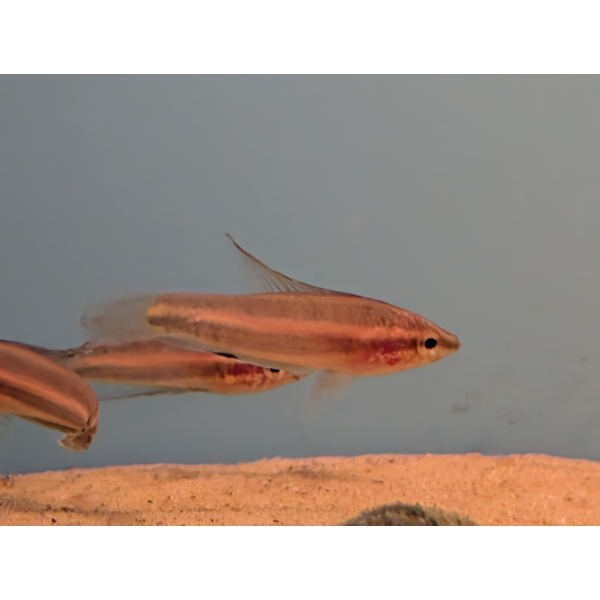
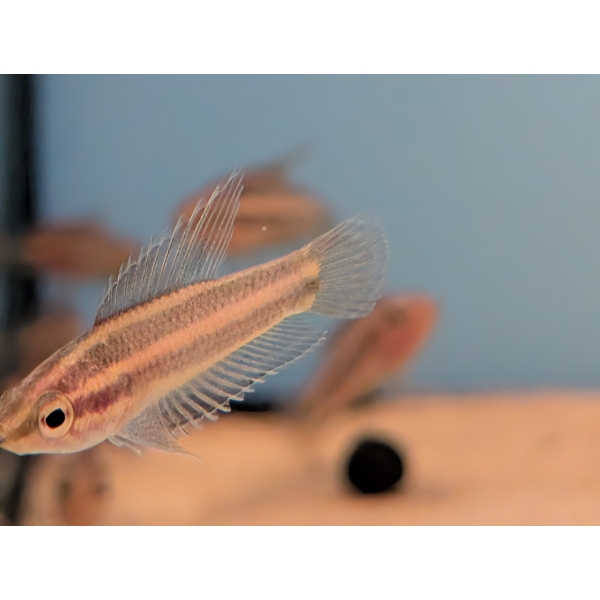
The Liquorice Gourami (Parosphromenus deissneri) is a fascinating and highly desirable dwarf labyrinth fish native to the peat swamp forests and blackwater streams of Indonesia (Bangka Island and Belitung). This species is renowned for its striking black and blue horizontal striping, which intensifies to iridescent red and blue during breeding displays. Due to its specific requirements for extremely soft, acidic water, it is best suited for experienced aquarists who can maintain precise blackwater conditions.
1. General Characteristics and Sizing
| Characteristic | Detail |
|---|---|
| Common Name | Liquorice Gourami, Licorice Gourami |
| Origin | Peat swamps of Indonesia (Bangka and Belitung Islands) |
| Adult Size | Up to 4 cm (approx. 1.5 inches) |
| Temperament | Extremely Peaceful and timid. Best kept in a species-only nano tank or with the smallest, most gentle tank mates. |
| Lifespan | 3 – 5 years with optimal care |
| Housing | Should be kept in a pair or a small group (e.g., 1 male with 2 females). Males are territorial among conspecifics. |
| Key Features | Elongated body with contrasting black and blue horizontal stripes. Males display iridescent red/blue fins during courtship. |
2. Aquarium Requirements (Husbandry)
As a habitat specialist, the Liquorice Gourami demands an environment that accurately mimics the dark, dense, and still water of its natural peat swamp home.
| Requirement | Recommendation |
|---|---|
| Minimum Volume | 30 Litres (approx. 6.5 Imperial Gallons) for a single pair or small group. Larger tanks are not always better for stability, provided the 30L tank is heavily planted. |
| Filtration | Ultra-gentle filtration is mandatory. Sponge filters or internal filters with very low flow are ideal, as they despise strong currents. |
| Lighting | Very Dim or Low Light is crucial. Use very dense surface cover from floating plants (e.g., Red Root Floater or Frogbit) and tall, dense planting to create dark corners. |
| Substrate | Fine, dark sand or bare bottom. A dark substrate enhances their colouration. |
| Decoration | Massive amounts of cover are required. Use dense clumps of fine-leaved plants (e.g., Java Moss, Cryptocoryne), intricate driftwood, and a heavy layer of leaf litter (e.g., dried catappa leaves) to create hiding and spawning spots. |
3. Water Quality and Parameters (Specialist Requirements)
This species requires extremely soft and highly acidic blackwater—a complete opposite to the hard, alkaline conditions of Rift Lake cichlids.
| Parameter | Optimal Range | Notes |
|---|---|---|
| Temperature | 24°C – 28°C (75°F – 82°F) | Stable warmth is vital. |
| pH | 4.0 – 6.0 (Highly Acidic) | A low pH is essential for their health and breeding. A pH above 6.5 will often lead to health issues. |
| Hardness (dGH) | 0 – 5 dGH (Extremely Soft) | Requires the use of 100% RO or DI water that is re-mineralised to a low hardness level. |
| Maintenance | Small, frequent (10%) water changes are preferred over large weekly ones, as stability is paramount. The replacement water must match the pH and hardness exactly. |
4. Diet and Nutrition
The Liquorice Gourami is a carnivorous micro-predator and has a very small mouth. They are easily out-competed and require tiny, high-protein foods.
- Staple Diet: They often refuse dry food. Try tiny, high-quality crushed flakes or micro-pellets specifically designed for micro-fish.
- Meaty Foods (Mandatory): Their diet must primarily consist of live or frozen micro-invertebrates. Essential foods include baby brine shrimp, cyclops, microworms, and daphnia.
- Feeding Behaviour: They are slow, deliberate feeders and should be fed sparingly but frequently in an environment where faster fish cannot steal their food.
5. Compatibility and Behaviour
Due to their small size and extreme sensitivity to water quality, they are best suited for species-only setups.
- Tank Mates: If kept in a community, only house with equally small, non-competitive, and non-nipping fish that thrive in the same soft, acidic water. Suitable options include Chili Rasboras or the Least Killifish (Heterandria formosa).
- Breeding: They are cave spawners. The male will display to the female by flaring his fins and intensifying his colours. They will spawn in small caves or under leaves, often upside down.
Convenient nationwide delivery; you’re only a click away!
Please put your desired delivery day in the Order Notes on the Checkout page.
General Enquiries
There are no enquiries yet.