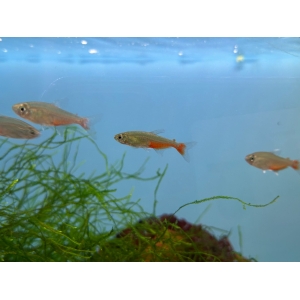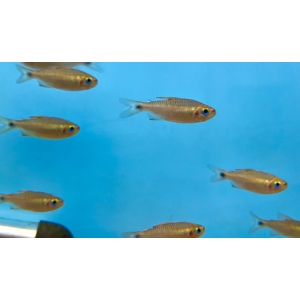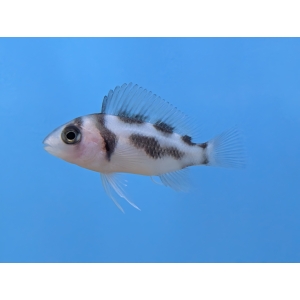
Mpulungu Sardine Cichlid Cyprichromis leptosoma “Mpulungu”
£22.00
Mpulungu Sardine Cichlid Cyprichromis leptosoma “Mpulungu”
Bulk Offer – 3 for £63.00
Discount will apply at checkout.
- Description
- Store Policies
- Enquiries
Description
Mpulungu Sardine Cichlid:
Blue Flash Cyprichromis (Cyprichromis leptosoma “Mpulungu”) is a slender, schooling cichlid endemic to the Mpulungu region of Lake Tanganyika. Unlike most cichlids that dwell among rocks or on the sandy bottom, the “Mpulungu” is a open-water (pelagic) species, prized for its vibrant blue and yellow highlights and its unique social dynamics.
Species Profile
- Scientific Name: Cyprichromis leptosoma “Mpulungu”
- Common Names: Blue Flash Cichlid, Neon Cichlid, Utaka (incorrectly, but occasionally used).
- Adult Size: Typically reaches 10–12 cm (approx. 4–5 inches).
- Lifespan: 5–8 years in a well-managed aquarium.
- Temperament: Very peaceful and active. They are a “shoaling” fish that requires the company of their own kind to feel secure and display their best colours.
Aquarium Requirements
Because these fish are constant swimmers and inhabit the upper water column, the shape of the tank is more important than the volume alone.
- Tank Size: A minimum length of 4 feet (120 cm) is essential. A 240-litre tank is a good starting point for a colony.
- Water Parameters:
- Temperature: 23–27°C (73–81°F).
- pH Level: High alkalinity is vital, ideally between 8.0 and 9.0.
- Hardness: 10–25 dGH.
- Substrate & Decor: Use fine sand at the bottom. While they don’t use caves, some tall rockwork or “standing” slates at the back can provide a sense of security and natural boundaries for territorial males. Leave the entire upper and middle sections open for swimming.
Diet and Nutrition
In the wild, they are planktivores, hovering in massive schools to feed on tiny organisms drifting in the current.
- Feeding: They have relatively small mouths and prefer feeding from the water column rather than the floor.
- Recommended Foods: High-quality crushed flakes or small floating pellets. They thrive on frozen or live Cyclops, Daphnia, and Artemia (Brine Shrimp).
Compatibility and Social Structure
- Group Size: These must be kept in groups of at least 10–12 individuals. A higher ratio of females to males (e.g., 2 or 3 females per male) helps reduce “shimmering” displays and minor aggression between competing males.
- Tank Mates: They make excellent “dither fish” for other Tanganyikan cichlids. Ideal companions include Shell Dwellers (Neolamprologus multifasciatus) or Rock Dwellers (Julidochromis), as these species occupy different zones of the tank.
- Caution: Avoid keeping them with large, predatory cichlids or highly aggressive species that might see their slender bodies as prey.
Breeding
- Breeding Style: They are maternal mouthbrooders, but uniquely, they spawn in mid-water.
- Process: The female catches the eggs in mid-air as they fall, before retreating to the edge of the shoal.
- Incubation: The female will carry the eggs for roughly 3 to 4 weeks. The fry are quite large when released and are often capable of eating crushed flake or baby brine shrimp immediately.
Convenient nationwide delivery; you’re only a click away!
Our nationwide delivery service makes it easy to receive your fish directly at your door, anywhere in the UK, for a flat rate of just £30. This convenient service allows you to order up to 10kg of fish, with the assurance that they will arrive in excellent condition. To make the fishes journey as comfortable as possible we use Oxygen in the fish bags and heat packs in all the boxes of fish we send out.
For your peace of mind we enclose a slip which will explain what to do in the event of a fish not traveling too well.
We use a licensed courier to deliver your fish directly to you door and will be with you by 1pm the next day.
Our delivery days are as follows:
Tuesday for Wednesday delivery
Wednesday for Thursday delivery
Thursday for Friday delivery
Please put your desired delivery day in the Order Notes on the Checkout page.
General Enquiries
There are no enquiries yet.