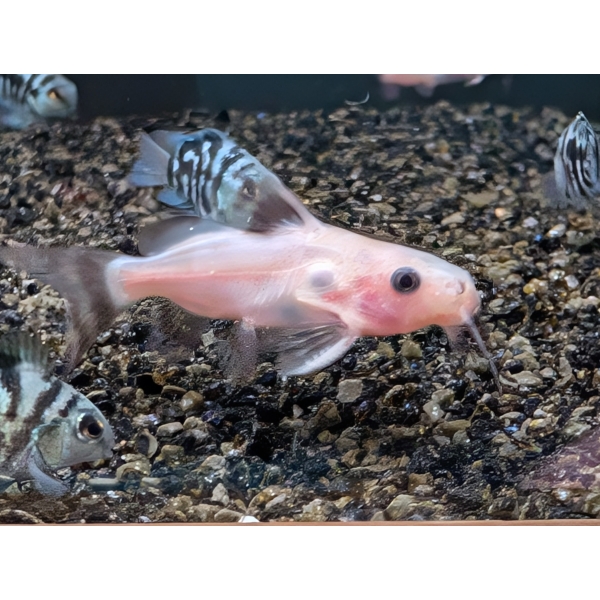



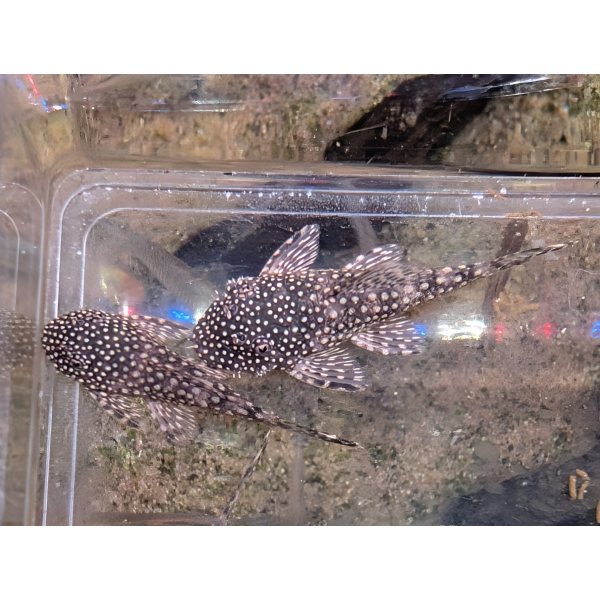
Nigrita Gold Catfish Synodontis nigrita
£15.00
Bulk Offer – 3 for £42.00
Discount will apply at checkout.
- Description
- Store Policies
- Enquiries
Description
Synodontis nigrita:
A Comprehensive Overview
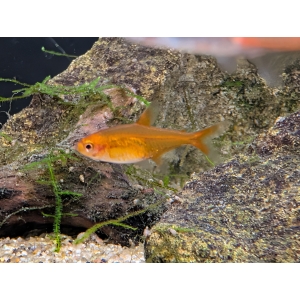
Synodontis nigrita, commonly known as the Nigrita Gold Catfish, Golden Synodontis, or sometimes just Nigrita Catfish, is a fascinating species of upside-down catfish belonging to the family Mochokidae. Native to various river systems across West and Central Africa, this active and intriguing catfish is admired for its striking golden-yellow colouration, often adorned with dark spots or markings, and its unique swimming behaviour. It is a popular choice for larger community aquariums due to its hardiness and engaging personality.
Taxonomy and Classification
- Kingdom: Animalia
- Phylum: Chordata
- Class: Actinopterygii
- Order: Siluriformes
- Family: Mochokidae (Squeaker Catfishes or Upside-Down Catfishes)
- Genus: Synodontis
- Species: Synodontis nigrita
The genus Synodontis is diverse, encompassing many species known for their ability to produce sounds (squeaks) and their varied colour patterns. S. nigrita is distinguished by its specific golden hue and typical markings.
Habitat and Distribution
Synodontis nigrita has a wide distribution across West and Central Africa, found in major river systems such as the Niger, Benue, Volta, and Chad basins. Its natural habitat typically consists of slow-moving to moderately flowing rivers, streams, and floodplains. These environments often feature a substrate of sand or mud, with plenty of submerged roots, driftwood, and rocky crevices, which provide shelter and foraging areas. The water parameters are generally neutral to slightly alkaline, with temperatures ranging from 22-28°C (72-82°F). They are often found in areas with dense vegetation or leaf litter.
Physical Characteristics
The Nigrita Gold Catfish is a medium-sized catfish, usually reaching an adult size of approximately 15-20 cm (6-8 inches) in total length, though some individuals may grow larger. Its most distinctive feature is its vibrant golden colouration and characteristic body shape.
Key physical characteristics include:
- Body Shape: Robust and somewhat elongated, with a flattened ventral surface and a high-backed profile. Like other Synodontis species, they often exhibit an “upside-down” swimming posture, particularly when feeding from the water surface or hiding.
- Colouration: A striking golden-yellow or brownish-gold base colour, often covered with irregular dark brown or black spots and blotches. The intensity and pattern of these markings can vary among individuals and populations.
- Eyes: Relatively large and prominent.
- Barbels: Possesses three pairs of barbels around its mouth, used for foraging in the substrate and detecting food.
- Fins: Dorsal fin is often tall, and the adipose fin is well-developed. The caudal fin is forked.
Diet and Feeding
In its natural habitat, Synodontis nigrita is an omnivorous scavenger, feeding on a variety of small invertebrates, insect larvae, crustaceans, algae, and detritus. In an aquarium setting, they are unfussy eaters and will readily accept a wide variety of high-quality foods.
Suitable foods include:
- Sinking Pellets & Wafers: High-quality sinking catfish pellets, wafers, or granules should form the staple of their diet.
- Frozen Foods: Frozen bloodworms, brine shrimp, mysis shrimp, and chopped krill are excellent protein supplements.
- Live Foods: Live blackworms, small earthworms, and daphnia can be offered as occasional treats.
- Vegetables: Blanched vegetables like zucchini, cucumber, and spirulina-based foods are important to include to ensure a balanced diet and aid digestion.
It’s important to ensure food reaches the bottom of the tank, as they are primarily bottom-feeders, though they will also feed from the surface, often in their characteristic upside-down manner.
Behaviour and Temperament
The Nigrita Gold Catfish is generally considered a peaceful to semi-aggressive species, particularly towards conspecifics as they mature. They are active, especially during the evening and night, and are highly social. While they can be kept individually, they thrive when kept in groups of at least 3-5 individuals, provided the tank is large enough to accommodate their territorial needs. In groups, they often establish a pecking order, and some chasing may occur, but serious harm is rare. They are excellent tank mates for other similarly sized, robust, and peaceful to semi-aggressive fish that occupy the mid to upper water columns.
Reproduction
Breeding Synodontis nigrita in captivity is not commonly reported by hobbyists and is considered challenging. Information on their natural breeding habits is limited, but like many Synodontis species, they are likely egg-scatterers. Commercial breeding often involves hormone induction.
- Spawning: In the wild, they are believed to spawn in crevices or among dense vegetation.
- Parental Care: There is no parental care.
- Fry Care: Information on fry care in a home aquarium setting is limited due to the difficulty of breeding.
Conservation Status
The conservation status of Synodontis nigrita is not extensively evaluated by international bodies like the IUCN. However, like many freshwater species in Africa, its natural habitats can be affected by pollution, habitat degradation due to agriculture and urbanisation, and over-collection for the aquarium trade. Sustainable collection practices and the development of aquaculture are important for its long-term viability.
Aquarium Care
For aquarists interested in keeping Nigrita Gold Catfish, here are some essential care guidelines:
- Tank Size: A minimum of 150 litres (40 gallons) for a single adult. For a group of 3-5 individuals, a tank of 250 litres (65 gallons) or more is highly recommended to provide ample space and reduce territorial disputes.
- Water Parameters:
- Temperature: 22-28°C (72-82°F)
- pH: 6.5-7.5 (neutral to slightly alkaline)
- Hardness: 5-20 dGH (soft to moderately hard)
- Filtration: Excellent and robust filtration is crucial to handle their bioload and maintain high water quality. Canister filters or large hang-on-back filters are recommended.
- Decor: Provide plenty of hiding spots and visual barriers using driftwood, smooth rocks, ceramic caves, and PVC pipes. They appreciate areas where they can retreat during the day. Robust live plants (e.g., Anubias, Java Fern) can be used, but ensure they are well-rooted or attached to decor.
- Substrate: Fine sand or smooth gravel is suitable, as they enjoy sifting through it with their barbels. Avoid sharp substrates that could damage their sensitive barbels.
- Lighting: Moderate to dim lighting is generally preferred, especially during the day, as they are more active in lower light conditions.
- Tank Mates: Best kept with other similarly sized, robust, and peaceful to semi-aggressive community fish that occupy the mid to upper water columns, such as larger tetras, rainbowfish, various cichlids (e.g., Kribensis, larger peaceful Central/South American cichlids), and other peaceful catfish species. Avoid housing them with very small, shy, or docile species that could be intimidated or outcompeted for food.
- Maintenance: Regular weekly water changes (25-30%) are crucial for maintaining pristine water quality, which is vital for their health and to prevent disease.
By providing a spacious, well-filtered, and appropriately decorated environment, the Nigrita Gold Catfish can be a captivating, hardy, and engaging addition to a freshwater aquarium.
Convenient nationwide delivery; you’re only a click away!
General Enquiries
There are no enquiries yet.