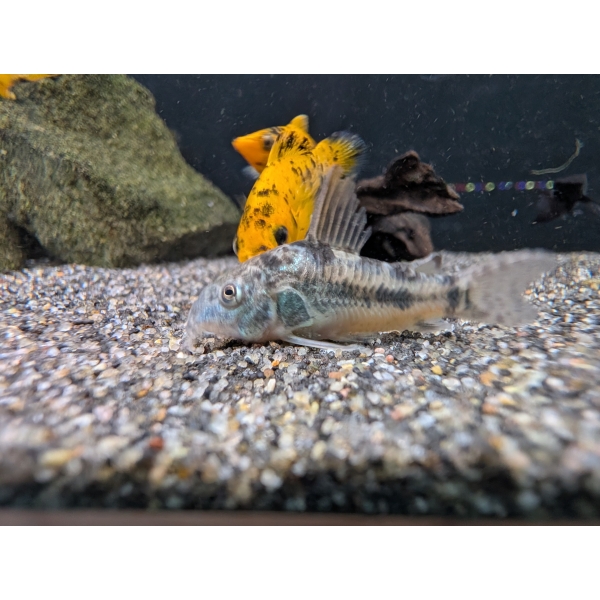
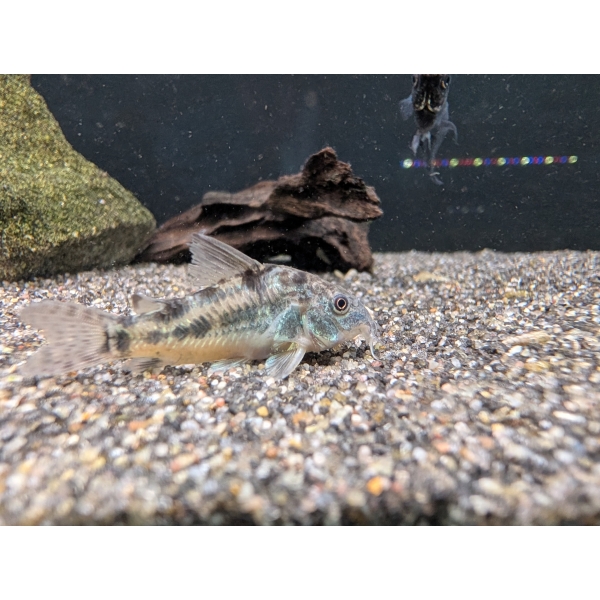
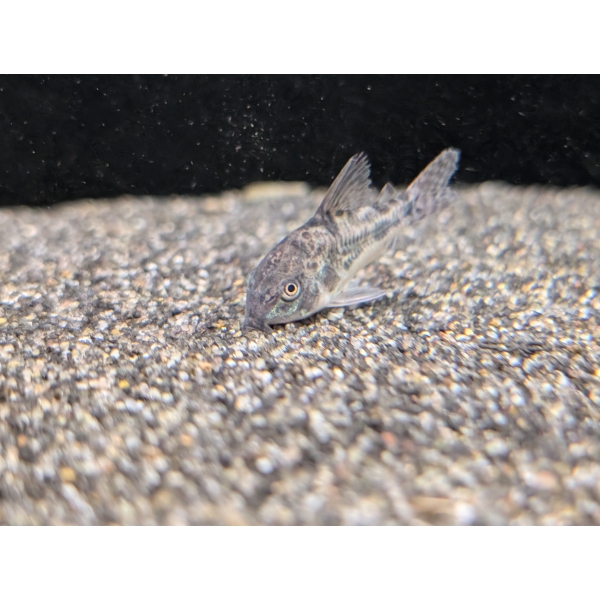
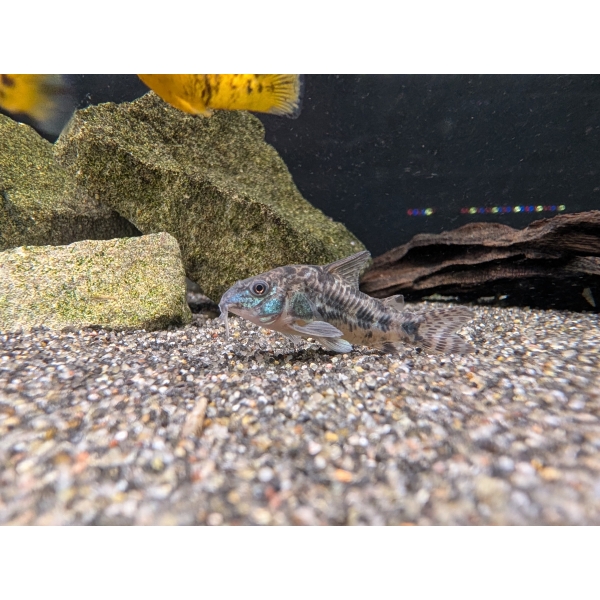
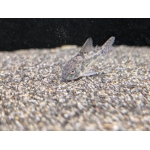
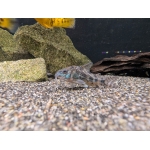


Peppered Catfish Hoplisoma paleatus
£6.50
Bulk Offer – 3 for £16.50
Discount will apply at checkout.
- Description
- Store Policies
- Enquiries
Description
Hoplisoma paleatus (The Peppered Catfish)
Species Profile:
While most hobbyists still affectionately refer to them as “Peppered Corys,” recent taxonomic shifts have moved this classic species into the genus Hoplisoma. Regardless of the name on the tank label, the Peppered Catfish remains one of the most resilient, charming, and industrious members of the aquarium community.
Native to the subtropical waters of South America, these fish are “armoured” with bony plates rather than scales, making them the tiny, dappled tanks of the riverbed.
Vital Statistics
| Feature | Specification |
| Scientific Name | Hoplisoma paleatus (formerly Corydoras paleatus) |
| Common Names | Peppered Catfish, Blue Leopard Corydoras |
| Adult Size | 6cm – 7.5cm (Females are generally larger and rounder) |
| Water Temperature | 15°C – 24°C (One of the best choices for unheated indoor tanks) |
| Ideal pH | 6.0 – 7.5 |
| Diet | Omnivorous scavenger |
Why the Name Change?
If you’ve been in the hobby a while, you’ll know them as Corydoras paleatus. However, ichthyologists recently revised the Corydoradinae subfamily, moving several species into the genus Hoplisoma. Don’t worry—their personality hasn’t changed. They are still the same “wink-and-a-nudge” catfish they’ve always been.
Core Care Requirements
1. The “Sand Only” Rule
The most critical part of keeping Hoplisoma paleatus is their substrate. They possess sensitive barbels (whiskers) used to navigate and find food.
-
The Risk: Sharp gravel acts like sandpaper, wearing these barbels down to nothing, which leads to stress and infection.
-
The Solution: Use fine, smooth aquarium sand. Watching them “nose-dive” into the sand to find a hidden pellet is one of the joys of keeping them.
2. Temperature Sensitivity
Unlike many Amazonian fish that require high heat, the Peppered Catfish hails from cooler regions in Argentina and Uruguay.
-
They thrive in subtropical conditions.
-
Avoid keeping them with “hot” fish like Discus or certain Rams; constant exposure to temperatures above 26°C will drastically shorten their lifespan.
3. Social Structure
Keeping a lone Peppered Catfish is, quite frankly, a bit mean. They are highly social and rely on a group for security. You should keep a minimum of six, though a dozen or more will result in much more confident and active behaviour.
Feeding and Nutrition
Hoplisoma paleatus are not “rubbish collectors”—they require a dedicated diet to thrive.
-
Primary Diet: High-quality sinking catfish wafers or pellets.
-
Supplementation: They love “meaty” treats. Frozen or live bloodworm, brine shrimp, and tubifex will keep them in peak breeding condition.
-
Timing: Feed them just as the lights go out if you have greedy mid-water fish that tend to steal their dinner.
Health & Maintenance
A Note on Water Quality: As bottom-dwellers, they are the first to feel the effects of poor hygiene. Nitrates and organic waste settle on the floor of the aquarium. Ensure you use your Superfish Plant Scissors to keep plants tidy and prevent decaying leaves from fouling the “carpet” where your catfish live.
Convenient nationwide delivery; you’re only a click away!
Our nationwide delivery service makes it easy to receive your fish directly at your door, anywhere in the UK, for a flat rate of just £30. This convenient service allows you to order up to 10kg of fish, with the assurance that they will arrive in excellent condition. To make the fishes journey as comfortable as possible we use Oxygen in the fish bags and heat packs in all the boxes of fish we send out.
General Enquiries
There are no enquiries yet.