


Piano Snail Taia naticoides
£4.00
Bulk Offer – 3 for £10.00
Discount will apply at checkout.
- Description
- Store Policies
- Enquiries
Description
Piano Snail (Taia naticoides)
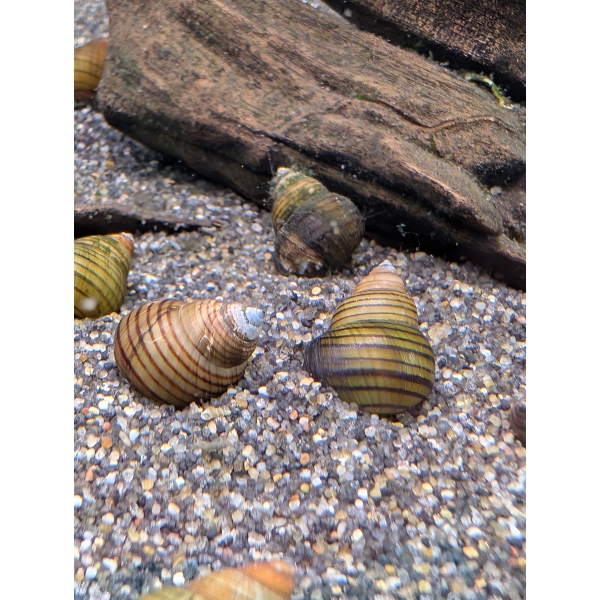
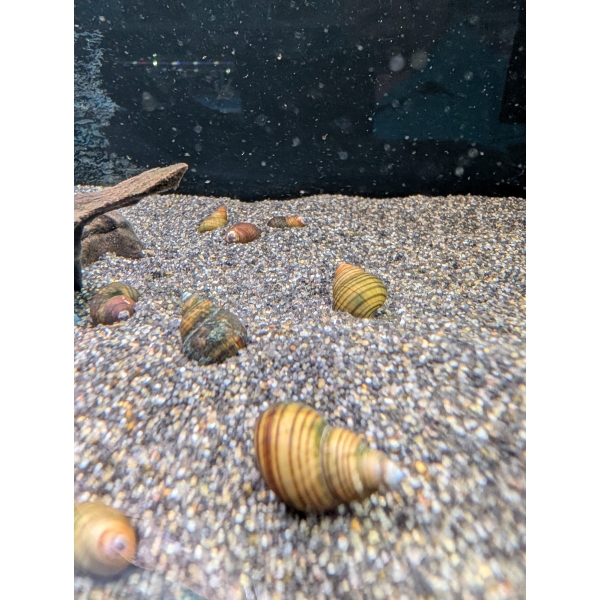
The Piano Snail, scientifically known as Taia naticoides, is a unique and charming freshwater snail that has become a delightful addition to community aquariums. Named for the distinctive dark stripes on its usually light-colored shell, resembling piano keys, this species offers both aesthetic appeal and beneficial scavenging habits.
Origin and Habitat
Piano Snails are native to Southeast Asia, particularly found in the slow-moving rivers, lakes, and streams of Myanmar (Burma), especially around areas like Inle Lake. Their natural habitat often features soft substrates where they can burrow, and they are accustomed to varied water conditions.
Appearance and Characteristics
Piano Snails typically grow to about 1 to 1.5 inches (2.5 to 3.5 cm) in shell length. Their shells are generally smooth and rounded, with a base colour ranging from cream to yellowish or light brown. The most striking feature is the pattern of dark brown or black spiral stripes that run along the whorls of the shell, giving them their characteristic “piano key” appearance.
They possess an operculum, a hard, protective trapdoor that allows them to seal themselves inside their shell. Unlike some other aquarium snails, Piano Snails are livebearers, meaning they give birth to fully formed miniature snails rather than laying eggs. Males can often be distinguished by a thickened, twisted right antenna, which serves as a reproductive organ.
Behavior and Temperament
Piano Snails are peaceful and relatively slow-moving invertebrates, making them excellent tank mates for a wide range of non-aggressive fish and other invertebrates. They are primarily scavengers, spending their time sifting through the substrate and grazing on biofilm, detritus, and uneaten food. They are known to burrow into soft substrates, which can help aerate the tank bottom.
They are not considered prolific algae eaters compared to species like Nerite snails, but they contribute to tank cleanliness by consuming decaying organic matter. They are not known to eat healthy live plants. Piano Snails are generally hardy once acclimated, but they can be somewhat shy, especially when newly introduced to an aquarium.
Aquarium Requirements
To ensure the health and well-being of Piano Snails, consider the following aquarium parameters:
- Tank Size: A minimum of 40 liters is recommended for a small group, with larger tanks being preferable to provide more space and stability. Keeping them in groups of at least 3-5 can encourage more natural behavior.
- Water Parameters:
- Temperature: 18-25c – they tolerate a wide range, but stable temperatures are best.
- pH: 7.0-8.5 (neutral to slightly alkaline water is preferred for shell health).
- Hardness: 6-20 dGH (moderately hard to hard water is beneficial for calcium availability).
- Filtration: Good filtration is essential to maintain clean water. They prefer gentle to moderate water flow.
- Substrate: A soft, fine substrate like sand or fine gravel is highly recommended, as they enjoy burrowing.
- Lighting: Moderate lighting is appropriate.
- Decor: Provide plenty of smooth rocks, driftwood, and live plants. These offer surfaces for grazing, hiding spots, and a more natural environment. Ensure there are open areas for them to move and burrow.
Diet
Piano Snails are omnivorous scavengers. While they will consume some biofilm and detritus, their diet should be supplemented to ensure they receive adequate nutrition.
- Primary Diet: Sinking pellets, flakes, and blanched vegetables (e.g., zucchini, cucumber, spinach, kale).
- Supplements: They will readily consume uneaten fish food and decaying plant matter.
- Calcium Source: Calcium is vital for strong shell growth. Ensure their diet or water provides sufficient calcium (e.g., through calcium-rich foods, cuttlebone, or calcium carbonate supplements).
Breeding
Piano Snails are livebearers and can reproduce in freshwater aquariums, though they are not known to have population explosions like some other snail species. Females release fully formed, miniature snails (typically 2-4 mm in size) every few weeks.
- Sexing: Males have a noticeably thicker and sometimes twisted right antenna compared to the female’s uniformly thin antennae.
- Reproduction Rate: Their reproduction rate is relatively slow, with females producing a small number of offspring at a time. This prevents them from overpopulating the tank.
- Fry Care: The young snails are independent from birth and will feed on the same foods as the adults, including biofilm and finely crushed foods.
Common Health Issues
Piano Snails are generally hardy, but like all aquatic invertebrates, they are sensitive to poor water quality, especially high levels of ammonia, nitrite, and nitrate. Maintaining stable, clean water parameters is crucial. Shell erosion can occur in soft or acidic water due to a lack of calcium, so ensuring adequate calcium and appropriate pH is important. They are also sensitive to copper, so avoid any medications containing copper in tanks housing these snails.
Conclusion
The Piano Snail is a charming and distinctive addition to a freshwater aquarium. Their unique striped shells, peaceful nature, and beneficial scavenging habits make them an interesting and low-maintenance inhabitant. Their livebearing reproduction, without the risk of overpopulation, adds to their appeal for aquarists seeking a unique and helpful invertebrate.
Description
The Piano snail (Taia naticoides) is a peaceful livebearing snail originating from Burma (Inle Lake). It is a species of a freshwater snail with an operculum and a gill, an aquatic gastropod mollusk in the family Viviparidae, the river snails. It is in fact a close relative to the European species of river snails (Viviparus). Like other river snails, it feeds on soft particles like mouldered food tablets, detritus etc. They are not considered to be good algae eaters. On the other hand, they also do not eat live aquarium plants.
As they come from subtropical regions, they are suited to a broad array of temperatures and can be kept between 15 and 28°C. It is a very slow and calm species of snail. Like many other river snails, they are sensitive to bad water conditions. Their aquarium should be kept with the very same attention as in keeping fish.
In these snails, males and females exist. The sexes can be easily distinguished by the broad and circled right antennae of the male. Coloration and shape of the shell are not usable for distinguishing the sexes, as both characters are very variable.
The young ones are about 2-4 mm in height when born. It seems that the females can produce offspring of different sizes. Adult snails may reach about 35 mm. The species likes to bury itself from time to time and thus, you should provide a soft and fine sand substrate covering at least part of the aquarium bottom.
Convenient nationwide delivery; you’re only a click away!
General Enquiries
There are no enquiries yet.