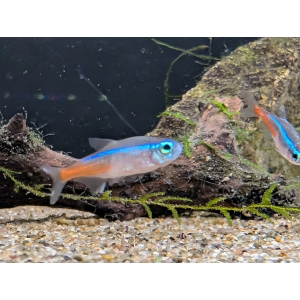


Red Tail Tinfoil Barb Barbonymus altus
£15.00
Bulk Offer – 3 for £42.00
Discount will apply at checkout.
- Description
- Store Policies
- Enquiries
Description
Red Tail Tinfoil Barb:
A Comprehensive Care Guide
The Red Tail Tinfoil Barb () is a magnificent freshwater fish from Southeast Asia, closely related to the standard Tin Foil Barb. It is distinguished by its vibrant red caudal (tail) fin, often without the black submarginal stripe seen in . This large, active, and schooling species makes a stunning centerpiece for expansive aquarium setups.
Scientific Classification
- Scientific Name:
- Family: Cyprinidae
- Origin: Southeast Asia (Mekong and Chao Phraya river basins, including parts of Thailand, Vietnam, Cambodia, and Laos). They inhabit large rivers and their associated floodplains.
Appearance and Size
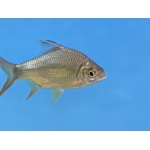
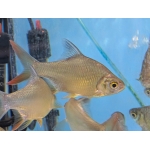
Red Tail Tinfoil Barbs are large fish, typically reaching up to 20-30 cm in captivity, though they can grow larger in optimal conditions. Their body is silvery or golden-yellow with large, reflective scales, giving them a “tinfoil” appearance. The most prominent feature is their bright red caudal fin, which often lacks the distinct black stripe found in . Their dorsal, pectoral, and anal fins also exhibit red coloration.
Temperament and Social Behavior
Red Tail Tinfoil Barbs are generally peaceful and highly active schooling fish. They thrive when kept in groups of at least five or six individuals. Keeping them in a school helps to reduce stress and encourages their natural, energetic swimming patterns. While not aggressive, their large size and rapid movement can sometimes startle smaller, more timid tankmates or outcompete them for food.
Tank Requirements
- Tank Size: Due to their large adult size and schooling nature, a minimum tank size of 500 litres is recommended for a group of Red Tail Tinfoil Barbs. Even larger tanks 750+ litres are highly beneficial to provide ample swimming space and ensure long-term health.
- Substrate: A soft, sandy substrate is ideal, but fine gravel can also be used. They may occasionally burrow.
- Decorations: Provide plenty of open swimming areas, as these fish are constantly on the move. Incorporate sturdy decorations like large pieces of driftwood, smooth rocks, and hardy live plants (such as Java Fern or Anubias) or artificial plants. Be aware that they may nibble on softer plant species due to their herbivorous tendencies.
- Lighting: Moderate lighting is suitable and will enhance their metallic sheen and red fins.
- Filtration: A robust and efficient filtration system is essential. Their size and active metabolism mean they produce a significant amount of waste, requiring powerful external filters (e.g., canister filters) to maintain excellent water quality.
- Water Flow: They appreciate moderate to strong water currents, mimicking their natural riverine habitats. Powerheads or efficient filtration systems can provide this.
- Lid: A secure and sturdy lid is crucial, as Red Tail Tinfoil Barbs are known to be skilled jumpers, especially if startled.
Water Parameters
Red Tail Tinfoil Barbs are adaptable to a range of water conditions, but consistent stability is vital for their well-being.
- Temperature: to .
- pH: Slightly acidic to neutral water is preferred, with a pH range of 6.5 to 7.5.
- Hardness (GH): Soft to moderately hard water, with a general hardness (GH) of 5-12 dGH.
- Water Quality: Ammonia and nitrite levels must always be zero. Nitrate levels should be kept low (below 20 mg/L) through regular and substantial partial water changes (at least 25% weekly). High dissolved oxygen levels are also paramount.
Diet and Feeding
Red Tail Tinfoil Barbs are omnivores with a significant herbivorous component to their diet. They have a strong appetite.
- Staple Diet: A high-quality flake or pellet food with a considerable vegetable or spirulina content should form the basis of their diet.
- Vegetable Matter: Regularly offer fresh blanched vegetables such as spinach, zucchini, romaine lettuce, or algae wafers.
- Supplements: Supplement their diet with live or frozen foods like bloodworms, brine shrimp, daphnia, krill, or chopped meaty foods (e.g., market shrimp) for larger specimens.
- Feeding Frequency: Feed small amounts two to three times daily, ensuring all food is consumed within a few minutes to prevent overfeeding and maintain water quality.
Tankmates
Choosing appropriate tankmates is crucial due to their size and active nature.
- Compatible Tankmates: Best kept with other large, peaceful to semi-aggressive fish that can handle their activity level and are not small enough to be considered prey. Examples include other large barbs, larger tetras, silver dollars, Bala Sharks, Clown Loaches, Plecos, and some larger peaceful cichlids.
- Avoid: Small fish (e.g., small tetras, guppies) that could be eaten, and very docile or slow-moving fish that might be stressed or outcompeted for food.
Breeding
Breeding Red Tail Tinfoil Barbs in a home aquarium is considered very challenging and is rarely successful. They are open-water egg scatterers and do not exhibit parental care.
- Breeding Setup: Successful breeding typically requires extremely large outdoor aquaculture ponds in tropical climates or massive indoor aquariums with specific water parameters (soft, slightly acidic water, around or ).
- Spawning: They scatter thousands of eggs over plants or a suitable spawning medium.
- Fry Care: If spawning occurs, the parents should be removed immediately to prevent them from eating the eggs or fry. Eggs typically hatch in 2-3 days, and fry become free-swimming shortly after. Newly hatched fry can be fed infusoria or newly hatched brine shrimp.
Special Considerations
- Rapid Growth: Juveniles grow quickly, so be prepared for their eventual large size and the need for a spacious tank from the outset.
- Longevity: With proper care, Red Tail Tinfoil Barbs can live for 8 to 10 years, and potentially longer.
- Algae Control: Their herbivorous diet means they can be helpful in controlling algae growth in the aquarium.
- Observation: Regular observation of their health, behavior, and interactions with tankmates is crucial.
By understanding and providing for the specific needs of the Red Tail Tinfoil Barb, you can enjoy these magnificent and active fish in a well-maintained, spacious aquarium.
Convenient nationwide delivery; you’re only a click away!
General Enquiries
There are no enquiries yet.