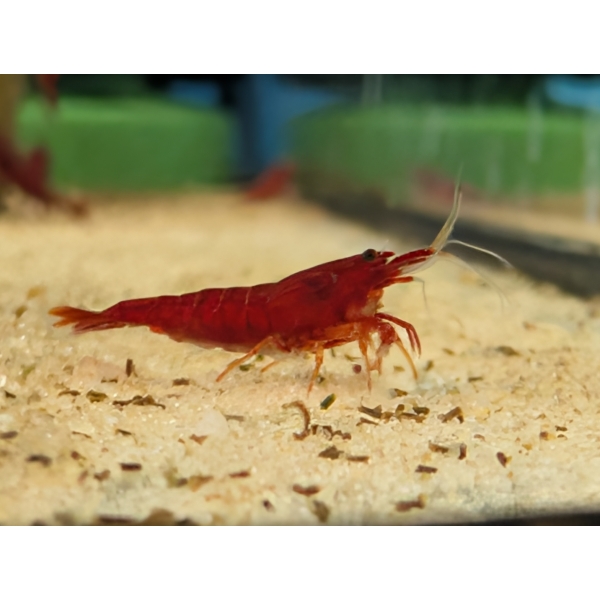



Sakura Red Shrimp
£6.00
Bulk Offer – 6 for £33.00
Discount will apply at checkout.
Sakara Red Shrimp
- Description
- Store Policies
- Enquiries
Description
Sakura Red Shrimp (Neocaridina davidi var. “Red”)
Species Profile:
Common Names: Red Sakura Shrimp, Sakura Shrimp, High-Grade Cherry Shrimp.
Scientific Name: Neocaridina davidi (Colour Morph).
Family: Atyidae.
1. Introduction
The Sakura Red Shrimp is one of the most popular and enduring freshwater invertebrates in the aquarium hobby. While often grouped under the general umbrella of “Red Cherry Shrimp,” the term “Sakura” specifically refers to a higher grade of colouration.
Named after the Japanese cherry blossom, Sakura shrimp are selectively bred to have a much deeper, more solid red coverage than the standard transparent Cherry Shrimp. They are the perfect balance of affordability and striking beauty, making them a staple for aquascapers and beginners alike.
2. Origins and Grading
-
Wild Origin: The wild Neocaridina davidi is native to Taiwan and is naturally brownish-grey or transparent to hide from predators.
-
The “Sakura” Grade: In the shrimp hobby, red shrimp are graded by the intensity of their shell.
-
Standard Cherry: Mostly transparent body with red speckles.
-
Sakura (This Profile): The body is mostly solid red with very little transparency. The legs may still be slightly pale or clear.
-
Fire Red / Painted Fire Red: The highest grade. Completely opaque, solid red body and legs (resembling red paint).
-
3. Appearance and Identification
-
Colour: A vibrant, deep red. In a high-quality Sakura specimen, you should not be able to see through the body shell easily.
-
Sexual Dimorphism:
-
Females: Much larger, rounder, and display the most intense, solid red colouration. They may have a yellow “saddle” (eggs developing behind the head) which is often visible even through the red shell.
-
Males: Generally smaller, slender, and slightly paler or more mottled than the females, even at the Sakura grade.
-
-
Size: Adults reach approximately 2.5 cm to 3 cm (1 to 1.2 inches).
4. Aquarium Requirements
Sakura Red Shrimp are incredibly robust, often cited as the hardiest shrimp in the hobby.
-
Tank Size: A minimum of 15–20 litres is suitable for a starter colony.
-
Filtration: A sponge filter is the gold standard. It provides oxygen, a surface for them to graze on, and ensures the tiny shrimplets are not sucked into the filter intake.
-
Substrate: They look best on a dark substrate (black sand or soil), which encourages them to deepen their red colouration to blend in. On white sand, they may fade slightly.
-
Décor:
-
Moss: Java Moss, Christmas Moss, or Marimo balls are essential for providing cover for molting adults and babies.
-
Plants: They thrive in planted tanks. Anubias, Ferns, and floating plants are ideal.
-
Wood: Driftwood releases beneficial tannins and grows biofilm (bacteria/fungi) which is their primary food source.
-
5. Water Parameters
-
Temperature: 18°C – 28°C (64°F – 82°F). They are very tolerant of cooler water and can often be kept in unheated tanks in typical British homes.
-
pH: 6.5 – 8.0.
-
Hardness: They require calcium and magnesium to build their shells after molting.
-
GH (General Hardness): 6 – 12 dGH.
-
KH (Carbonate Hardness): 2 – 8 dKH.
-
-
Toxicity Warning: Copper is lethal to shrimp. Always check labels on fish medications and plant fertilisers to ensure they are “Shrimp Safe” (Copper-free).
6. Diet and Feeding
Sakura Red Shrimp are unfussy scavengers.
-
Primary Diet: They spend most of their day grazing on biofilm and soft algae growing on tank surfaces.
-
Supplemental Food:
-
Specialist Shrimp Pellets/Granules.
-
Blanched Vegetables: Courgette, spinach, nettle, or cucumber slices (boiled until soft).
-
Algae Wafers: Standard catfish wafers are readily accepted.
-
-
Feeding Schedule: Feed sparingly (every 2–3 days). If food remains after 2 hours, remove it to prevent water pollution.
7. Behaviour and Tank Mates
-
Temperament: Completely peaceful.
-
Molting: You will regularly see empty white shells in the tank. These are exuviae (molted skins). Leave them in the tank; the shrimp will eat them to recycle the minerals.
-
Tank Mates:
-
Best: Kept alone or with snails (Nerite, Ramshorn).
-
Compatible: Otocinclus catfish and Pygmy Corydoras.
-
Caution: Small schooling fish like Neon Tetras or Guppies are generally safe with adults, but will likely eat some of the baby shrimplets.
-
Avoid: Angelfish, Bettas, Gouramis, and Cichlids.
-
8. Breeding
Sakura Red Shrimp are incredibly prolific breeders (often called the “rabbits of the aquarium world”).
-
The Process: If you have males and females and stable water, they will breed. No special intervention is needed.
-
Berried Females: A female carries fertilized eggs under her tail (looking like a cluster of yellow or green berries) for about 30 days.
-
Hatching: They release fully formed, miniature shrimplets (no larval stage). These babies are independent immediately and eat biofilm.
-
Culling (Optional): To maintain the high “Sakura” grade redness, serious breeders may remove offspring that are pale or transparent to prevent them from diluting the colony’s colour quality over time.
9. Summary Checklist
| Requirement | Specification |
| Minimum Tank Size | 15–20 Litres |
| Temperature | 18°C – 28°C |
| pH | 6.5 – 8.0 |
| Substrate | Dark substrate enhances red colour |
| Diet | Biofilm, Algae, Blanched Courgette |
| Compatibility | Peaceful (Prey for larger fish) |
| Grade Definition | Solid red body, minor transparency on legs |
| Critical Warning | Copper is toxic |
| Adult Size | 2.5–3 cm |
Convenient nationwide delivery; you’re only a click away!
Please put your desired delivery day in the Order Notes on the Checkout page.
General Enquiries
There are no enquiries yet.