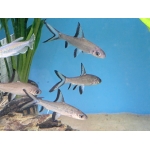


Silver/Bala Shark Balantocheilus melanopterus
£10.00
Bulk Offer – 3 for £27.00
Discount will apply at checkout.
- Description
- Store Policies
- Enquiries
Description
Silver Shark (Balantiocheilos melanopterus)
The Silver Shark, scientifically known as Balantiocheilos melanopterus, is a striking and active freshwater fish highly popular in the aquarium hobby. Despite its common name, it is not a true shark but a member of the Cyprinidae family, related to minnows and carp. Renowned for its sleek, torpedo-shaped body and distinctive black-edged fins, this fish brings a dynamic and elegant presence to large, well-maintained aquariums.
Origin and Habitat
Silver Sharks are native to the large rivers and associated floodplains of Southeast Asia, particularly found in the Mekong and Chao Phraya river basins, as well as on the Malay Peninsula, Sumatra, and Borneo. Their natural habitat is characterised by clear, flowing waters, often with sandy or gravelly substrates, and they are accustomed to moderate water flow. Historically, they were abundant, but wild populations have significantly declined due to habitat loss and overfishing for the aquarium trade.
Appearance and Characteristics
The Silver Shark typically grows to a substantial size of 10-14 inches (25-35 cm) or even larger in a well-maintained aquarium, though they grow slowly. Its most distinctive features are:
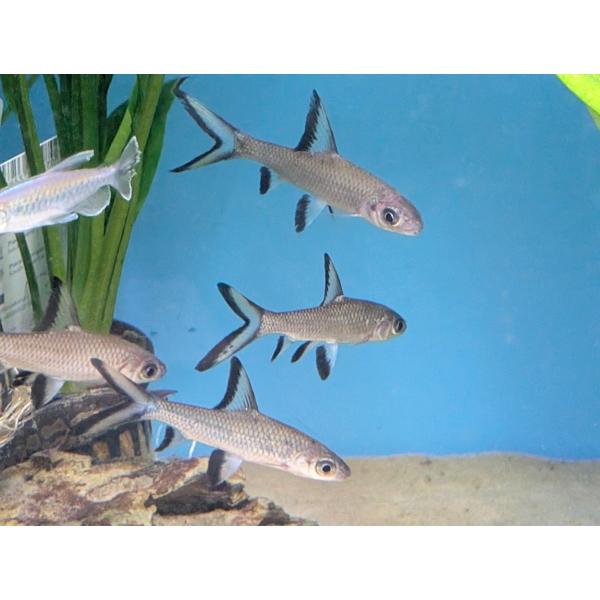
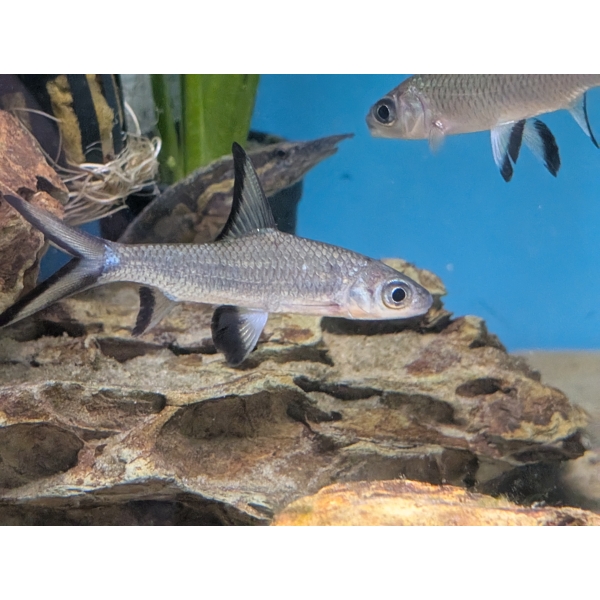
- Body Shape: An elongated, torpedo-shaped, laterally compressed body, giving it a streamlined, shark-like appearance.
- Colouration: A brilliant, reflective silver or metallic grey body, which shimmers under aquarium lighting.
- Fin Markings: All its fins (dorsal, caudal, pectoral, pelvic, and anal) are edged with a prominent, contrasting black band, which is the origin of its scientific name melanopterus (meaning “black fin”). The caudal (tail) fin is deeply forked.
Their large, expressive eyes and constant movement make them an engaging species to observe.
Behaviour and Temperament
Silver Sharks are generally peaceful and highly social schooling fish. Keeping them in a group of at least five to six individuals is crucial for their well-being. This promotes their natural schooling behaviour, reduces stress, and allows them to display their best colours and interactions. When kept alone or in too small a group, they can become shy, stressed, and prone to illness, often exhibiting nervous darting behaviour.
They are active swimmers and will utilise all levels of the aquarium, though they are particularly active in the mid to upper water column. Their peaceful nature makes them excellent tank mates for other similarly sized, robust, and non-aggressive community fish. Suitable companions include larger tetras (e.g., Congo Tetras), peaceful cichlids (e.g., Geophagus species), larger gouramis, and various catfish (e.g., Plecos). Avoid housing them with very small fish that could be eaten, or slow-moving, long-finned species that might be stressed by their active swimming.
Aquarium Requirements
Due to their large adult size, active nature, and schooling requirements, Silver Sharks demand specific and spacious aquarium conditions:
- Tank Size: A minimum of 450 litres is recommended for a small school of 5-6 juvenile Silver Sharks. For a mature group, a tank of 750 litres or larger is highly recommended to ensure ample swimming space and prevent stunting. A longer tank footprint is more beneficial than a tall one, allowing for extensive horizontal swimming.
- Water Parameters:
- Temperature: 23-26°C (73-80°F) – consistent, warm temperatures are vital.
- pH: 7.0-7.5 (neutral is preferred).
- Hardness: 5-15 dGH (soft to moderately hard water).
- Filtration: Excellent and robust filtration is paramount to manage their significant bioload. A powerful canister filter or multiple large hang-on-back filters providing strong mechanical, biological, and chemical filtration are necessary. Good water movement, mimicking their natural riverine habitat, is also beneficial.
- Substrate: A fine sand or smooth gravel substrate is ideal.
- Lighting: Moderate lighting is suitable.
- Decor: Provide plenty of open swimming space in the mid to upper water column. Robust pieces of driftwood and smooth rocks can be included to offer some visual interest and occasional hiding spots, but ensure they do not impede their active swimming. Live plants can be used, but choose hardy, well-rooted species (e.g., Anubias, Java Fern, larger Amazon Swords) as they can sometimes nibble on softer plant leaves. A tight-fitting lid is essential, as they are known jumpers, especially when startled.
Diet
Silver Sharks are omnivores, feeding on a variety of plant matter, small crustaceans, and insects in the wild. A high-quality, varied, and balanced diet is essential for their health and vibrant colouration in the aquarium.
- Primary Diet: High-quality flake or sinking pellet food as a staple, specifically formulated for omnivorous tropical fish.
- Supplements: Offer a variety of live or frozen foods such as bloodworms, brine shrimp, Mysis shrimp, and chopped earthworms.
- Vegetable Matter: Blanched fresh vegetables like zucchini, cucumber, spinach, and shelled peas should be offered regularly to supplement their diet.
Feed them small amounts two to three times a day, ensuring all food is consumed within a few minutes.
Breeding
Breeding Silver Sharks in a home aquarium is extremely challenging and rarely achieved. They are egg-layers, and their complex breeding habits in the wild, which involve seasonal migrations and specific environmental cues, are very difficult to replicate in captivity. Most Silver Sharks available in the aquarium trade are either wild-caught or commercially bred using hormone induction.
Common Health Issues
Silver Sharks are generally hardy once established but can be susceptible to common freshwater fish diseases, particularly Ich (white spot disease), especially when stressed or introduced to new environments with unstable water parameters. Maintaining pristine water quality, stable parameters, a balanced diet, and a stress-free environment (including keeping them in a proper school) are key to preventing illness.
Conclusion
The Silver Shark is a truly magnificent, active, and elegant fish that can bring immense character and a dynamic presence to a large, well-maintained community aquarium. Its striking appearance and active schooling behaviour make it a rewarding species for the dedicated aquarist. With proper care, ample space, and a suitable group, these long-lived fish can become a cherished and impressive inhabitant of your aquatic world for many years.
Convenient nationwide delivery; you’re only a click away!
General Enquiries
There are no enquiries yet.