

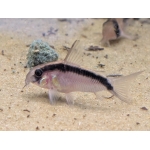


Skunk Catfish
£9.00
Skunk Catfish
Bulk Offer – 3 for £24.00
Discount will apply at checkout.
- Description
- Store Policies
- Enquiries
Description
Hoplisoma granti:
Skunk Catfish Care Guide
Common Names: , , Scientific Name: Corydoras granti (often traded as C. arcuatus or Hoplisoma granti) Family: (Armoured Catfish family) Origin: South America (Upper Rio basin in Brazil and Colombia).
The is perhaps the most recognisable of the species due to its unique . It is a peaceful, active, and hardy bottom-dweller, highly valued in the aquarium hobby for its fascinating shoaling and iconic appearance.
Key Characteristics and Appearance
- Size: A moderate-sized , typically reaching an adult length of about ( inches).
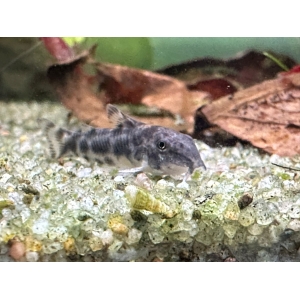
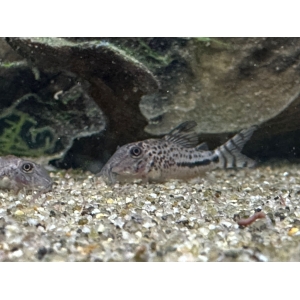
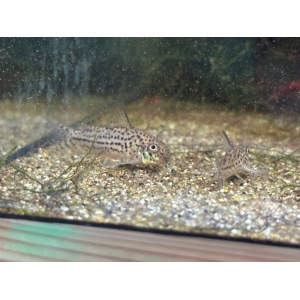
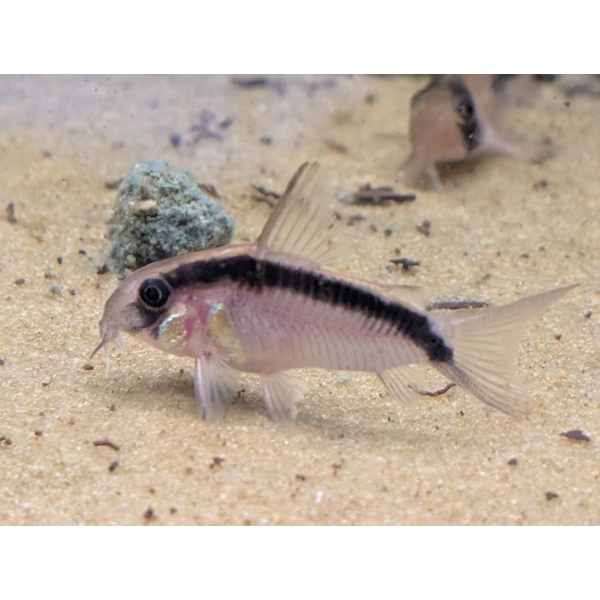
- Appearance: The body is generally pale pink, cream, or light grey. Its defining feature is a bold, dark, curved stripe (or ‘arc’) that starts at the snout, runs over the top of the body, and often extends through the dorsal fin, resembling a skunk’s markings—hence the common name.
- Temperament: Highly social and peaceful. They are active during daylight hours and are constantly sifting the substrate.
- Activity: Like all , they are obligate shoalers and require the presence of their own kind to feel secure and display natural .
Aquarium Setup Requirements
originate from tributaries that often have soft, slightly stained water, and they require clean conditions to prevent damage.
Tank Size and Substrate
- Minimum Tank Size: A tank is suitable for a healthy shoal of six to ten fish. The tank should provide ample bottom surface area.
- Substrate: Fine, soft sand is absolutely non-negotiable. use their to continuously sift for food. Coarse gravel will injure their , leading to infections and inability to feed properly.
- Decor: Use smooth materials like , rounded river stones, and dense planting. They need plenty of shaded resting spots provided by plants or overhanging décor.
Water Parameters
C. granti prefers the softer, slightly acidic water conditions common to their homes. Stability is key to their long-term health.
| Parameter | Recommended Range |
|---|---|
| Temperature | to ( to ) |
| to (Acidic to Neutral) | |
| Hardness () | Soft to Medium () |
Filtration and Water Flow
Effective is crucial to keep the water pristine, as they are sensitive to nitrates. Use a filter that provides gentle to moderate flow, ensuring there are still calm areas at the bottom where the fish can rest and sift without being disturbed. Regular weekly water changes of are mandatory.
Diet and Social Needs
Dietary Needs
are omnivorous and require a diet rich in protein to thrive. They must be fed sinking foods as they rarely venture to the water surface to eat flakes.
- Staple: High-quality sinking tablets, wafers, or granules formulated for catfish.
- Supplement: Provide a varied diet with plenty of live or frozen options, such as bloodworms, , , and . This is important for conditioning them for spawning and promoting natural .
- Feeding Time: Feed them shortly after the main tank lights are turned off, as this is often when the shoal becomes most active and competitive for food. Ensure the food settles on the substrate quickly.
Social Requirements and Compatibility
- Shoaling: Absolutely must be kept in groups. A minimum shoal size of six individuals is required, though ten or more is better for optimal and security. A lone will become lethargic, stressed, and sickly.
- Tank Mates: They are entirely peaceful and make superb tank mates for small, non-aggressive species that inhabit the mid-to-upper water column. Suitable companions include small (like or ), , , and . Avoid species that are known to nip fins or aggressively compete for food on the bottom.
General Enquiries
There are no enquiries yet.